
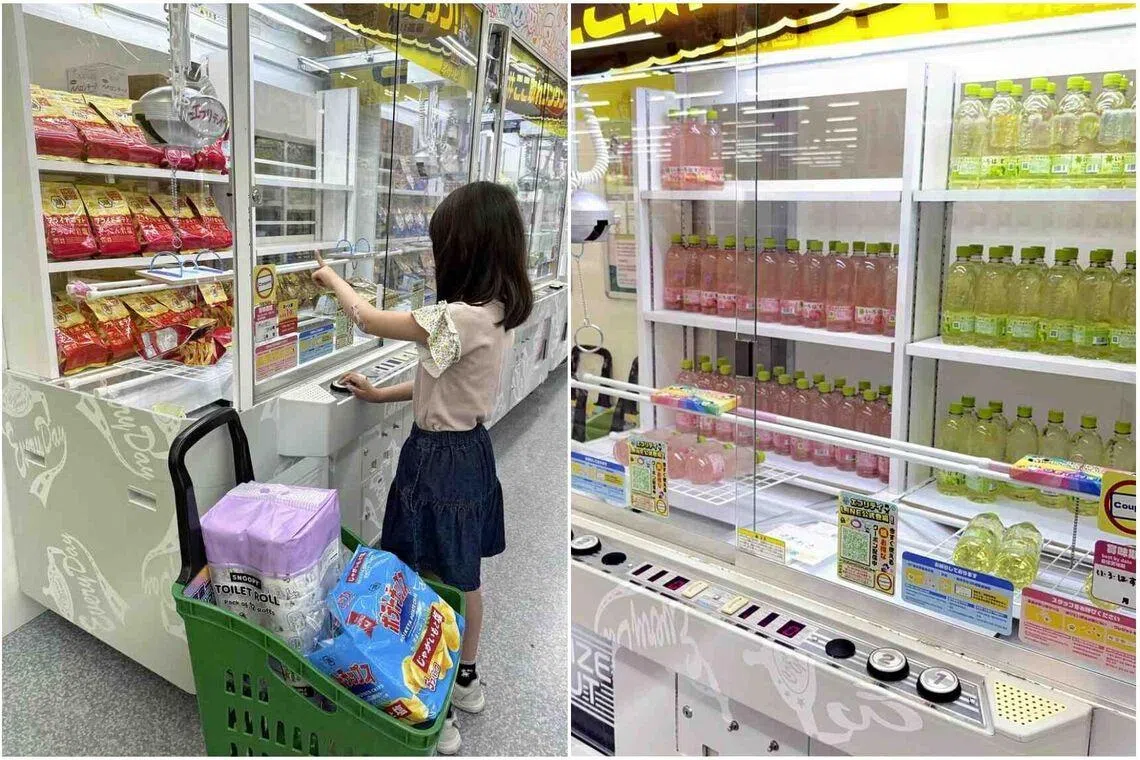
No exaggeration: this shift says a lot about how Japanese arcades keep reinventing themselves. But let's stick with the prizes for now, because the real story is what you can win, and why that matters to both players and Japan fans.
Japan claw machines are leaving the plushie era behind
Guess what? The classic image of a Japanese crane game is still there, the glass box, the joystick, the padded arm, the tense little moment before the grab. But the prize line-up is changing, and that’s why arcades are getting more interesting again. Instead of only stuffed animals, many machines now hold rice, instant noodles, curry packs, shampoo, toilet paper, snacks, and other everyday items that feel more like a supermarket shelf than a toy display.
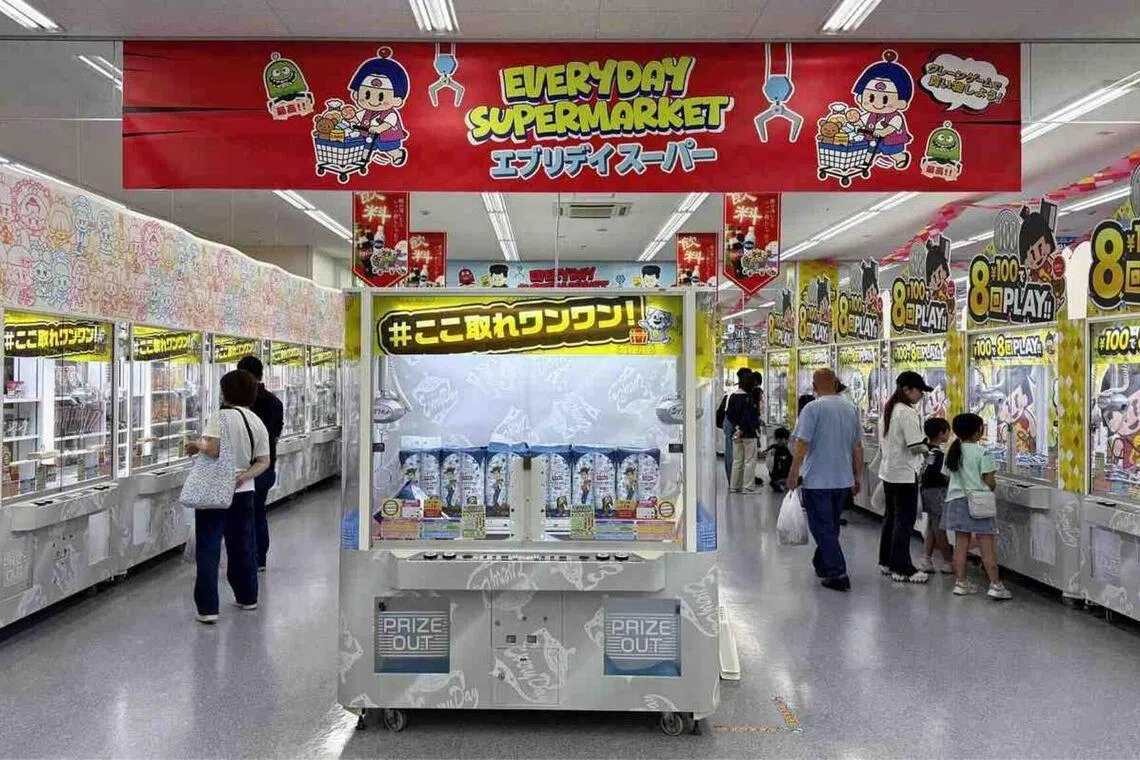
Compared with back home, where claw machines often feel like a quick game for kids or a novelty prize, Japan treats them as a serious arcade category. That’s why places like Tama no Kuni arcade can stand out during Golden Week, when families, tourists, and local regulars all flood into entertainment spaces and look for something new. Wild, isn't it?
Tama no Kuni and Golden Week: why May 4 mattered
May 4 sits right in the middle of Golden Week, one of Japan’s busiest holiday periods. People have time off, trains are packed, and leisure spots in and around Tokyo get a big traffic boost. Tama no Kuni arcade used that moment well, because holiday visitors are often more willing to try machines that feel practical, playful, and a bit absurd all at once.
Fun fact: Golden Week usually includes Showa Day on April 29, Constitution Memorial Day on May 3, Greenery Day on May 4, and Children’s Day on May 5. During that stretch, arcades can turn into mini-event spaces, and a crane game with household goods can be more tempting than a giant plush bear. It’s not just about winning, it’s about winning something you’d actually open and use the same week. See what I mean?
Why everyday prizes work so well
Here’s the catch: these prizes lower the psychological barrier. A plush toy can be cute, but it also feels decorative, and maybe disposable if you don’t collect them. A bag of rice or a pack of coffee feels useful, so even people who never touch traditional prize machines might give it a go. That broader appeal is exactly what arcade operators want.
My tip: if you’re learning Japanese, this is a great place to pick up real-life vocab. You’ll see words like 食品 (shokuhin, food products) for food items, 生活用品 (seikatsu youhin) for daily necessities, and prize labels that read almost like store signage. It’s a neat little lesson in consumer language, and it shows how Japanese arcades mirror everyday life. Brilliant, really.
How Japan’s crane games keep diversifying
That reminds me: Japan has always been very good at turning ordinary things into a game. Crane machines, or crane games, already had a cultural edge because the fun was never only in the prize, it was in the technique. The arm strength, the angle, the timing, the tiny slip when the box shifts by a few millimetres, all of that makes the experience feel skill-based even when luck is involved.
Unlike what we're used to, Japanese arcades often refresh their prize themes to match the season, local events, or even food trends. One month it’s character goods, the next it’s ramen bowls, snacks, cleaning supplies, or convenience-store staples. No exaggeration: this diversification helps arcades survive in a tough market, because it keeps the floor feeling fresh without needing to rebuild the whole business model.
A consumer exploration with a very Japanese twist
What I especially like is how this reflects Japanese consumer culture. People here are often drawn to items that are practical, seasonal, and nicely packaged, so a crane game offering daily goods doesn’t feel random at all. It feels like a small pop-up version of the department store basement, the konbini, and the arcade rolled into one. That’s a very Japan way to sell excitement.
Before I forget: the prize mix also tells you something about value perception. A cheap-looking machine can suddenly feel worth trying if the prize is a familiar brand of snack or a household item that would cost you real money elsewhere. The game becomes a tiny economic calculation, wrapped in neon lights and arcade noise. Sounds good, right?
What Japan fans should notice when they try one
Know that feeling when you walk past a crane machine, tell yourself you won’t play, then stop anyway? That’s the pull, and everyday prizes make it stronger. For Japan fans and language learners, these machines are worth watching not just for fun, but for the clues they give about daily life, shopping habits, and the way Japanese businesses adapt to changing tastes.
If you get the chance, look closely at the prize labels and the item design. You’ll spot brand names, product categories, and packaging that tell their own story. My tip: use those labels as mini reading practice, especially if you’re still getting used to 仮名 (kana, kana syllabary) and common consumer words. ありがとう (Arigato, thank you), and a little crane-game luck never hurts.
Frequently Asked Questions
Why are Japanese claw machines changing?
Arcades are broadening their prize selection to attract more players, especially adults and families who want practical items rather than only toys.
What kinds of prizes can you win now?
Besides plush toys, many machines now offer food, drinks, household goods, toiletries, and other everyday essentials.
Why is Golden Week important for arcades?
Golden Week brings a large wave of holiday visitors, so arcades use the period to test new prize ideas and draw more foot traffic.


