

Seriously though, this isn't just about shoes. It's about a player who turns ordinary merchandise into a collector's object, with Japanese and global fans both pushing the market in the same direction.
![Dragon Ball Z: Kakarot [Master Edition]](https://s.pacn.ws/1/p/1eh/dragon-ball-z-kakarot-master-edition-908785.1.jpg?v=t8ja8t&width=400)


Shohei Ohtani cleats auction and the power of a superstar
Shohei Ohtani is more than a baseball star, he’s an economic magnet. When his name appears on a lot sheet, collectors don't just see sports gear, they see a piece of the story around one of the most marketable athletes on the planet. The Los Angeles Times reported on July 13, 2026, that a pair of Ohtani cleats linked to his 2025 Japan trip had entered auction, and that alone was enough to spark attention far beyond the usual baseball crowd.
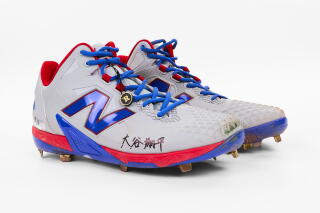
What many overlook is that Ohtani's appeal isn't limited to Dodgers fans. He pulls in Japanese buyers, American collectors, sneaker people, and casual fans who know they may never own anything else connected to him. That's why the bidding can rise so quickly. A signed bat is one thing, but game-used cleats carry the feel of a specific moment, a specific field, a specific swing. My tip: if you're studying sports collectibles, always look at the story attached to the object, not just the object itself. My verdict is that the story is where the money lives.
Why Ohtani gear sells for so much
The reason is simple: Ohtani has rare cross-market value. He is a two-way phenomenon, a global face of baseball, and a player whose image works in Japan, the United States, and across Asia. That makes his gear unusually liquid in collector terms, which is a fancy way of saying it can be sold quickly and often at a premium. Compared with back home, where most players have local fan value, Ohtani sits in a different tier entirely.
For example, a normal pair of cleats might be sold as memorabilia for a few hundred dollars, maybe more if a star wore them in a major game. Ohtani's pair can climb much higher because the buyer isn't paying only for leather and laces. They're paying for association, for display value, and for bragging rights. That's why auction houses love athletes like him, and why his merchandise often behaves like an asset with its own mini market. See what I mean?
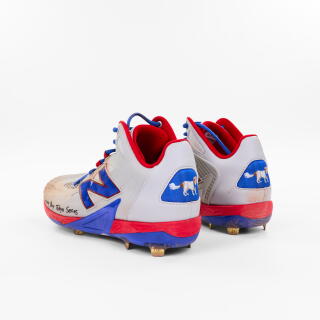
What the Los Angeles Times reported
The Los Angeles Times connected the auction lot to Ohtani's 2025 Japan appearance, which matters because context changes everything. If the cleats were worn in Japan, they carry added emotional weight for Japanese fans, and that can push prices even higher. A simple piece of sportswear becomes a souvenir from a transnational moment, and collectors know it.
That brings us to the broader market around Ohtani's image. Dodgers items already have strong demand, but Japan-linked pieces often carry an extra layer of cultural memory. A product tied to a home-country event can feel more intimate, more local, even when the final auction site is global. Highly recommended: if you follow Japanese sports media, watch how often an item's origin story matters as much as the player himself.
Japanese fan culture and the kanji connection
Imagine a narrow alley in Tokyo. A small shop window has baseball goods on display, maybe a cap, a keychain, a postcard, and a signed photo behind glass. That kind of display logic matters here, because Japanese collector culture often values presentation, provenance, and neat categorisation. Ohtani fits perfectly into that world. His name is recognised instantly, and even the 漢字 (kanji, Chinese characters used in Japanese) for his surname, 大谷, carries weight because fans see it everywhere, from news graphics to replica jerseys.
What most people don't know is that Japanese fans often collect not only the item, but the memory attached to it. A cleat from a Japan event can connect to a stadium visit, a TV broadcast, or a trip with family. The item becomes a time capsule. Seriously though, that emotional layer helps explain why Ohtani merchandise can behave like both sports memorabilia and pop culture goods at once. Not bad, right?
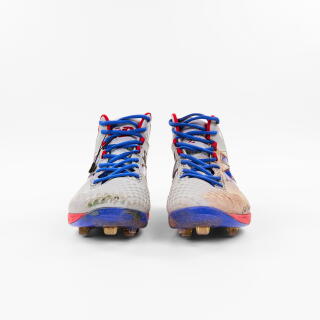
Why kanji matters for learners
For Japanese learners, this is a nice reminder that names are part of vocabulary too. Ohtani's surname is usually written as 大谷, read as Ohtani, and seeing it on merchandise or in headlines helps train recognition. The same goes for related words like 作家 (sakka, writer / author) for baseball player? No, that's not right, and that's exactly why real-world reading matters: you learn by spotting what actually appears in print, not by memorising isolated lists. When you follow sports news in Japanese, you start noticing how names, teams, and event labels repeat across articles. My verdict is that that's one of the easiest ways to build reading confidence.
What the auction says about the Ohtani economy
That leaves the big picture. Ohtani has created a small economy around himself, one driven by scarcity, performance, and narrative. Shoes are only one piece of it. Jerseys, bats, tickets, trading cards, and even media appearances all feed the same machine. The cleats auction is just a visible example of how one player can shape demand across different collector circles.
My opinion is that Ohtani is one of the few athletes whose merchandise has become a kind of cultural currency. Fans aren't only buying a thing, they're buying proof that they were close to the moment. That proof matters in Japan especially, where memorabilia often overlaps with お土産 (omiyage, souvenir)-style collecting, careful display, and long-term keeping rather than casual use. What many overlook is that the strongest sports markets are often the ones built on emotion first and price second. Then the price catches up. See what I mean?
For Japanese learning fans, this is also a great reminder to follow sports and culture together. A headline about cleats can teach you about auction language, fandom, and how kanji-laden names travel across media. This is my hidden gem! If you want more stories like this, keep watching how Ohtani's name moves through the market, because every new item tells you something about modern Japan and global sports culture. more Japan news on jpnerd.com
Frequently Asked Questions
Why do Ohtani's items sell for so much?
His global popularity, rarity of game-used items, and strong fan emotion all push prices upward.
Why does a Japan-linked item matter more?
It adds a local story, which makes the item more meaningful for Japanese fans and collectors.
Can Japanese learners benefit from following stories like this?
Yes. Sports news is full of repeated names, place labels, and real-world vocabulary that helps reading practice.


