
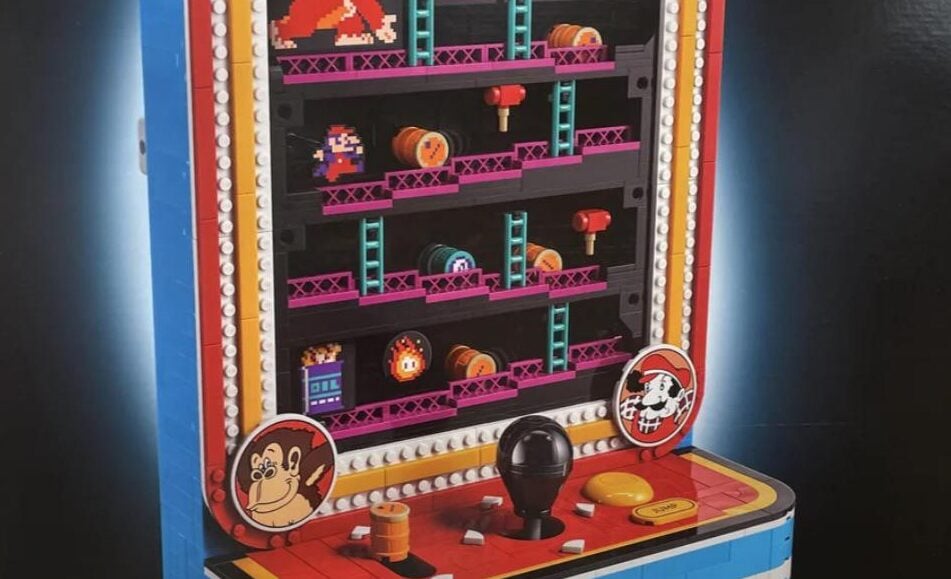
And yes, there’s a proper Japanese games angle here, because Donkey Kong is tied to Shigeru Miyamoto, Nintendo history, and that special kind of nostalgia Japan keeps packaging so well. Let me show you why this set is getting so much attention, and why the price tag may actually make sense.
![Dragon Ball Z: Kakarot [Master Edition]](https://s.pacn.ws/1/p/1eh/dragon-ball-z-kakarot-master-edition-908785.1.jpg?v=t8ja8t&width=400)

Nintendo and Lego are back, and the price is doing the talking
Plot twist: the next big Nintendo and Lego collaboration is reportedly a Donkey Kong arcade machine set priced at $200. The report comes from Video Games Chronicle, which says the model is expected to arrive as a premium display piece rather than a small toy set. That price puts it in the collector lane, not the impulse-buy lane.
Unlike what we’re used to with smaller branded sets, this one sounds closer to a shelf centrepiece. And honestly, that fits Nintendo’s recent Lego strategy, which has leaned into nostalgia, engineering, and grown-up fans who want something they can build, admire, and maybe show off next to a game shelf. Personally, I think that’s the smartest path they could take. Classic Japan, isn’t it?
Donkey Kong arcade machine: why this idea works so well
Know that feeling when a single image can explain an entire era? That seems to be the charm here. A Donkey Kong arcade cabinet instantly takes you back to the early days of arcade culture, when cabinets were loud, bright, and designed to pull you in with a few seconds of movement and sound.
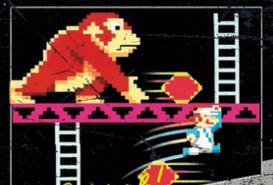
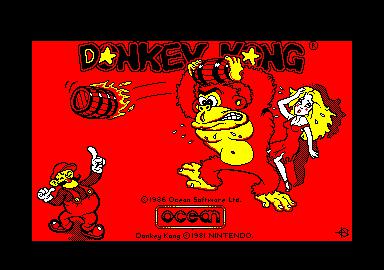
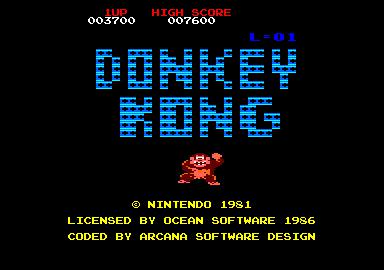
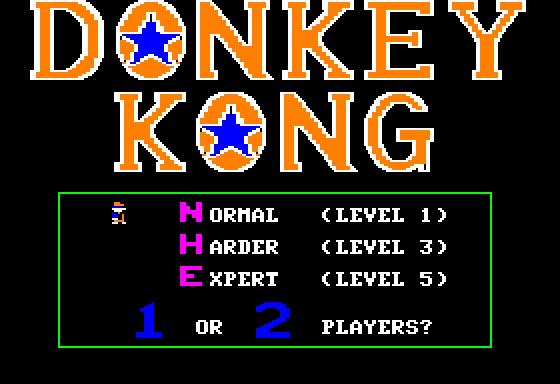
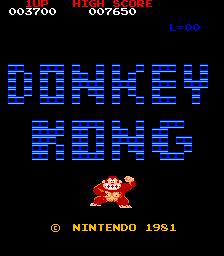
The best part is that Donkey Kong is one of Nintendo’s most important arcade-era names. The original Donkey Kong launched in 1981, first in arcades and then in wider home releases, and it helped shape Nintendo’s global identity long before Super Mario Bros. became the household name. If this Lego set recreates the cabinet properly, fans aren’t just buying a character model, they’re buying a slice of gaming history.
That matters for Japanese learning too, because retro gaming vocabulary often overlaps with everyday fan language. Words like キャラ (kyara, character) for character, レトロ (retoro, retro) for retro, and 模型 (mokei, model) for model show up constantly in Japanese hobby spaces. If you read Japanese collector blogs, you’ll see that kind of language everywhere, especially when people talk about display pieces and nostalgia-driven products. Wait, there’s more.
Shigeru Miyamoto’s fingerprints are all over this one
Hand on heart: you can’t talk about Donkey Kong without talking about Shigeru Miyamoto. He created the original game at Nintendo in the early 1980s, and it became one of the defining works of his career, alongside Mario, Zelda, and the broader shift from a pure hardware company to a creative entertainment giant.
That legacy is a big reason this Lego set feels bigger than a normal brand crossover. It’s not just a monkey and a cabinet. It’s a nod to one of the most important figures in game history, and to the period when Japanese game design was still building its vocabulary, one hit at a time. Speaking of which, this is exactly the kind of release that Japanese fans love to discuss in terms of 懐かしい (natsukashii, nostalgic; warmly familiar), a word that means nostalgic or warmly familiar.
My tip: if you like learning Japanese, keep an eye on how people talk about old games in forums and videos. You’ll see phrases like natsukashii, 安全 (anzen, safety; safe) when talking about safe display builds, and 可愛い (kawaii, cute) when a tiny figure or gimmick makes a set feel more playful than expected. Those words aren’t just vocabulary, they’re part of how Japan talks about fandom. Convinced yet?
Collector appeal, retro value, and why $200 may not be crazy
Quick detour: $200 sounds steep until you compare it with other display-focused Lego releases. Premium licensed sets often carry that kind of price because you’re paying for parts count, brand value, and the fact that adult fans are now a major market. Nintendo knows this, Lego knows this, and the result is a product designed to feel collectible from day one.
Here’s the catch: the real value isn’t just in the bricks, it’s in the emotional packaging. Donkey Kong speaks to arcade veterans, Mario-era fans, and newer players who know the character through modern Nintendo games. Add the retro cabinet format, and you get something that works as both décor and a memory trigger. Highly recommended for anyone who still keeps old cartridges, figures, or arcade-style merch on a shelf, this is exactly the kind of release that’ll look right at home.
That reminder of game preservation is very Japanese in spirit too. Japan loves objects that honour craft, history, and presentation, whether that’s a boxed vinyl release, a miniature restaurant replica, or a perfectly arranged display corner. This set feels like it belongs in that world. Wild, isn’t it?
What this says about Nintendo’s Lego strategy going forward
Picture this: Nintendo keeps using Lego to turn its biggest legacy properties into premium nostalgia pieces. That would make sense, because the company doesn’t need to chase toy-store clutter, it can aim for fans who want one strong item instead of ten smaller ones.
As a fan of both Japan culture and game history, I think this approach is clever. The Mario sets proved the idea could work, but Donkey Kong raises the stakes by leaning harder into arcade history, creator legacy, and collector appeal. If Nintendo and Lego keep choosing icons with strong Japanese roots, the line could become a kind of brick-built museum of game history. Personally, I’d love to see that happen.
And for Japanese learners, this is a nice reminder that fandom language is a real study aid. When a product like this lands, people discuss it with words like 快適 (kaiteki, comfortable; pleasant) for comfort, 過去 (kako, the past) for the past, and omosa when talking about seriousness or weight, both literal and emotional. That mix of play and history is what makes Japanese pop culture so rewarding to follow. Wait, there’s more.
For more updates like this, check more Japan news on jpnerd.com.
In pictures
Frequently Asked Questions
How much is the new Lego Donkey Kong set expected to cost?
It is reported to be priced at $200 in the United States.
What is the set supposed to be?
It is expected to be a Donkey Kong arcade machine model, likely aimed at display-minded collectors.
Why are fans linking this set to Shigeru Miyamoto?
Because Shigeru Miyamoto created the original Donkey Kong game, which gives the set strong historical and fan appeal.


