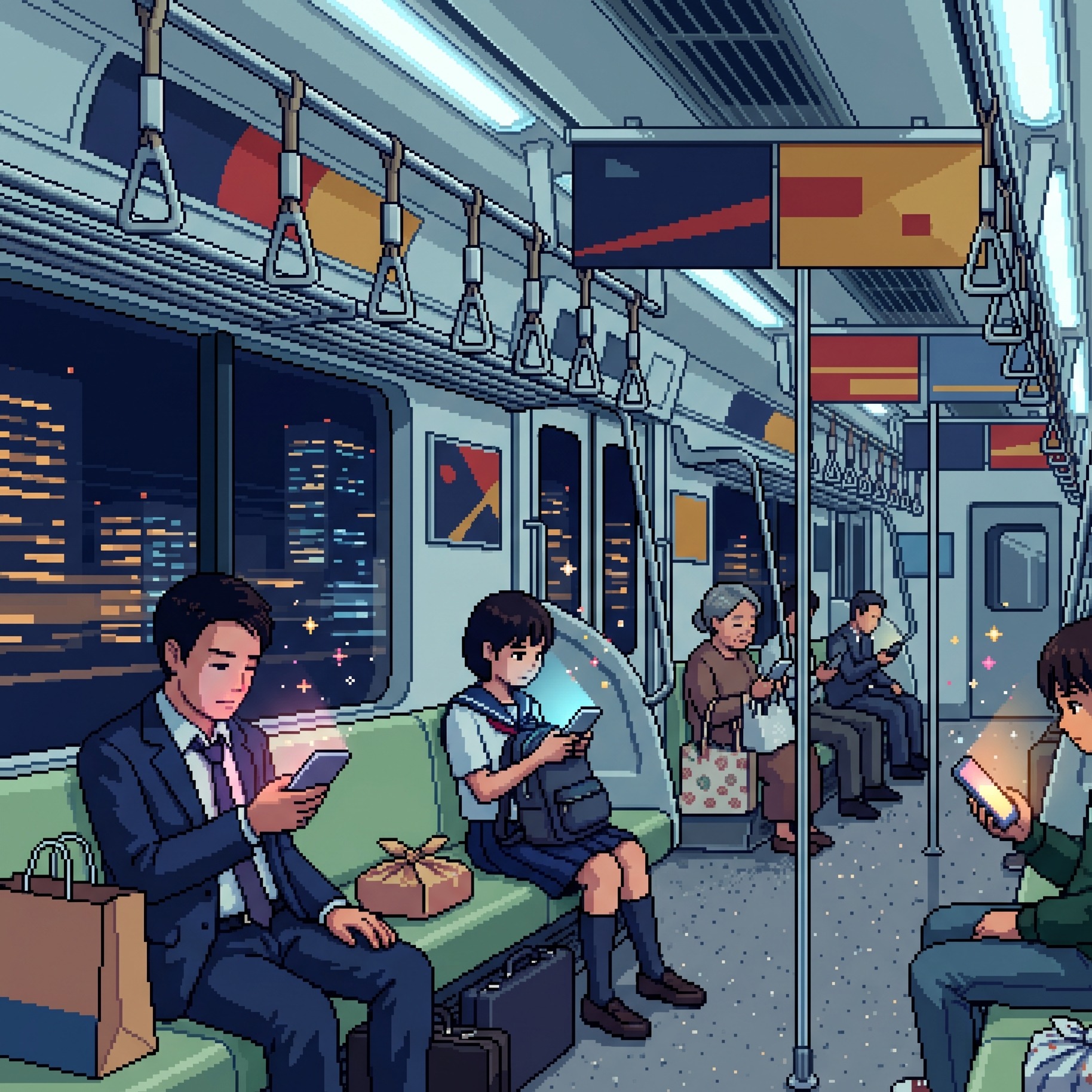
Held at Tokyo Big Sight, it’s loud, crowded, and somehow organised at the same time. Classic Japan, isn’t it?


Winter Comiket is the sort of event that makes Tokyo feel even bigger than it already is. Every December, thousands of creators and fans head to Tokyo Big Sight for a weekend that mixes fan-made manga, games, art books, cosplay, and a level of energy you really won’t forget. If you’re planning a Japan trip around winter pop culture, this is one of those names worth putting on your list.
For Japanese learners, it’s also a goldmine. You’ll hear words like circle for creator group, 同人誌 (dōjinshi, self-published fan work) for self-published works, and 宅急便 (takkyūbin, parcel delivery service) when people talk about shipping huge stacks of books home. While we're at it, the event is a great reminder that Japanese fan culture isn’t just about buying merch, it’s about making things, sharing them, and meeting people face to face. See what I mean?
What Winter Comiket is, and why it matters
Comiket, short for Comic Market, started in 1975 and has grown into the world’s largest dōjinshi fair. The winter edition is usually held around the end of December, while the summer edition often takes place in August. Both are enormous, but winter has its own feel, cooler weather, sharper crowds, and often a slightly less punishing heat situation than summer. Not bad, right?
The event is held at Tokyo Big Sight in Koto ward, on the Odaiba side of Tokyo. That location matters, because the venue is built for scale, and Comiket needs all of it. According to the event coverage on Tokyo Cheapo, you should expect big crowds, long queues, and a lot of walking. Hand on heart, this is not a casual drop-in event. It’s a proper expedition.
The best part is that you’re not just looking at fan work, you’re looking at a live snapshot of Japanese subculture. One table might have original fantasy art, another a parody book, another a game zine, and next to that a creator selling prints, stickers, or handmade goods. If you’ve ever wanted to understand how fan communities actually work in Japan, this is simply brilliant.
How to survive Winter Comiket at Tokyo Big Sight
Imagine a narrow alley in Tokyo. Now scale that up to thousands of people, add trains, ticket lines, and a venue the size of a small city. That’s the vibe you need to prepare for. Winter Comiket is famous for early arrivals, queueing in the cold, and careful crowd control, so timing matters more than enthusiasm alone.
And it gets better: the official guidance for big Comiket events usually includes rules on what you can bring, where you can line up, and how to move inside the halls. You’ll also want cash, because while some creators accept card payments or QR payments, plenty still prefer cash for fast, low-friction sales. My tip: bring small bills and coins. It saves everyone time, and it’s a polite move in Japan. Sounds good, right?
What to wear and bring
Compared with back home, Japan’s winter event culture can be surprisingly practical. Warm layers, comfortable shoes, a portable battery, and a light bag are all smart choices. If you plan to buy a lot, foldable tote bags or a backpack with extra room are a lifesaver. Remember, you may be standing, walking, and waiting for hours, and the temperature near the bay can feel colder than central Tokyo.
Fun fact: many experienced visitors treat Comiket like a marathon. They check the floor map in advance, decide which circles matter most, and move through the venue with almost military precision. That may sound intense, but it’s the easiest way to enjoy the day without getting overwhelmed. Personally, I think that planning is part of the fun. See what I mean?
Japanese learning ideas you can pick up from Comiket
I still remember exactly how often people use short, practical Japanese at events like this. You’ll hear ありがとう (arigato, thank you), これですか (kore desu ka, Is this it?), いくらですか (ikura desu ka, How much is it?), and すみません (sumimasen, excuse me / sorry) constantly. If you’re studying Japanese, Comiket is a place where textbook phrases become real, fast, and useful.
Here are a few terms worth learning before you go: dōjinshi means self-published work, circle refers to a creator group or booth, 先輩 (senpai, senior; mentor) and kohai may come up in fan circles, and yoyaku means reservation or pre-order. You might also spot setto for a set bundle, and kanzen when something is complete or full. None of this is abstract classroom stuff, it’s everyday event language, and that makes it stick much faster.
What I especially like is that you can connect the language to actual objects in front of you. A printed booklet, a wall of art, a queue of fans, a creator thanking buyers with a bow, it all helps the vocabulary land. If you learn best by context, Winter Comiket is a neat little language lab. Personally...
Why Winter Comiket is worth a place on your Tokyo itinerary
Winter Comiket isn’t for everyone, and that’s fair. If you hate crowds, strict schedules, or waiting in the cold, you may prefer smaller events. But if you want a real, ground-level look at Japanese fan culture, it’s one of the strongest experiences Tokyo has to offer.
Here’s the catch: you shouldn’t treat it like a tourist attraction in the usual sense. It’s an active market, a creator event, and a community gathering, all at once. Go in with respect, a plan, and a bit of stamina, and you’ll probably come away with not just books or art, but a better feel for how Japan’s creative scene works. That’s the good stuff, isn’t it?
And if you’re building a Japan trip around seasonal events, Winter Comiket pairs nicely with other Tokyo winter outings, from illumination spots to year-end shopping streets. For more Japan updates and travel ideas, check out more Japan news on jpnerd.com.
Frequently Asked Questions
What is Winter Comiket?
It is the winter edition of Comic Market, a huge fan-made comic and art event held in Tokyo.
Where does Winter Comiket take place?
It takes place at Tokyo Big Sight in Koto ward, Tokyo.
Is Winter Comiket good for first-time visitors?
Yes, but only if you prepare for crowds, queues, and a lot of walking.