
Overview
Tourism Expo Japan is Japan's largest travel trade show, and that scale matters because the event is not built around a single audience. It combines a consumer-facing festival with a trade-focused marketplace, so the atmosphere shifts from business talks and destination pitches to public-facing discovery depending on the day and the hall. In 2026, the fair was held from 2026-09-24 to 2026-09-27 at Tokyo Big Sight, with the first two days reserved for trade visitors and 2026-09-26 and 2026-09-27 open to the public.
Organized by the Japan Travel and Tourism Association, or JTTA, and the Japan Association of Travel Agents, or JATA, the event has long been described as a seismograph for Japan tourism trends. That metaphor feels apt. The show gathers prefectures, cities, airlines, rail operators, hotels, regional tourism boards, and other travel providers into one dense room, where the direction of the industry can be read in the themes people choose to emphasize: recovery, regional revitalization, international outreach, and the steady search for new forms of おもてなし (omotenashi, hospitality; attentive, gracious service), the hospitality that frames many Japanese visitor experiences.
For readers searching for tourism expo japan news, the value of the event is not only in headlines but in the pattern it reveals. It is a place where regions present themselves with local foods, craftspeople, and cultural demonstrations, and where travel professionals compare notes on changing demand. For anyone trying to understand tourism expo japan guide content, the event is best approached as a layered experience: part convention, part public fair, part industry thermometer.
How the event is structured
The two-sided structure is what makes Tourism Expo Japan unusually useful. Trade days are where business happens quietly and methodically. Buyers and sellers meet, regions court partners, and travel companies present routes, products, and services. Public days are more open and more tactile, with exhibits designed to attract ordinary visitors who may be planning a trip, exploring a region, or simply collecting ideas for the next season. This dual format means the event serves both professionals and curious travelers without flattening either audience into the other.
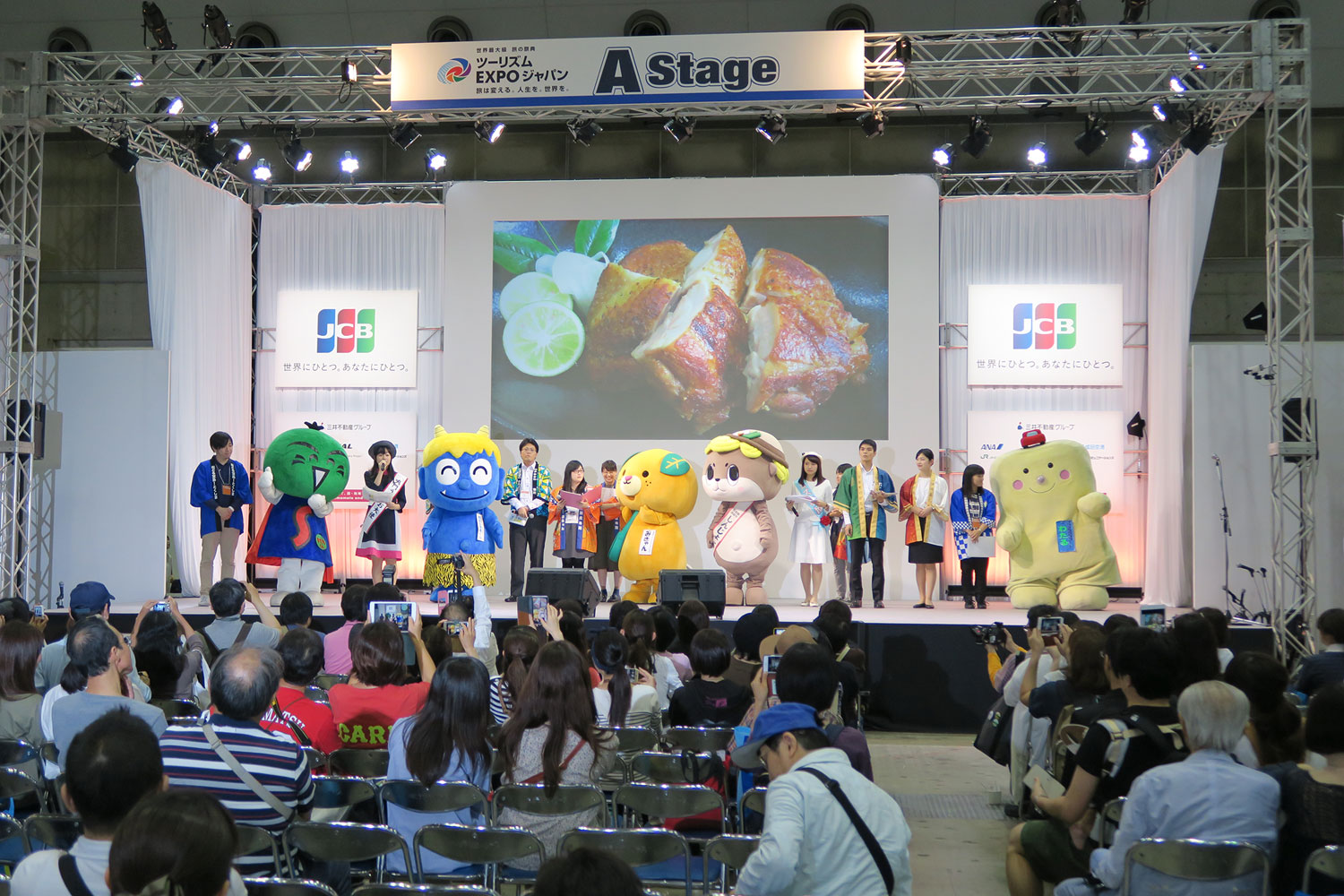
In practical terms, the first encounter can feel like stepping into a wide marketplace of curated intentions. There are destination booths, stage presentations, tasting counters, pamphlets, and the occasional hands-on demonstration that gives a region's identity some physical form. I find that this is where terms like 予約 (yoyaku, reservation; booking), meaning a reservation, and 会場 (kaijo, venue; exhibition hall), the venue floor or exhibition hall, become useful in conversation, because the event is as much about planning as it is about browsing. Another helpful word is 繋がる (tsunagaru, to connect; to be linked), to connect, which captures the way exhibitors and visitors use the fair to make contact across regions, sectors, and languages.
Because the show is so large, it rewards slow looking. The busiest stands can be the easiest to understand, but the quieter corners often reveal the event's deeper logic: a rural town introducing a new trail, a rail operator explaining access to a lesser-known watershed, or a regional tourism board framing cultivation, craft, and seasonal rhythm as part of a travel story. That attention to place is one reason the fair continues to matter.
Why it matters for Japan tourism
Tourism Expo Japan matters because it shows how Japan tourism is being assembled in real time. The event is not simply a calendar date; it is a meeting point where local ambitions and national strategy briefly overlap. Regions use the fair to speak for themselves, and that self-presentation often reveals which communities are investing in inbound tourism, which are seeking domestic travelers, and which are trying to bring attention back to familiar places with a new angle.
This is also where the question of labor becomes harder to ignore. A tourism event of this scale inevitably reflects the industry's pressure points, including the human shortage that many operators face. When exhibitors talk about service, transport, and reception, they are often describing not just demand but the staff needed to sustain it. The fair therefore becomes a useful place to observe how technology, staffing, and local expertise are being brought into conversation. The phrase ichioku soshin, or one origin point? No, not here. What matters instead is the everyday work of travel: reception, guidance, translation, logistics, and the small acts that make movement feel smooth.
For readers learning Japanese, tourism expo japan kanji is a practical search phrase because many of the terms encountered at the fair appear on signage, brochures, and schedule boards. A gentle way into the language side of the event is to collect the recurring vocabulary around maps, tickets, access, and exhibitions. Another useful phrase is ガイドル (gaidoru, multilingual guide/support staff), from guide, which often appears in the context of multilingual visitor support. The event is therefore not only a place to follow tourism trends, but also a low-pressure environment for noticing how language works in public space.
What visitors and trade guests usually look for
Trade visitors tend to look for partnerships, routes, packages, and regional projects that can be scaled or refined. Public visitors usually come for ideas, samples, and a sense of distance collapsing into possibility. A region that seems remote on a map can become legible through a well-made display, a short performance, or a conversation at a booth. That is one of the event's quiet strengths: it makes abstract geographies feel navigable.
- Travel professionals look for business meetings, product information, and destination updates.
- Public visitors look for trip ideas, regional specialties, and seasonal travel inspiration.
- Exhibitors use stage presentations, demonstrations, and brochures to tell their story.
- Observers interested in industry trends can track which themes recur across booths and sessions.
For anyone approaching the fair as a learner rather than a buyer, the best strategy is simple. Read the exhibitor list, note the regions and companies that appear most often, and follow the vocabulary that repeats across displays. If a trip to the fair is not possible, the event reports and surrounding coverage still offer a usable picture of what the industry is trying to say about itself. That is where Tourism Expo Japan 2026 coverage can help, especially for readers who want a concise news-oriented overview before going deeper.
Tourism trends visible on the show floor
Large travel fairs rarely speak in direct theses, but they are full of evidence. Tourism Expo Japan repeatedly shows how regions want to be seen: through food, craft, landscape, access, and seasonal experience. Some destinations lean into heritage and ritual, while others focus on contemporary convenience, family travel, or niche outdoor routes. Together, these choices show how the tourism industry is trying to balance memory and motion.
The role of 職人 (shokunin, artisan; skilled craftsman), skilled artisans, also matters here, even when the fair is not explicitly about craft. Their presence in demonstrations and regional displays gives texture to the idea of place. A lacquer bowl, a woven textile, a local snack, or a touring stage performance can all become part of a region's travel identity. In that sense, the fair is not just about destinations as coordinates. It is about cultivation, in the broadest sense: the patient work of making a place legible, attractive, and worth returning to.
Another layer of the event is its timing. A late-September fair allows regions to look ahead to autumn travel, year-end planning, and the next fiscal cycle. The dates matter because they make the event useful for both immediate bookings and longer-term forecasting. For a reader trying to learn how the tourism sector talks about itself, the show offers a compact vocabulary of aspiration.
How to follow along and learn more
The most practical way to learn from Tourism Expo Japan is to treat it as a recurring event with a clear rhythm. First, look at the organizer information from JTTA and JATA so the institutional shape of the fair is clear. Next, read the schedule to distinguish trade-only days from public access days, because that distinction changes the tone of coverage and the likely content of the halls. Finally, scan post-event reporting for the themes that return year after year: regional promotion, international visitors, transport links, and the persistent question of how to deliver hospitality at scale.
If the goal is language practice, the event also offers a useful reading path. Search tourism expo japan guide content, then build a small vocabulary list from the official materials or coverage: yoyaku, kaijo, omotenashi, tsunagaru, and gaidoru are all terms that help anchor the experience. For readers who want broader context, related coverage such as this German-language guide to Tourism Expo Japan shows how the fair is being framed for an international audience.
And so it becomes less a single exhibition than a living cross-section of Japan's travel industry: its ambitions, its labor pressures, its local pride, and its changing language. Tourism Expo Japan is large enough to feel like a map, but specific enough to reward close attention.
Frequently Asked Questions
What is Tourism Expo Japan?
Tourism Expo Japan is Japan's largest travel trade show. It combines a consumer-facing festival with a trade-focused marketplace.
When and where was Tourism Expo Japan 2026 held?
Tourism Expo Japan 2026 was held from 2026-09-24 to 2026-09-27 at Tokyo Big Sight.
Who organizes Tourism Expo Japan?
The event is organized by the Japan Travel and Tourism Association, or JTTA, and the Japan Association of Travel Agents, or JATA.
Which days were open to the public in 2026?
For Tourism Expo Japan 2026, the first two days were reserved for trade visitors, while 2026-09-26 and 2026-09-27 were open to the public.
Why do people follow Tourism Expo Japan news?
People follow Tourism Expo Japan news because the event is often described as a seismograph for Japan tourism trends, showing how destinations, regions, and travel providers present themselves.
