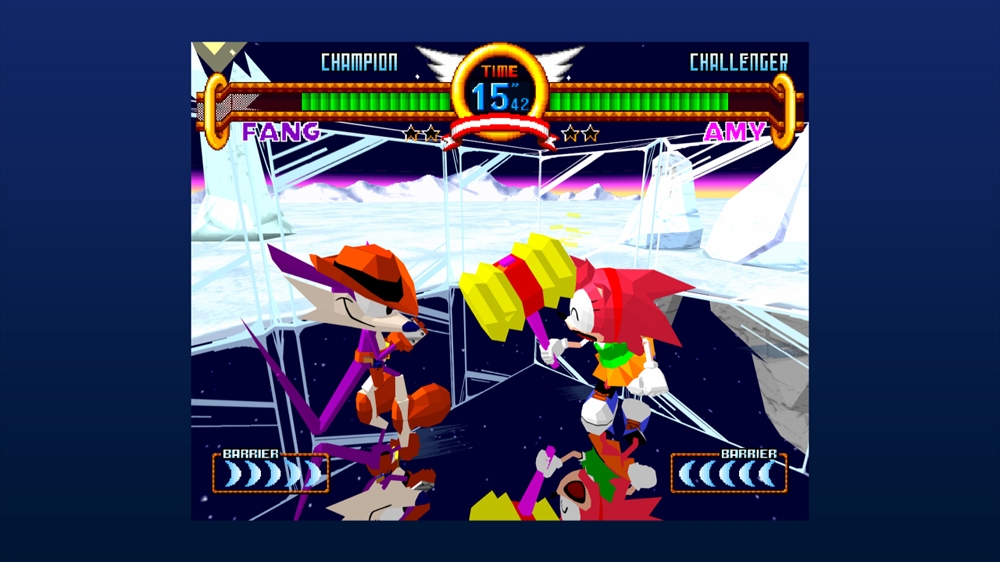
I keep thinking that the best tribute pieces don’t just repeat a character, they give him a new room to stand in. That’s exactly what this Sonic Art Exhibit does, with fan art, gallery energy, and just enough nostalgia to make the whole thing hum.
![Dragon Ball Z: Kakarot [Master Edition]](https://s.pacn.ws/1/p/1eh/dragon-ball-z-kakarot-master-edition-908785.1.jpg?v=t8ja8t&width=400)


35 Years of Sonic, and the Birthday Still Feels Fresh
The first time I went to Japan, I noticed how often anniversaries are treated like small cultural seasons, not just dates on a calendar. Sonic the Hedgehog, who first raced onto the Mega Drive in 1991, now has 35 years behind him, and Sega is marking that milestone with more than a tidy retrospective. It has joined forces with iam8bit for a Sonic Art Exhibit and gallery tour, plus a fan art showcase that gives the blue hedgehog the kind of afterlife only a true icon earns.
Seriously though: Sonic is one of those characters who moved from game mascot to shared language. He’s on lunchboxes, posters, sneakers, and in the memories of people who may not have touched a console in years. That makes this project feel right, because it doesn’t treat the anniversary as a museum label. It treats it as living culture, and that matters. Sounds good, right?
iam8bit and Sega Turn Nostalgia into an Exhibit
iam8bit has spent years making game art feel gallery-ready, and Sega knows the value of presenting its history with care. The partnership for Sonic's 35th birthday leans into both instincts. Instead of a single corporate image campaign, the project gathers new artwork, physical display pieces, and the sort of fan-made responses that show how far the character has travelled.
What many overlook: fan art is not just decoration, it’s a record of affection. A good showcase can reveal how people have adopted a character into their own visual language, whether that means bright pop colours, hand-drawn line work, or a more subdued, almost wistful take on the fastest thing alive. The Sonic Art Exhibit seems built for that range. It gives the 職人 (shokunin, artisan; craftsman) of fandom, the artists who keep refining their craft in public, a proper wall to stand on. Wait, there’s more.
Why this collaboration lands
To be fair: anniversary events can feel airless when they’re only about branding. This one works because it invites interpretation. Sonic is still Sonic, but the exhibit lets him become memory, speed, motion, joke, and symbol all at once. That flexibility is what keeps a character alive for 35 years. My tip: if you care about game history, don’t only look for the official key art. Look at how fans redraw the same figure again and again, because that’s where the real cultivation of a fandom often shows itself. Highly recommended: the slower you look, the more the pieces begin to speak.
Fan Art, Gallery Space, and the Pleasure of Looking Slowly
Plot twist: a hedgehog famous for velocity can make a very good subject for slow looking. A gallery setting asks for attention to line, texture, and choice, the details that usually blur past in motion-heavy game culture. In that sense, the Sonic Art Exhibit becomes a small watershed, where arcade memory meets curatorial care. The result is less about speedrunning a legacy and more about staying with it long enough to notice its seams.
And it gets better: the fan art component adds a human scale. Sega's official history matters, but fan work shows how a franchise lives in bedrooms, studios, school notebooks, and late-night drawing sessions. I especially like that this kind of display can bridge audiences, from lifelong Sega followers to Japanese learners who are just beginning to recognise words like 知識 (chishiki, knowledge), 想像 (souzou, imagination), and 思い (omoi, feeling; thought) in the way fans talk about games and art. Those words, loosely, are knowledge, imagination, and feeling, and Sonic has always carried all three. Simply brilliant.
What Japanese learners can take from it
Ever wondered why game events can be useful for language study? They’re packed with practical vocabulary, and they often reveal how Japanese pop culture talks about collaboration, celebration, and creation. Terms like 作品 (sakuhin, work; piece of art) for a work, 参加 (sanka) for participation, and 記念 (kinen, commemoration; anniversary) for commemoration come up often around exhibitions like this. Reading about a Sonic tribute in English is one thing, but noticing the Japanese ideas behind it gives the whole event more depth. It makes the birthday feel less like an announcement and more like a shared practice.
On the flip side: this is also a reminder that fandom is not separate from culture. It’s one of the places where culture gets handled, remade, and passed along. Sega and iam8bit have made a show that understands that. For nerds, artists, and Japan fans, that combination is hard to beat. But that’s not all.
Frequently Asked Questions
What is the Sonic Art Exhibit?
It is a Sega and iam8bit collaboration created to mark Sonic's 35th anniversary, combining gallery-style presentation with fan art and themed artwork.
Why is iam8bit involved?
iam8bit is known for turning game culture into physical art and collectible displays, so it fits naturally with a celebration that mixes nostalgia, design, and fandom.
Why should Japanese learners care?
Because game exhibitions often reflect Japanese pop culture vocabulary and ideas around art, celebration, and community participation.