Overview
Mount Fuji stands at 3,776 meters, Japan’s highest mountain, and it draws hundreds of thousands of climbers each year. That scale matters, because this is not a casual hillside walk. It is a high-altitude ascent with real weather risks, changing rules, and a strong need for preparation, especially if you are aiming for the famous sunrise climb. And yes, that sunrise summit push is part of why so many people come… a slow ribbon of headlamps on the mountain can feel almost unreal from a distance.
If you are trying to understand Your complete guide to climbing Mount Fuji, the first thing to know is simple: the best time to go is usually the official climbing season, from early July to early September. Outside that window, especially from mid-September to late June, snow, ice, and closed facilities make the mountain much more dangerous. So planning matters here, not just for comfort, but for safety.
For practical planning, it also helps to understand a few mountain-specific terms. A 山小屋 (yama-goya, mountain hut), meaning a mountain hut, is where many hikers rest overnight and some require reservations. A トイレ (toire, toilet), or toilet, is usually charged on Mount Fuji, so bring small cash and do not assume facilities are free. A 予約 (yoyaku, reservation), meaning a reservation, can also be required for trail access or huts depending on the season and system in place. And when people talk about the sacred atmosphere of the mountain, they are often referring to おもてなし (omotenashi, Japanese-style hospitality and attentive service), the careful, respectful hospitality and order that shapes many Japanese spaces.
The four official routes and how they differ
Mount Fuji has four official climbing routes: Yoshida, Subashiri, Gotemba, and Fujinomiya. Each one changes the feel of the climb, and the route you choose will affect your pace, your crowd levels, and even how hard the day feels on your legs.
- Yoshida Trail: the most popular route and the usual choice for first-timers. It starts at Fuji Subaru Line 5th Station at about 2,300 meters, which gives you a relatively manageable starting point and easy access to support facilities.
- Subashiri Trail: generally less crowded, and it joins the Yoshida route above the 8th station. It is a good fit if you want a slightly quieter ascent without going fully off the usual path.
- Gotemba Trail: the longest and toughest of the main routes. It begins at about 1,440 meters, so you are taking on a much larger vertical climb and a more demanding day.
- Fujinomiya Trail: the shortest route to the summit and starts at about 2,400 meters. Because of that higher starting point, it is often appealing to hikers who want a shorter overall climb, though shorter does not mean easy.
If you are comparing options, I think the most important question is not which route is ‘best’ in the abstract, but which one fits your experience, fitness, and schedule. Mount Fuji rewards honest planning. It does not really care about our ego [annoying, but fair].
How the season, access rules, and fees shape the climb
In recent years, authorities have been managing access more strictly to reduce overcrowding and protect the trails. That is a very Mount Fuji thing now: the mountain is beautiful, famous, and busy, so the balance between access and conservation has become part of the climb itself.
A mandatory hiking fee of 4,000 JPY applies to the main summer trails, and this fee is intended to reduce overcrowding, protect the mountain, and improve safety and infrastructure. In practice, it is tied to advance online payment and, in many cases, a trail-and-date reservation step. The old voluntary donation system has effectively been replaced by this more structured approach, so do not assume you can just show up and sort everything out at the gate.
That also means your planning window is a little more specific than it used to be. If you are researching Your complete guide to climbing Mount Fuji guide or checking current conditions, look for the route you want, the date you want, and the exact entry process that applies that season. The details matter, and they can change how smooth the whole trip feels.
For deeper background on route rules, seasonal limits, and the broader access picture, it is also worth reading Climbing Mount Fuji: Trails, Season, Rules and Fees (2026) and, if you are comparing timing, Mount Fuji Off-Season vs Peak Season: Best Time to Climb.
What the climb actually feels like
The classic Mount Fuji experience is a night ascent, starting from the 5th station in the evening and continuing until sunrise. It is popular for good reason: you climb through the dark, reach the top in time for dawn, and then descend after sunrise. The mountain’s long line of headlamps is one of those images that sticks with you even if you have only seen it in photographs… it feels communal, a little exhausting, and oddly moving.
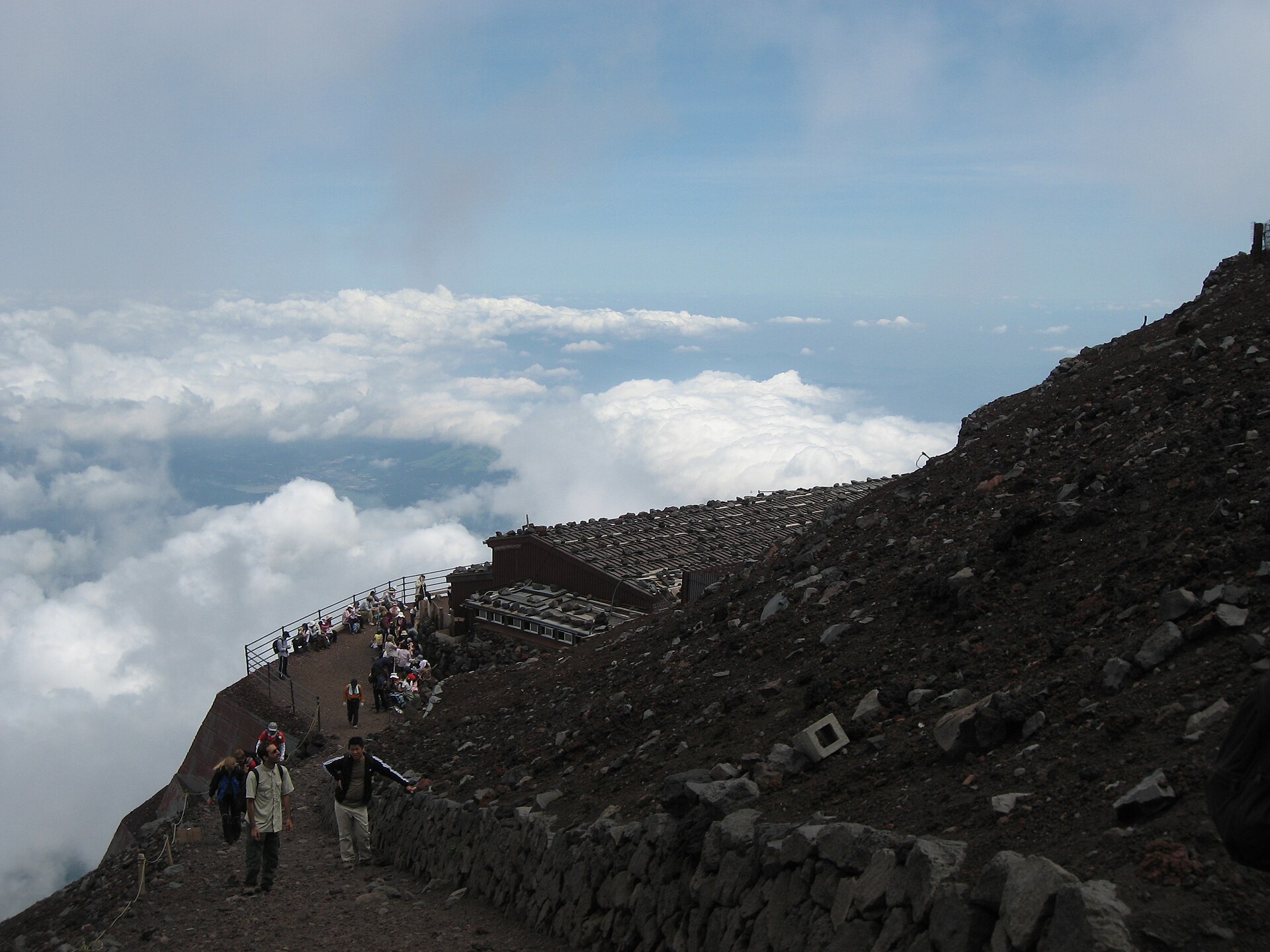
But night climbing also raises the stakes. Cold, poor visibility, and fatigue can make the route feel longer than expected, and it is easy to underestimate the climb when the summit is still hidden in darkness. The summit can drop below freezing even in July and August, and wind tends to pick up around the 8th station, which is exactly the kind of detail that sounds small until you are standing there in it.
That is why a responsible pace matters. Acclimatize slowly, keep an eye out for altitude sickness symptoms like headaches, nausea, and dizziness, and do not treat a tough hour as proof that the whole climb is fine. Mountains have a way of asking for patience [and Mount Fuji is very good at that].
Gear, food, and the little details people forget
A good Mount Fuji packing list is not glamorous, but it is the difference between an uncomfortable climb and a manageable one. Bring sturdy hiking boots, a windproof jacket, a headlamp, at least 2 liters of water, spare clothing, and a first-aid kit. For colder conditions, pack at least two layers on top, plus gloves and a hat.
- Sturdy hiking boots with a proper sole
- Windproof outer layer
- Headlamp with fresh batteries
- At least 2 liters of water
- Spare clothing for changing weather
- First-aid kit
- Two warm layers on top
- Gloves and a hat
Many mountain huts require reservations, so if you plan to sleep partway up, sort that early. Toilets are usually charged, so carry small change. And because the mountain is treated with real care, it is important to carry your trash back down and use official toilets even when it is inconvenient. That is part of the social contract here, simple as that.
Respecting the mountain as a sacred place
Mount Fuji is not only a climbing destination. It is also a sacred place with shrines, route markers, and ritual areas that should be treated with care. Do not touch ritual objects, do not disturb local ceremonial spaces, and keep your attention on the rules and markers that help protect both people and the mountain itself.
This is where travel in Japan often becomes richer the more seriously you take it. The climb is not just about reaching the summit; it is also about moving through a place with history, faith, and collective effort layered into the trail. And honestly, that is part of what makes the experience linger.
Related places and why Fuji still matters
People often compare Mount Fuji with other Japanese outdoor experiences, but it stands apart because it combines scale, accessibility, ceremony, and seasonal management in one place. If you are interested in where to experience Japan through the lens of hiking culture, this is one of the clearest answers. It is famous, yes, but it is also deeply instructive: how Japan handles conservation, access, mountain safety, and visitor flow is all visible here in a very practical way.
And if you are looking to study or talk about the mountain in Japanese, search terms like Mount Fuji kanji and learn Japanese Mount Fuji can help you connect the mountain to the language you will see on signs, booking pages, and route notices. Even if you are just starting out, that extra bit of language prep can make the planning process feel much more grounded.
For a closer look at the broader seasonal and route situation, you can also read Mount Fuji richtig besteigen: Regeln, Limits, Verantwortung. It is a useful companion piece if you want the rule side of the climb alongside the practical side.
Frequently Asked Questions
When is the best time to climb Mount Fuji?
The official climbing season is usually from early July to early September. Outside that period, especially from mid-September to late June, conditions are much more dangerous because of snow, ice, and closed facilities.
Which Mount Fuji trail is best for first-time climbers?
The Yoshida Trail is the most popular route and is commonly used by first-timers. It starts at Fuji Subaru Line 5th Station at about 2,300 meters.
How much does it cost to climb Mount Fuji?
A mandatory 4,000 JPY hiking fee applies to the main summer trails. It is tied to advance online payment and, in many cases, a trail-and-date reservation step.
Do I need special gear for Mount Fuji?
Yes. A practical checklist includes sturdy hiking boots, a windproof jacket, a headlamp, at least 2 liters of water, spare clothing, a first-aid kit, and extra cold-weather layers, gloves, and a hat.
Can I climb Mount Fuji at night?
Yes, many hikers do a night ascent to watch sunrise from the summit. It is common, but it also increases the risks of cold, poor visibility, fatigue, and underestimating the climb.