
If you’re learning Japanese, this shift is also a useful reminder that food words travel with history, trade, and regional identity. 抹茶 (matcha, powdered green tea) is no longer only a Japan story, and that makes the category worth watching closely.
China’s matcha boom is no longer a side story. It’s becoming a global market force, and Japan is feeling the pressure. For Japan fans and Japanese language learners, this is a good moment to look past the bowl and think about the supply chain behind it.
Matcha used to be strongly associated with Japanese tea culture, from 宇治茶 (uji-cha, Uji tea) in Kyoto to the ritual of 茶の湯 (chanoyu, tea ceremony; way of tea). That image still matters. But production volumes are shifting, and the biggest new player isn’t a small artisanal producer. It’s China, especially Guizhou province.
China’s Matcha Production Has Moved to the Front
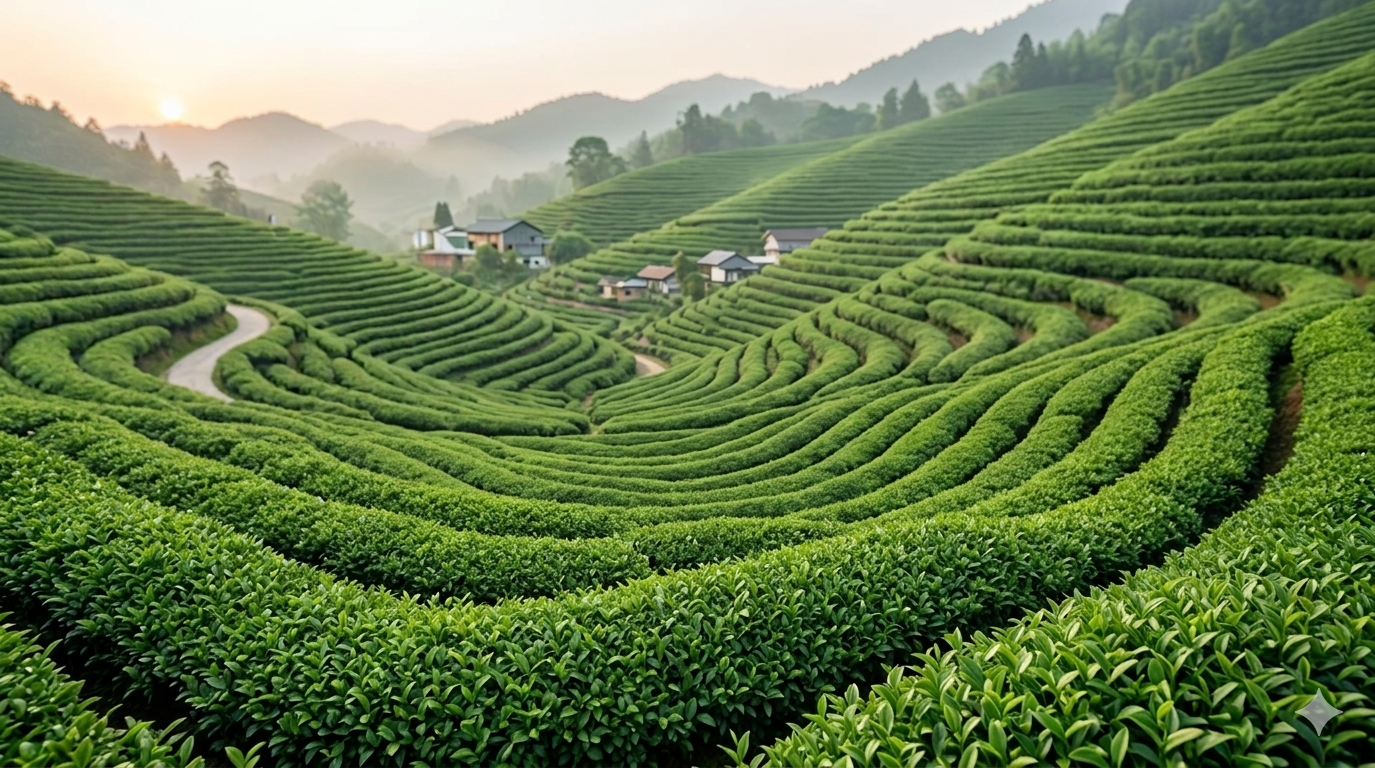
Fun fact: the latest market story isn’t about a new cafe trend, but about tea farms and processing lines. According to reporting from 36Kr Japan, China has become the largest matcha-producing source in the world. The centre of that growth is Tongren, in Guizhou, where local authorities and producers have turned matcha into an industrial category, not just a specialty product.
That matters because matcha isn’t easy to scale. You need shaded tea leaves, careful harvesting, steaming, drying, and grinding into a fine powder. The result has to stay bright green, aromatic, and low in bitterness. Once production gets large enough, the competition shifts from taste alone to logistics, consistency, and cost. Highly recommended: if you study food vocabulary in Japanese, this is a good place to learn terms like 碾茶 (tencha, tea leaves used for matcha), usu, and 煎茶 (sencha, steeped green tea), because each one sits in a different step of tea processing.
Why Tongren stands out
Tongren is often described as a matcha centre because the region has built an entire cluster around tea cultivation and processing. That includes farming, powder production, packaging, and export channels. In market terms, this isn’t just agriculture. It’s a supply system.
The scale is important. When one region can supply large volumes at lower cost, buyers take notice. Food manufacturers, dessert chains, and beverage brands want stable supply. They also want price predictability. That’s where China starts to look very strong.
On the flip side, scale doesn’t automatically replace reputation. Japan still has a premium image, especially for ceremonial-grade matcha. But for everyday drinks, lattes, ice cream, and bakery use, buyers often compare cost first. Convinced yet?
Japan’s Matcha Market Is Under Pressure
Unlike what we’re used to, Japan isn’t the only reference point anymore. That’s the real shift. Japanese matcha remains highly respected, but demand at home is becoming harder to manage because the product is being pulled in several directions at once.
First, domestic and export demand for matcha has been strong for years. Tourism helped. Social media helped. Specialty cafes helped. Then came a wave of global demand from consumers who wanted flavoured drinks, sweets, and wellness products. Japanese producers have had to balance export demand with domestic supply, and that balance isn’t always easy.
Quick detour: matcha isn’t a casual ingredient in Japan. It has cultural weight. It appears in tea ceremonies, seasonal sweets, and family gift-giving. That’s one reason price changes can feel sensitive. When production is tight, the market doesn’t simply adjust like a commodity market. It touches cultural value too.
At the same time, imported matcha from China puts pressure on pricing across the category. If consumers can’t tell the difference in a latte or cookie, they may choose the cheaper option. That creates a problem for Japanese producers who depend on a premium story. My tip: when you see matcha on a menu, ask whether it’s for flavour, ceremony, or brand image. Those are three different products, even if the word is the same.
Demand is changing, not disappearing
Japan’s matcha market isn’t collapsing. It’s getting more complicated. Premium buyers still want Japanese origin. Large-scale food businesses, however, often care about steady supply, fine powder texture, and green colour. Those requirements can be met by more than one country.
That means Japanese producers may need to keep narrowing their focus. High-grade tea, traceable origin, and careful milling are strengths that are hard to copy quickly. But if the product category keeps expanding into mass-market beverages and confectionery, Japan will face stronger competition from lower-cost production centres. Sounds good, right?
What This Means for Japan Fans and Japanese Learners
Ever wondered why matcha vocabulary shows up so often in Japanese food content? This is one reason. The word matcha is globally known, but Japanese context still shapes how people talk about quality. In Japanese, terms like maibutsu, 名物 (meibutsu, local specialty; famous product), and お土産 (omiyage, souvenir; gift) often appear in food discussions. They point to local pride and regional identity, not just flavour.
The best part: this is a practical topic for language learners. You can follow Japanese food news and build useful vocabulary at the same time. Try noticing words like genkyu, sanchi, kakuho, and kakekomi if you read market coverage. You’ll see how often food news overlaps with business language.
While we’re at it, Japan’s tea culture is still a strong reference point for the world. Uji remains an important name, and Japanese matcha brands continue to set the standard for ceremonial use. But China’s rise in Tongren shows how fast a food category can change once industrial production, local policy, and international demand line up.
What I especially like is that this story isn’t just about competition. It shows how a traditional ingredient can become a global product, then a mass-market ingredient, then a brand marker. That sequence is very modern, and very food-industry driven. Classic Japan, isn't it?
For Japan fans, the takeaway is simple. Matcha still carries Japanese cultural weight, but the market itself is broader than Japan now. If you want to understand the current tea world, you have to watch both Kyoto and Guizhou.
Personally, I think this makes matcha even more interesting to follow. It’s a small green powder, but it sits at the intersection of agriculture, craft, trade, and taste. That’s why food news like this is worth reading carefully. Convinced yet?
For more Japan stories like this, see more Japan news on jpnerd.com.
Frequently Asked Questions
Why is China’s matcha production getting so much attention?
Because it has grown large enough to challenge Japan’s long-held position in the global market, especially for lower-cost and industrial uses.
Does Japanese matcha still matter?
Yes. Japan still has a strong premium reputation, especially for ceremonial and high-grade tea.
Why is Tongren in Guizhou mentioned so often?
It has become a major production centre with a full matcha supply chain, from tea farms to processing and packaging.


