
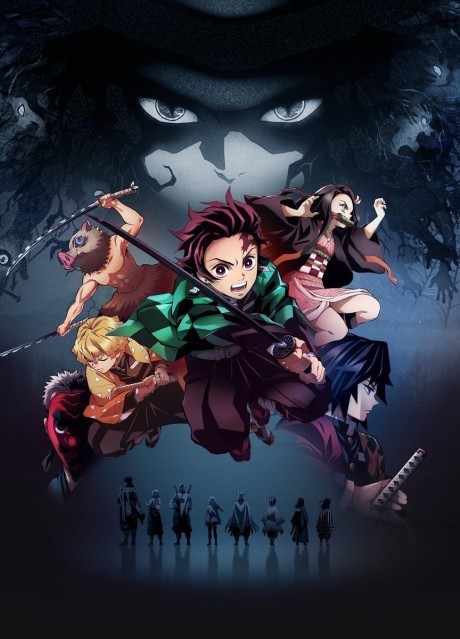
It’s not a giant mainstream campaign; it’s a tightly focused product move tied to 劇場版 (Gekijoban, theatrical film) Kimetsu no Yaiba: 無限城編 (無限城 (Mugenjo)-編 (hen), Infinity Castle arc) Dai-issho: Akaza 再来 (sairai, return). And honestly, that narrow focus is exactly what makes it interesting.



Ever wondered why some anime merch feels more exciting when it’s very specific? Demon Slayer Unlimited Castle is a good example, because the new Akaza sound prize release from S-Trust doesn’t try to please everyone. It speaks directly to fans of one character, one movie chapter, and one scene-heavy moment in the franchise.
No exaggeration: this is tied to Gekijoban Kimetsu no Yaiba: Mugenjo-hen Dai-issho: Akaza sairai, the first chapter of the Infinity Castle film project. That title alone tells you where the emphasis is, with a theatrical release built around the return of Akaza, one of the most recognisable villains in the series. For Japanese learners, this is also a nice reminder of how Japanese movie titles often stack descriptive phrases, then close with a dramatic subtitle that carries the emotional weight. Personally...
What the Akaza sound prize actually is
Trust me on this one: the phrase “sound prize” sounds odd at first if you’re used to standard figures or acrylic stands. In Japanese prize item culture, though, it makes perfect sense. A prize item can be something you win through arcade-style machines, campaign draws, or themed promotions, and a “sound” version usually means there’s an audio gimmick built into the product, or a design concept centred on sound effects, voice clips, or an auditory theme.
To be fair, that’s part of the appeal. Anime fans don’t just want a static display piece; they want something that feels like it came out of the story world. With Akaza, that makes even more sense, because his presence in Kimetsu no Yaiba is tied to intense fight scenes, sharp dialogue, and a very specific atmosphere. S-Trust is leaning into that feeling with the flash stage series format, which suggests a staged rollout rather than a one-time, everything-at-once drop. Sounds good, right?
Why collectors pay attention
Know that feeling when a merch line is so targeted that you instantly know who it’s for? That’s what’s happening here. A lot of general anime goods disappear into the same pool, but a character-specific prize item linked to a theatrical chapter gives collectors a reason to track release timing, availability, and regional distribution. If you’re the kind of fan who already knows Akaza’s importance in the Mugenjo-hen storyline, this isn’t just another trinket, it’s a small piece of franchise timing.
What I especially like is that the flash stage series approach creates a sense of momentum. Instead of one big announcement and done, you get a sequence that can keep fans watching for the next item, the next variation, or the next related prize. Sounds weird, but it’s true. That kind of release structure works especially well in Japan, where limited runs, capsule toys, and campaign-linked goods often build more excitement than large, unfocused merch pushes. But that’s not all.
Demon Slayer Unlimited Castle and the Akaza comeback angle
Imagine a narrow alley in Tokyo. You pass a ガチャポン (gachapon, capsule toy machine) wall, then a crane game corner, and suddenly there’s a display tied to a major anime film. That’s the sort of retail ecosystem this Akaza sound prize fits into. The source announcement connects the item to the film title Gekijoban Kimetsu no Yaiba: Mugenjo-hen Dai-issho: Akaza sairai, which makes the timing especially sharp, because Akaza’s return is the whole hook.
Speaking of which, this matters for fans who follow Japanese release culture closely. Movie-adjacent merch in Japan often lands in a very narrow window, when buzz is still fresh and social media discussion is high. If you know the words sairai, meaning return, and daii-ssho, meaning first chapter, the title already tells the story structure. That’s a useful little language lesson, and it also shows how Japanese marketing loves precision. A great example: one subtitle can carry both plot and product strategy. Personally...
Why the flash stage format matters
On a related note, “flash stage” sounds like a fast-moving promotional series, and that’s probably the point. It suggests a staged reveal that rewards fans who keep checking back, rather than a single static listing. For a character like Akaza, who already has strong visual identity and a clear fan base, that format is smart. It creates anticipation, and anticipation sells.
From a Japan fan perspective, this is also where local merch culture becomes more interesting than people expect. A release like this isn’t only about ownership, it’s about being part of the moment. You see the announcement, you recognise the title, you know the chapter, and suddenly you’re following the same information stream as domestic fans. If you’re learning Japanese, that’s a great habit to build, because terms like 編集 (henshu, editing), シリーズ (shiriizu, series), and sairai show up constantly in entertainment news, even when the article itself is in English. Not bad, right?
What Japanese learners can take from this release
For language learners, a product announcement like this is a nice mini reading exercise. The most useful vocabulary is often the simplest: gekijoban for theatrical film, hen for chapter, sairai for return, and Mugenjo for infinity castle. You don’t need to memorise every kanji to get value from the title; you just need to notice how Japanese packs meaning into compact phrases.
My tip: when you read anime news, keep a tiny notebook of recurring words. If a release uses a character name plus a dramatic subtitle, chances are that same structure will appear again in game updates, event announcements, and figure listings. The more you spot patterns, the easier Japanese marketing text becomes to follow. And with Demon Slayer, those patterns show up all the time because the franchise is so heavily merch-driven. Highly recommended: use these announcements as bite-sized reading practice.
Oh, almost forgot: the fandom context matters too. Demon Slayer merchandise often lands alongside theatrical releases, store campaigns, or lottery-style goods, and that helps explain why even a narrow item like an Akaza sound prize can generate attention. It’s not just a product, it’s a timestamp. If you’re watching Japan from abroad, that’s a helpful way to understand why a small item can feel like a big event. But that’s not all.
Frequently Asked Questions
What is the Akaza sound prize?
It is a themed prize item connected to Akaza and the Infinity Castle movie chapter, released through S-Trust’s flash stage series.
Why is this release notable?
It ties a specific character product to a major Demon Slayer theatrical chapter, which makes it highly targeted for collectors.
Can Japanese learners get anything from this news?
Yes. The title and product wording are good practice for learning how Japanese entertainment news names films, chapters, and promotional goods.


