
It also tells us something useful as learners: Japanese writing isn’t just about reading symbols. It’s about period, context, and what a character would’ve actually seen on the page.
![Dragon Ball Z: Kakarot [Master Edition]](https://s.pacn.ws/1/p/1eh/dragon-ball-z-kakarot-master-edition-908785.1.jpg?v=t8ja8t&width=400)


Ghost of Tsushima and the fear of getting Japan wrong
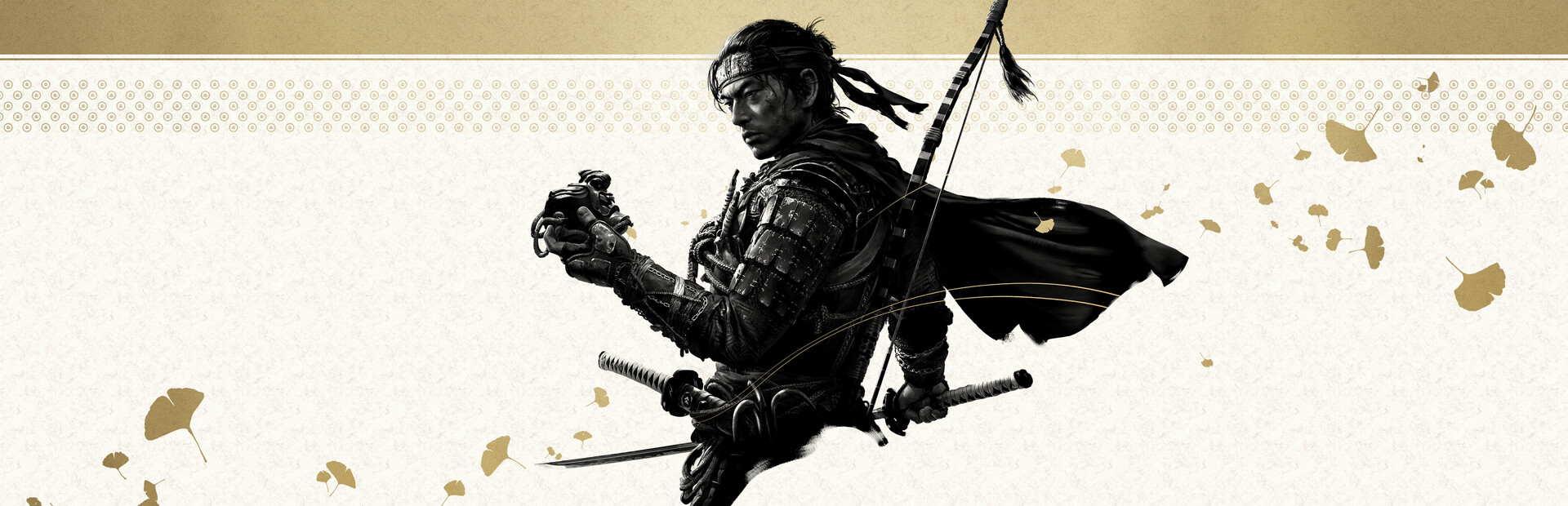
Ghost of Tsushima launched in 2020, and it immediately stood out. Not just for its sword fights and wind-swept fields, but for the care behind the setting. The story takes place in 1274, during the Mongol invasion of Tsushima Island, and Sucker Punch knew from the start that a Japan-themed game would be watched very closely.
Here’s the thing: when you make a game about 侍 (samurai, samurai warrior), shrines, banners, armour, and old place names, small mistakes stop being small. A wrong crest gets noticed. A weird-looking sign gets noticed. And yes, the 漢字 (kanji, Chinese characters) get noticed too. The developers reportedly worried about offending Japan, and that worry shaped how Sony and Sucker Punch approached the project.
Take Ghost of Tsushima, for instance. The team didn’t treat Japanese decoration as flavour text. They treated it as historical material. That means researching how characters were written, what was used in the late Kamakura period, and what would’ve looked plausible in 13th-century Japan. Sounds fussy? It is. And that’s exactly why it matters.
Why Sony checked each kanji historically
According to reporting from VidaExtra, the team at Sony verified the historical use of each kanji. That’s a striking level of checking. Not just the overall mood, not just the architecture, but the written characters themselves.
Here’s the catch: kanji aren’t timeless stickers. A character can be ancient, but the way people write it, combine it, or prefer it can change over time. Some forms were common in one era and unusual in another. Others existed in formal writing but not in everyday use. If you want a game set in 1274 to feel right, you have to ask what a literate person on Tsushima might’ve recognised. That’s a very different question from “does this look Japanese?”
That level of verification also shows a practical fear: the fear of getting Japan wrong in front of Japanese players. I think that’s healthy, by the way. Not because it guarantees perfection, but because it forces teams to respect the material. Too many games use Japan as a visual costume. Ghost of Tsushima tried to do more than that. Honestly, it paid off.
What historical kanji checking means in practice
Script, period, and audience
Strictly speaking, historical verification of kanji means checking whether the script matches the period, region, and social setting. In a game like this, that can affect signs, letters, temple inscriptions, clan names, and UI text. It might also influence whether the team uses older forms, later simplifications, or a more stylised calligraphy style.
For Japanese learners, this is worth knowing: kanji aren’t just vocabulary units. They carry history. A learner may know 城 (shiro) for castle and 山 (yama) for mountain, but the written forms can tell a bigger story. Some characters have variants. Some look different in older documents. Some feel formal, literary, or old-fashioned. Context decides a lot more than beginners expect.
Oh, and almost forgot: this is where historical authenticity becomes a language lesson. A game can introduce you to a place, but it can also introduce you to the habit of asking, “Which form is this, and why here?” That question is useful whether you’re reading a shrine plaque, a museum label, or a menu in a ryokan with very enthusiastic brushwork.
Why this matters for Japan fans
Compared to back home, where a fantasy setting can get away with loose visual shorthand, Japan-themed media often gets judged on precision. That’s partly because Japanese writing is so visible. You can fake a castle silhouette more easily than you can fake a believable inscription. The writing is a test you can’t really hide from.
My tip: if you like Ghost of Tsushima, use it as a reason to look at actual historical Japanese materials. Even a small habit helps. Compare game text with photos of old temple signs, edo-era prints, or museum captions. You don’t need to become a specialist. You just start noticing patterns. And that’s where learning gets interesting.
Sucker Punch, Sony, and the work behind the atmosphere
Sucker Punch is an American studio, based in Bellevue, Washington. That matters because Ghost of Tsushima wasn’t a local Japanese studio making a domestic history game. It was an outside team trying to do justice to Japan, with Sony’s support and scrutiny behind it. The gap between inspiration and responsibility can be large. The team seems to have understood that.
There’s a reason the game was praised in Japan as well as abroad: the developers did their homework. They worked with consultants, studied landscapes, and paid attention to the language of the period. The kanji check is just the nerdy tip of a larger iceberg. But it’s a revealing tip. It shows a studio that knew where mistakes would hurt most.
And yes, this is the sort of detail that Japan fans love. Not because it’s flashy. Because it’s specific. A game can have stunning combat and still get remembered for a tiny text decision. That tells you something about Japanese studies, really. The surface is never just the surface.
Before I forget: if you enjoy this kind of behind-the-scenes Japan story, you might also like other articles on more Japan news on jpnerd.com. There’s always another layer to peel back.
Frequently Asked Questions
Did Ghost of Tsushima really check historical kanji?
Yes. Reporting on the game says Sony verified the historical use of each kanji to avoid mistakes in the written Japanese.
Why would a game studio worry about that?
Because a Japan-set game is judged on details. If the writing looks wrong, Japanese players will notice quickly.
What can Japanese learners take from this?
That kanji are tied to history and context. The same character can feel different depending on the period and setting.


