
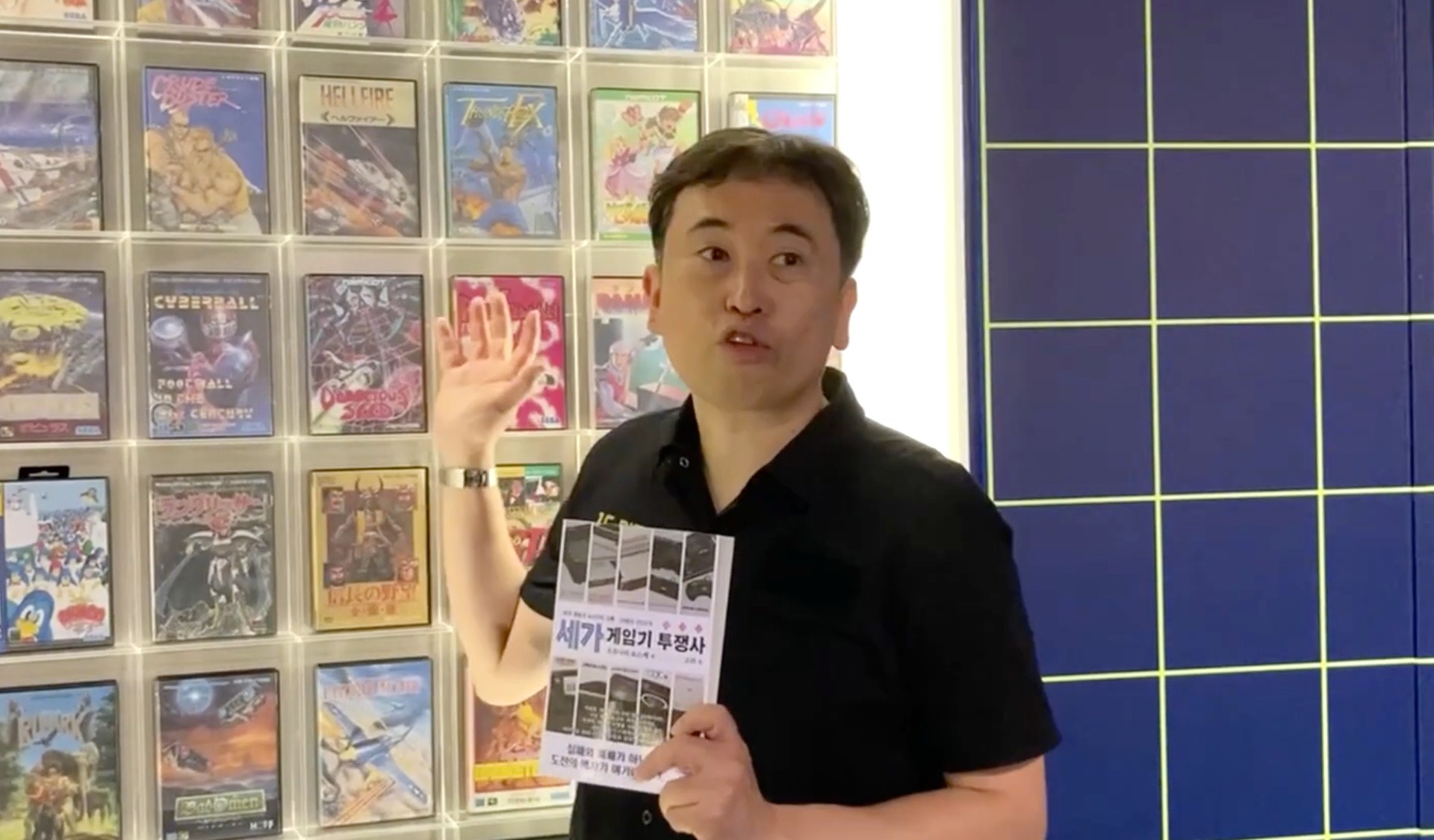
For Japan fans, this is more than trivia. It’s a look at how one of the country’s most important game companies thinks about memory, code, hardware, and legacy.
![Dragon Ball Z: Kakarot [Master Edition]](https://s.pacn.ws/1/p/1eh/dragon-ball-z-kakarot-master-edition-908785.1.jpg?v=t8ja8t&width=400)


What happens when a company has decades of arcade cabinets, home consoles, prototype builds, and forgotten oddities sitting inside one giant archive? Sega’s answer, at least according to Yosuke Okunari, is simple: keep making games playable. That sounds obvious, but for a company with hardware history as messy and wide as Sega’s, it’s a serious mission, not a slogan.
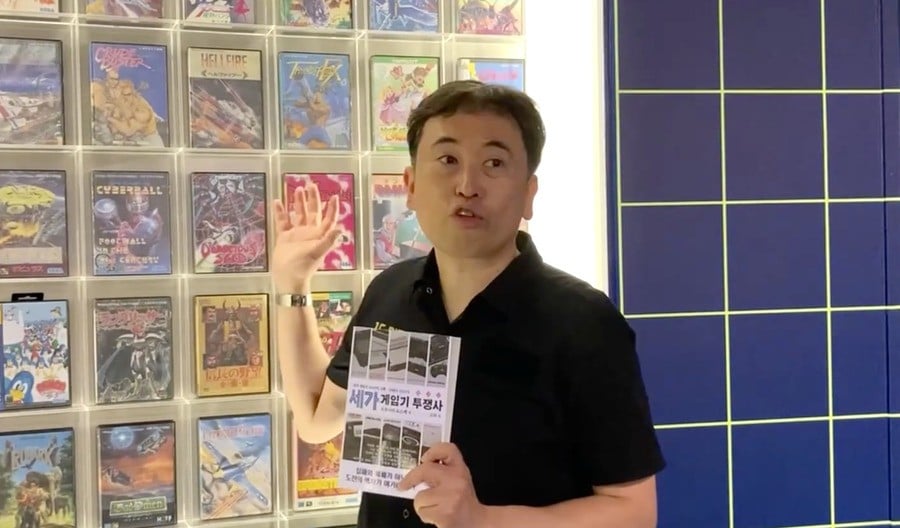
The reason is simple: Sega’s library stretches across arcade, Mega Drive, Saturn, Dreamcast, and a mountain of regional releases and experiments. Okunari, who’s long been one of Sega’s most talkative preservation-minded creators, explained in a Time Extension report that the company has a massive internal database of its games, and that this archive is central to how Sega thinks about its own history. Sounds nerdy? It absolutely is. Pretty brilliant, too.
Yosuke Okunari and Sega’s preservation obsession
Yosuke Okunari isn’t some random exec dropping vague nostalgia lines in an interview. He’s spent years working on Sega projects that lean hard into the company’s back catalogue, from retro collections to hardware history talk that gets collectors and preservation fans excited. His name’s become shorthand for a very specific kind of Sega thinking, one that values old code, old systems, and the people who still care about them.
In the Famitsu interview referenced by the report, Okunari made it clear that the end goal is to make every Sega game playable. Let’s be honest: that’s a huge statement. Sega has released hundreds upon hundreds of titles, from coin-op classics like Space Harrier and Out Run to home hits like Sonic the Hedgehog, Virtua Fighter, and Shenmue. A plan like that isn’t just about nostalgia, it’s about engineering, rights, and survival.
From my experience, this is where Sega often feels more interesting than its rivals. Nintendo is careful, Sony is polished, but Sega has that slightly wild archive energy, like a cluttered 床の間 (tokonoma, alcove) filled with treasures nobody quite wants to throw away. Compared with back home, where old games are often treated as disposable, Sega’s internal history sounds almost museum-like. Convinced yet?
Inside Sega’s massive internal database
Here’s the deal: the real star of this story isn’t a single game, but Sega’s internal database. According to the interview, this archive stores information about the company’s games in a structured way, making it possible to track what exists, what was released, and what might still be worth bringing back. That matters because preservation starts with knowledge, and knowledge starts with records.
Think about what that means in practice. If a 1980s arcade title had a regional revision, a different board configuration, or a version with missing assets, Sega can’t just rely on memory or old magazine scans. It needs internal data, documentation, and whatever source material survived in its offices and labs. By the way, this is the sort of detail that makes preservation fans go quiet for a second, then start taking notes. It’s not glamorous, but it’s the backbone of emulation, ports, and modern re-releases.
Why this matters for Japanese learners
If you’re studying Japanese, this is a great topic for vocabulary building. Words like 保管 (hokan, storage; safekeeping), 資料 (shiryou, materials; documents), and システム (shisutemu, system) come up constantly in tech and preservation contexts, and Sega’s archive story gives them real-world weight. The first time I went to Japan, I was struck by how often people talk about keeping records, whether it’s train timetables, game ephemera, or shop histories. That same habit shows up here, just in a very Sega way. Sounds good, right?
Why making every Sega game playable is so hard
Know that feeling when you think a retro re-release is just a quick port? Sega’s archive story should cure that illusion fast. A game can exist on paper and still be impossible to play without the original hardware, dev tools, legal clearance, and enough surviving source material to rebuild the thing properly. That’s before you even get to arcade boards, custom chips, and region-specific quirks.
Okunari also admitted, in the report’s framing, that he’ll probably retire before the mission is complete. That’s not defeat, it’s realism. Sega’s catalogue is enormous, and some titles are lost to time, fragmented across offices, or tied up in rights issues. But even a partial success would be huge. A playable archive would mean more than ports for Switch or Steam, it would mean protecting Sega’s own memory from decay.
Before I forget, this is also why Sega’s retro releases often feel so loved by fans. When the company does it well, it’s not just slapping an old logo on a new menu. It’s closer to restoration. My tip: if you’re into Japanese game history, keep an eye on which titles Sega chooses for collections, because those picks often hint at what the archive can support right now. Insider tip: that selection process tells you a lot about the company’s priorities. Wild, isn’t it?
Sega history, from arcade roots to modern reissues
Let’s be honest: Sega’s identity has always been tied to movement, speed, and experimentation. The company’s arcade era gave us loud, stylish, coin-eating machines, while the home-console years brought battles with Nintendo, bold hardware bets, and unforgettable software. That history is exactly why an internal mega-archive matters, because Sega isn’t preserving a neat line, it’s preserving a maze.
The company’s hardware timeline alone is a preservation headache. Mark III in 1985, Mega Drive in 1988 in Japan, Saturn in 1994, Dreamcast in 1998. Each system had its own architecture, its own development habits, and its own weird little ecosystem. Add arcade boards to that, and you get a catalogue that can’t be handled like a simple spreadsheet. It needs a living database, and then it needs people like Okunari who actually want to use it.
What I especially like is the attitude behind this. Sega isn’t pretending the past can be frozen neatly in amber. It’s trying to make the past usable, which is a much more Japanese kind of preservation than people outside Japan sometimes expect. It’s practical, patient, and a little obsessive in the best way. From my experience...
Frequently Asked Questions
Who is Yosuke Okunari?
He is a longtime Sega figure associated with retro projects, preservation-minded interviews, and company history work.
What is Sega’s internal game database?
It is a large archive of Sega’s own historical game records, used to track and preserve the company’s software legacy.
Why is this important for game preservation?
Because old games need records, source material, and technical context before they can be restored, ported, or emulated properly.
Sources
For more updates like this, see more Japan news on jpnerd.com.

