The series has always been bigger than its own pitch, and this release fits that pattern neatly. If you care about Japanese pop culture, game releases, or the strange way football anime still exports so well, this one’s worth a look.
![Dragon Ball Z: Kakarot [Master Edition]](https://s.pacn.ws/1/p/1eh/dragon-ball-z-kakarot-master-edition-908785.1.jpg?v=t8ja8t&width=400)
![Startup Company [Console Edition] (Limited Edition)](https://s.pacn.ws/1/p/157/startup-company-console-edition-limited-edition-741799.16.jpg?v=ry4mm8&width=400)
![Startup Company [Console Edition]](https://s.pacn.ws/1/p/157/startup-company-console-edition-741779.10.jpg?v=ry4ngq&width=400)
Captain Tsubasa: My Golden XI has launched as a worldwide mobile game, and that’s the headline, no extra smoke machine required. The announcement matters because this isn’t some vague teaser with a “coming soon” buried in the fine print. It’s a proper global service start, which means fans outside Japan can actually play it now instead of waiting for the usual drip-feed of regions and apologies.
For a franchise like Captain Tsubasa, that detail matters. The series has spent decades proving that football anime can travel, and it keeps doing so because the core fantasy is easy to grasp: the pitch is a stage, the players are exaggerated, and every match feels like a duel with consequences. My Golden XI is built on that same premise, just translated into a mobile format where reach, retention, and nostalgia all need to coexist without tripping over each other. Not an easy job. Mobile rarely forgives sloppy design, even when the brand is doing half the marketing for you.
Here’s the thing: the appeal isn’t only that this is Captain Tsubasa, it’s that the publisher is clearly betting on a worldwide audience from day one. That’s a different proposition from a domestic release that gets exported later, often with half the community already scattered. A clean global launch says confidence. It also says the company wants to turn an old, beloved IP into a living service, not a museum exhibit. Which, frankly, is the correct move if you want people to keep spending time in the thing.
Captain Tsubasa and the logic of global fan service
Captain Tsubasa has never been a niche title inside Japan, but its overseas life is where the brand becomes especially interesting. The manga by Yoichi Takahashi started in 1981, and the anime adaptation helped turn it into a shared memory across multiple countries, especially in Europe, Latin America, and parts of Asia where football already had the cultural oxygen it needed. That combination did the work. Fans didn’t need a local explanation for why a spectacular bicycle kick mattered. They already understood the language of the sport.
Fun fact: this is one of the reasons Japanese sports anime export so well when they’re built around a real-world game. The rules are familiar, the emotional stakes are universal, and the series can still layer in its own exaggerated visual grammar. Captain Tsubasa doesn’t ask you to learn a new sport. It asks you to accept that a shot can be so dramatic it practically bends the laws of physics. Classic Japan, isn’t it?
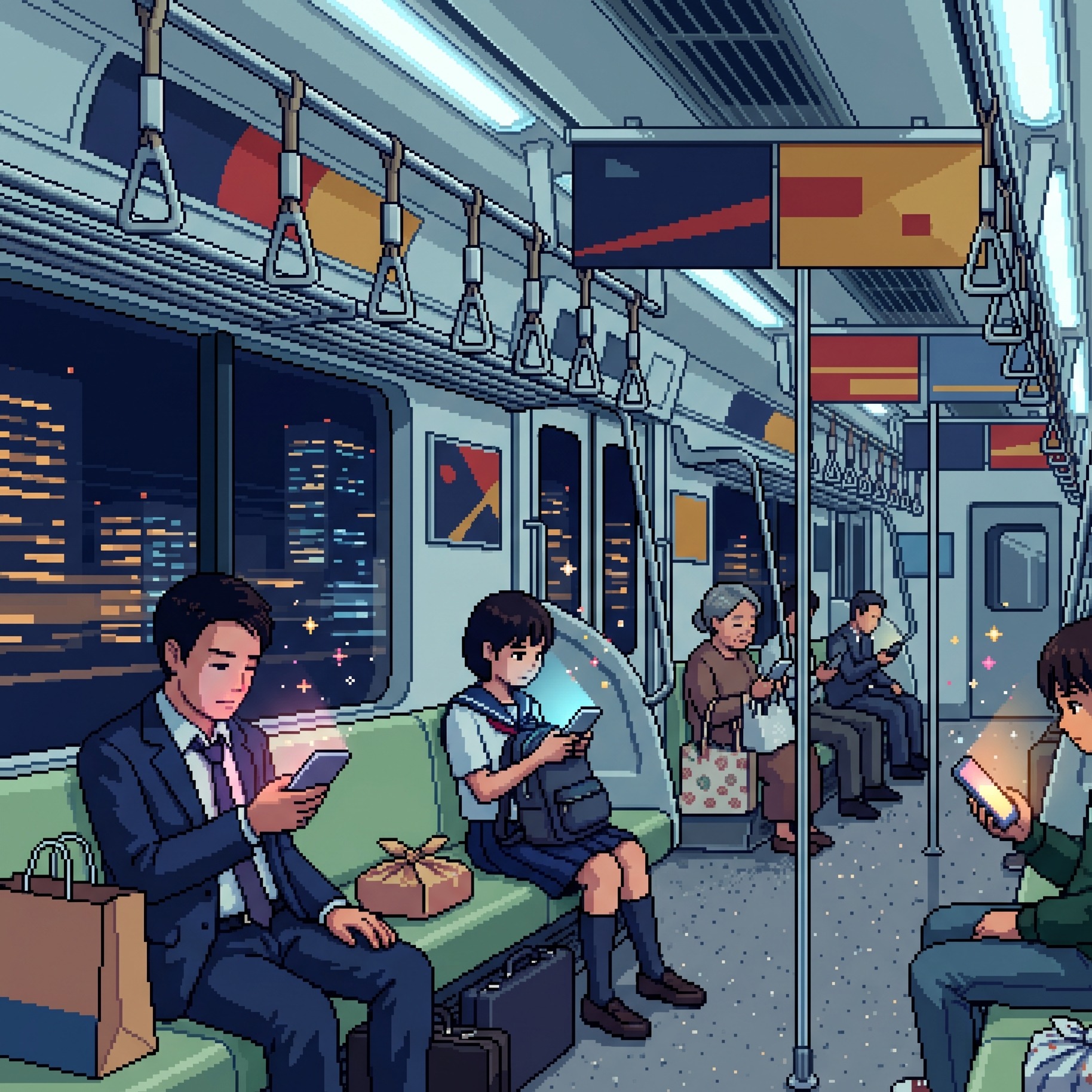
That’s why a mobile game like My Golden XI makes strategic sense. It gives the franchise a live platform where old fans can reconnect and newer players can arrive with only a passing knowledge of Tsubasa Ozora, Kojiro Hyuga, or Genzo Wakabayashi. Mobile is also the format most likely to catch people during commutes, breaks, or those oddly Japanese moments of dead time between obligations. You know the rhythm: train, phone, match, repeat.
My Golden XI on mobile: what the worldwide launch actually means
Picture a narrow alley in Tokyo. A small shop is still open, a TV inside is showing sports highlights, and someone nearby is tapping through a game on a phone with one hand. That’s the ecosystem this release is aiming for, even if the audience now stretches far beyond Japan. My Golden XI is a mobile game, so its success will depend on fast interaction, recognisable characters, and a loop that doesn’t become a grind disguised as enthusiasm. Mobile games can be brutally honest about their own weaknesses. If the pacing is bad, players leave. If the presentation is limp, they leave faster.
What I especially like is the clarity of the release decision. A worldwide service start cuts through a lot of the usual nonsense. No ambiguous regional testing. No fan forums filled with translation scraps and rumours about delayed servers. Just a direct launch that says, “Here it is, go play.” That kind of straightforwardness is refreshing, and it’s also the right call for a franchise with an international fan base that already knows how to find things on the internet, thank you very much.
On the flip side, a global release also raises the standard. If you promise worldwide access, you’re signing up for different expectations around localisation, server stability, event timing, and monetisation. The audience in Japan may tolerate one style of ガチャ (gacha, random-pull monetisation) economy; overseas players may not. That tension will decide whether My Golden XI becomes a long-running service or just another brief appearance in the app store graveyard. And yes, the graveyard is crowded. Mobile never stops collecting its dues.
Why this matters for Japanese learners and Japan fans
For Japanese learners, this is useful in a practical way, not just a fandom one. You’ll keep seeing terms like 最強 (saikyo, the strongest), team, match, or goal in marketing, but you’ll also run into the franchise vocabulary around soccer itself: シュート (shuto) for shot, パス (pasu) for pass, and 天才 (tensai, genius) when a character is being treated like a miracle child, as anime often does. That’s a very readable entry point if you’re building listening or reading confidence around sports media. You already know the context. The language gets less intimidating because the action is obvious.
Hand on heart: sports anime is one of the easiest genres to use as a study bridge if you pick the right title. The visual cues do half the decoding, and Captain Tsubasa is especially friendly because the emotional beats are simple even when the animation goes full melodrama. You don’t need to catch every line to follow a match. You just need enough Japanese to recognise who’s attacking, who’s defending, and who’s about to deliver the inevitable impossible shot. From my experience, that’s a very efficient way to build vocabulary without feeling like you’re stuck in a textbook. Sounds good, right?
What this release says about old anime brands in mobile
Here’s the thing: legacy anime brands only survive in games if the publisher understands what the brand actually is. Captain Tsubasa isn’t valuable because it’s old. It’s valuable because it has a specific emotional structure, one that maps cleanly onto competition, teamwork, rivalry, and escalation. My Golden XI is trying to cash that in globally, and I think that’s sensible. If you’ve got a property with decades of goodwill, you use it where it can breathe.
For example, the mobile format lets the game keep the franchise visible between major anime waves, manga anniversaries, and licensing pushes. That’s the modern life cycle of a classic IP, whether purists like it or not. The trick is execution. If the game respects the characters and gives players a reason to stay, it can extend the brand’s life in a way that feels earned. If it doesn’t, nostalgia will only carry it for so long. Nostalgia is generous, but not immortal.
My tip: if you’re a Japan fan who’s been waiting for a fresh Captain Tsubasa project with accessible entry, this is the one to watch. It’s not trying to reinvent the franchise, and that’s probably wise. It’s trying to make the franchise usable again, on phones, across borders, in a format that still has room for football drama. That’s a much better goal than “surprise the market”, which is usually code for “we didn’t plan this properly”. Which is why this global mobile launch is worth noting, and now you know exactly why that is.
Frequently Asked Questions
What is Captain Tsubasa: My Golden XI?
It is a mobile game based on the Captain Tsubasa franchise, launched as a worldwide service.
Why does the global launch matter?
It means players outside Japan can access the game at the same time, which usually improves fan reach and discussion.
Is this relevant for Japanese learners?
Yes. Sports anime and games are a practical way to pick up common vocabulary, character names, and match-related expressions.