
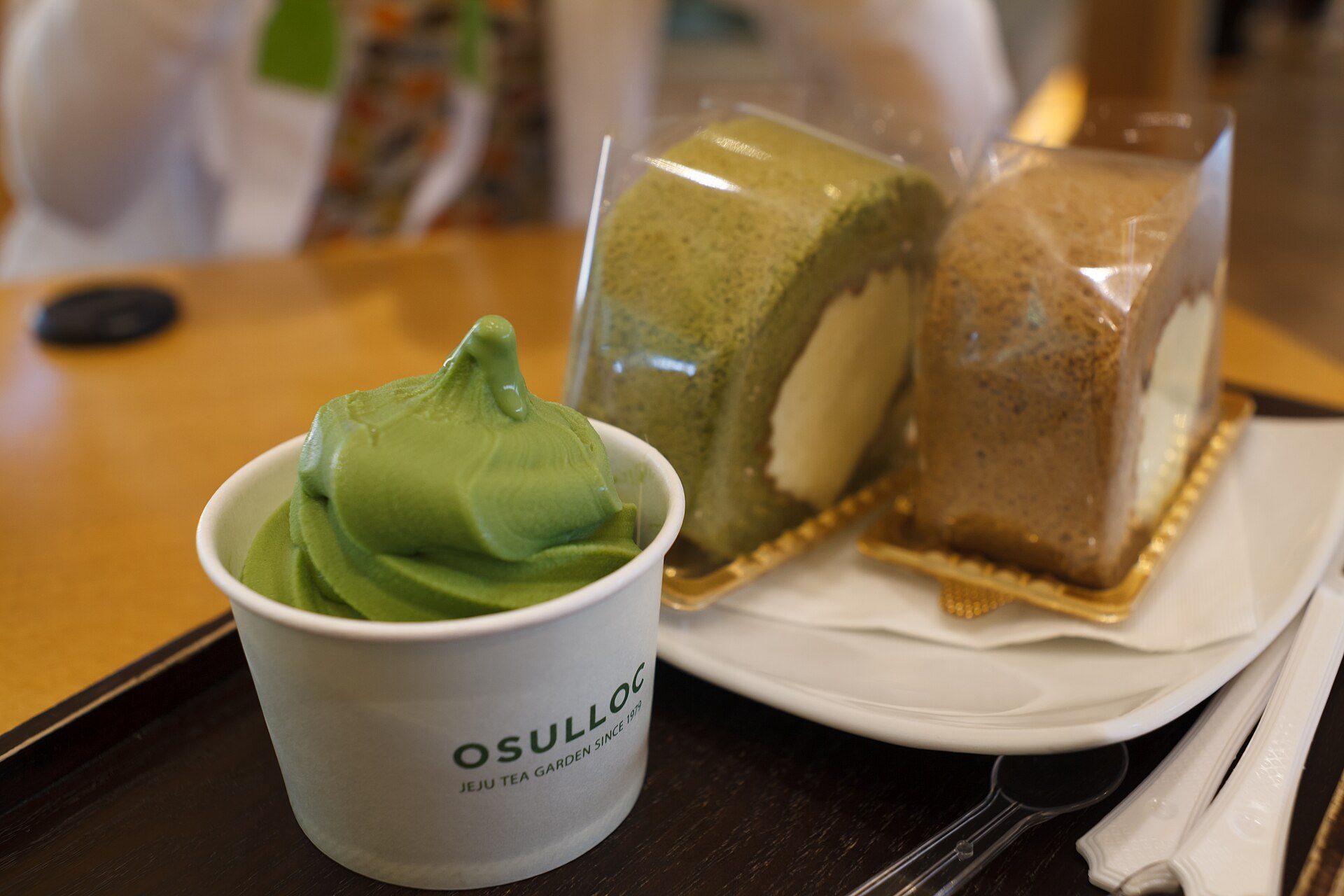
Today I'm sharing 抹茶 (Matcha, powdered green tea) desserts from Nakamura Tokichi, one of the most polished tea-house food lines in Japan. If you've been wanting to understand why some matcha sweets taste deep, clean, and not overly sweet, this is a good place to start. Their Matcha Recipe section shows how a tea brand can turn a classic ingredient into desserts that still respect the tea.
こんにちは (Konnichiwa, hello)! Nakamura Tokichi is a tea brand rooted in Uji, Kyoto, a place closely linked with high-grade green tea. The company was founded in 1854, and that long history matters here, because the desserts are built around tea flavour first, sugar second. That's the basic idea behind a good matcha dessert. You want bitterness, sweetness, and dairy to stay in balance, not fight each other. No wonder, because matcha isn't just an ingredient. It's a flavour system.
For Japanese learners, this topic is also useful in a practical way. You'll see words like matcha, panna cotta, 生クリーム (nama cream, fresh cream), and 葛切り (kuzukiri, kudzu starch noodles) in real food contexts. You'll also notice how Japanese brands often present recipes as a quiet extension of their identity. That tells you something about Japanese food culture. A brand isn't only selling a product. It's teaching a way to use it. See what I mean?
Nakamura Tokichi and the Matcha Recipe Culture
Nakamura Tokichi stands out because it treats tea as something that can move from cup to plate without losing structure. That approach is especially clear in the brand's recipe archive. The Matcha Recipe tag isn't a random collection of sweets. It works like a small reference library for home cooks who want to use matcha with control.
What many overlook is that matcha desserts are sensitive to small changes. The grade of the powder matters. So does heat. So does the amount of dairy. If your matcha tastes dull, you often need more than just extra powder. You need better mixing, lower heat, and a cleaner ratio. That is why tea-house recipes are useful. They show restraint. They don't try to hide the tea under sugar.
Why this brand matters for home cooks
Compared with back home, many Western-style matcha desserts lean heavily on cream and sugar. That can work, but it flattens the tea. Nakamura Tokichi's approach gives you a better target. You can still make something rich, but the matcha should stay visible in aroma and colour. My tip is to start with a recipe that has a short ingredient list. That makes it easier to taste what matcha is doing.
On the flip side, tea-forward desserts can fail if you use low-quality powder. If the colour looks brownish, the result will usually taste muddy too. Use fresh matcha, sift it, and store it in an airtight container away from light. That small habit helps more than people expect. Wild, isn't it?
Silky Matcha Panna Cotta: the Texture Test
Plot twist: the dessert that best shows Nakamura Tokichi's style isn't always the most elaborate one. Silky Matcha Panna Cotta is a strong example because it depends on texture as much as flavour. Panna cotta already has a delicate structure. Add matcha, and you get a dessert that can taste elegant or clumsy depending on how you handle the mixture.
Here the balance is exact. The cream gives body. The milk keeps it light. Gelatine sets it. Matcha brings the tea note. If the mixture is too hot when you add matcha, you can get clumps. If the dessert is over-set, it loses the soft wobble that makes panna cotta satisfying. Here's the catch: the most successful version feels almost simple, but it only works because each step is controlled.
How the dessert is built
I still remember how often matcha panna cotta gets ruined by rushing the cooling stage. Let the gelatine bloom fully. Warm the dairy gently. Whisk the matcha with a little hot liquid first, then combine it with the rest. This keeps the colour even and the taste clean. If you skip that first mixing step, you'll see specks and taste bitterness in the wrong places.
That brings us to the flavour profile. Good matcha panna cotta should taste slightly bitter at the front, then creamy, then clean at the finish. It shouldn't taste like candy. When I make this kind of dessert at home, I prefer a light sweetness and no extra garnish beyond a small amount of cream or 小豆 (azuki, red beans) on top. What I especially like is how the tea taste stays present even after the dairy softens it. That is the mark of a well-built recipe. Not bad, right?
How to Make a Home Version with Better Matcha Control
If you want to make a home-cooked version inspired by Nakamura Tokichi, keep the method tight. Use 200 ml milk, 100 ml cream, 2 to 3 teaspoons matcha, 40 to 50 g sugar, and about 4 g gelatine for a small batch that serves 2 to 3. This isn't the only ratio, but it gives you a good starting point. You can scale it up once you know how your matcha behaves.
Did you know that? Sifting matcha before mixing helps more than most beginner recipes admit. It takes a few seconds and prevents stubborn lumps. Also, warm the dairy until just steaming. Don't boil it. Matcha loses some of its freshness when it gets hit with too much heat. Once the base is smooth, pour it into cups and chill it for at least 3 hours. Overnight is even better if you want a firmer set.
Serving ideas that fit the tea-house style
That reminds me: presentation matters, but it doesn't need to be fussy. A narrow glass, a ceramic cup, or a simple dessert bowl works well. Add a thin layer of whipped cream only if you want more richness. A few red bean paste spoonfuls can work too, but keep the portion small so the matcha stays central. If you want to practise Japanese food vocabulary, this is a useful dish because it connects flavour with texture words like shikkari, 柔らかい (yawarakai, soft), and 黒い (kuroi, black) in real kitchen use.
From my experience, the best matcha desserts are the ones that taste calm. Nakamura Tokichi understands that very well. Their recipe section gives you a standard to aim for, and Silky Matcha Panna Cotta is a good entry point because it is elegant without being difficult. If you make it carefully, you will get a dessert that feels authentic, home-cooked, and worth repeating. Convinced yet?
Give this style a try, then adjust the sweetness and tea strength to suit your pantry and your own matcha. I hope this gives you the confidence to make a better tea dessert at home. If you want more food and Japan coverage, read more Japan news on jpnerd.com.
Frequently Asked Questions
What makes Nakamura Tokichi matcha desserts special?
They focus on tea flavour first, so the desserts stay balanced and not overly sweet.
Can I use any matcha powder for panna cotta?
You can, but fresher, better-quality matcha gives a cleaner colour and taste.
How long should matcha panna cotta chill?
At least 3 hours. Overnight gives the best set for serving.


