What many overlook is that Pokemon Let's Go is full of repeated menu lines, battle prompts, item names, and simple grammar, so you keep seeing the same Japanese again and again. That kind of repetition is gold for learners, and it works better than people expect.
![Dragon Ball Z: Kakarot [Master Edition]](https://s.pacn.ws/1/p/1eh/dragon-ball-z-kakarot-master-edition-908785.1.jpg?v=t8ja8t&width=400)


Why Pokemon Let's Go Works So Well for Japanese Learners
The first time I went to Japan, I was surprised by how often simple language repeated itself, on train signs, in convenience stores, and in game menus. Pokemon Let's Go works in a similar way, because it keeps reusing short phrases, clear labels, and familiar patterns, so you start recognising meaning before you even look it up.

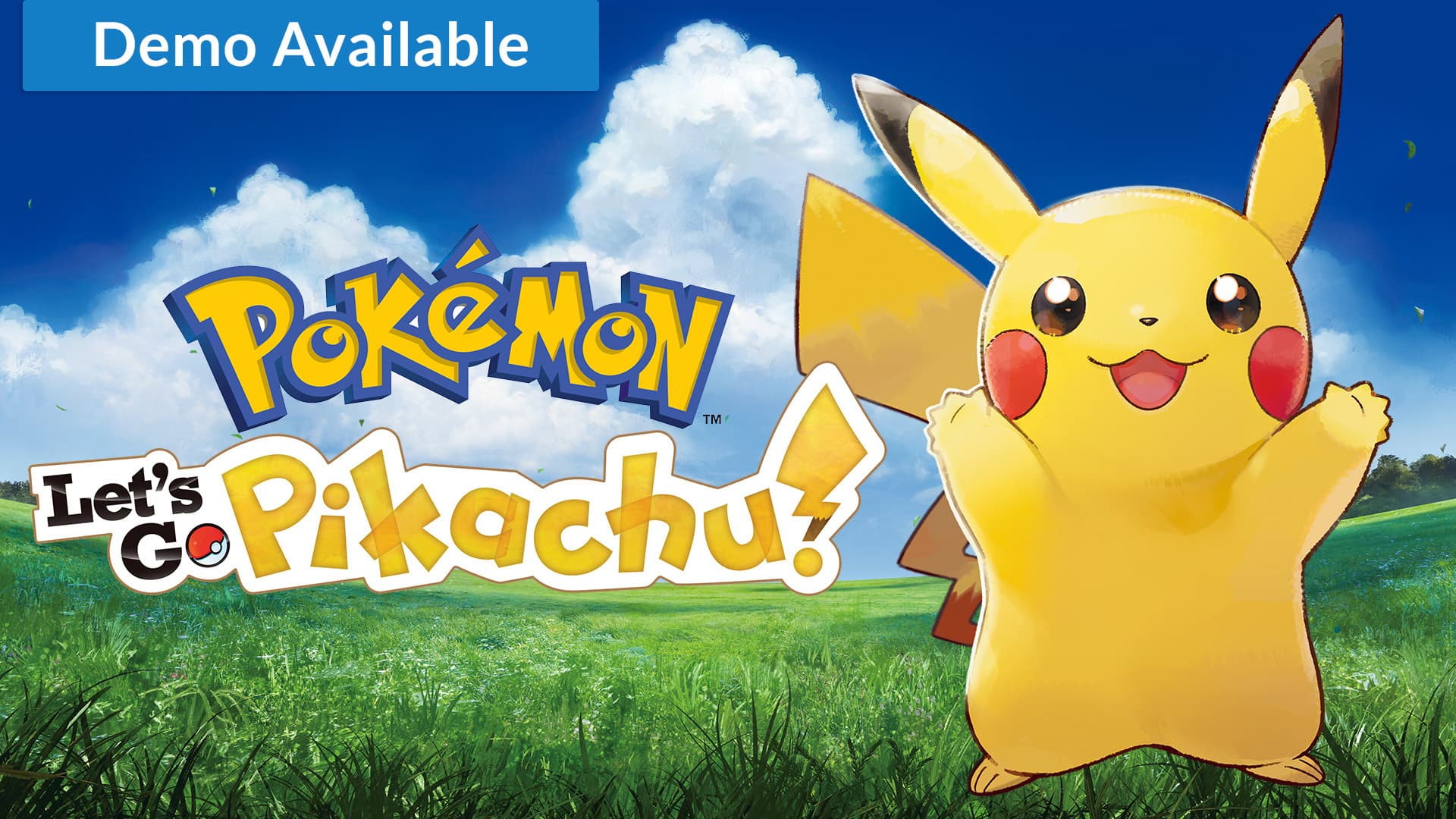
Released in 2018 by Game Freak and Nintendo for the Nintendo Switch, Pokemon Let's Go Pikachu and Pokemon Let's Go Eevee aren't massive, text-heavy RPGs. That's exactly why they're beginner-friendly. You get item names, battle choices, and town dialogue that usually stays short and clean, and that means your brain isn't fighting through pages of story text just to understand what to do.
No wonder, because the games are built on the old Kanto region formula. You move from town to town, talk to NPCs, catch Pokemon, and read the same command words again and again. Wild, isn't it? The learning side comes from that repetition, not from brute-force memorisation.
What I especially like is that the game gives you a chance to connect Japanese to action. If you see neko, then look at an in-game cat-like Pokemon, the meaning sticks better. If you see kaseki for fossil, and then pick up a fossil item, the word stops feeling abstract. Personally, that's one of the best ways to learn.
The 100 Words That Unlock a Huge Chunk of the Game
Can 100 words really get you through about 40 percent of Pokemon Let's Go? Pretty much, yes, at least if you're talking about basic comprehension, not perfect translation. The reason is simple: the game relies on a small set of high-frequency words that show up constantly in menus, item screens, battle commands, and shop dialogues.
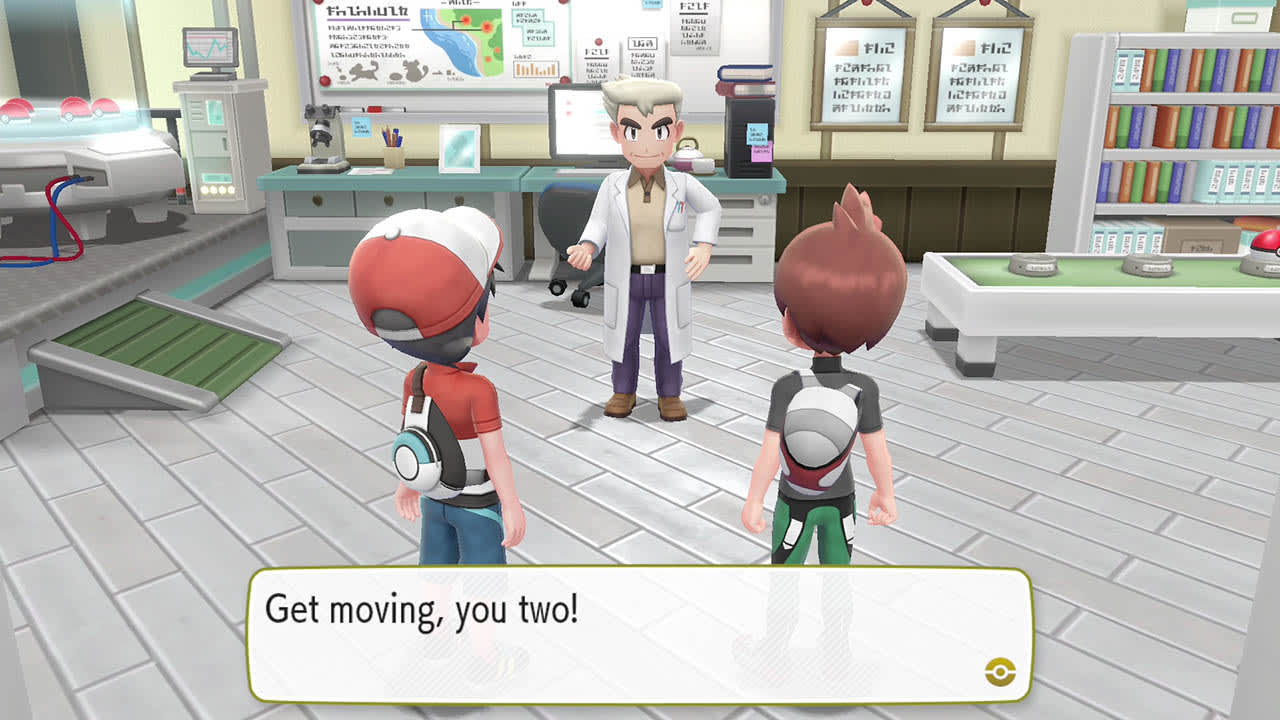
For example, words like pokemon, item, move, battle, yes, no, bag, map, town, route, trainer, and wild appear all the time. Add common verbs and status words such as agaru, heru, miru, tsukau, and toru, and suddenly a lot of the interface becomes readable. You don't need to know every single kanji to get the gist either, because the context is strong and the menu structure is predictable.
Seriously though, the magic isn't the number 100 itself, but the type of words. High-frequency vocabulary gives you leverage. If you know the word for healing, buying, catching, switching, and running away, you can navigate most of the game without panic. That's a better feeling than staring at a dictionary every ten seconds.
Before I forget, this is also why Pokemon Let's Go is a smarter first Japanese game than many people think. It's not too wordy, not too complicated, and it keeps rewarding you for learning just a little more. Not bad, right?
Examples of the most useful word groups
Battle words, menu words, and item words carry a huge amount of the load. If you know nyuuryoku, sentou, kougeki, bougyo, and recovery-related terms like kaifuku, you can follow a lot of the action. On a related note, the game often uses short command phrases instead of long explanations, which is very kind to learners.

Shop and town words matter too. Things like uketsuke, shouhin, kaimono, and one of the most common verbs in any game, kau, show up in familiar places. That makes the game feel less like study material and more like a real little language playground, which is exactly why people stick with it. My tip: focus on repeated words first, not on rare ones.
JLPT Grammar and Kanji Coverage in Pokemon Let's Go
Compared with textbook drills, Pokemon Let's Go gives you grammar in a more natural shape. You will see plain forms, polite forms, and short imperative-style prompts, but not much advanced grammar. That makes it especially useful around N5 and early N4 level, where the goal is recognition, not perfection.
Grammar points often stay simple. You will run into patterns like no, ga, wo, and ni all over the place, plus frequent sentence endings that help you understand who's doing what. The game also gives you plenty of exposure to basic question and response structure, especially in NPC dialogue. If you're studying with a textbook like Genki or Minna no Nihongo, it's satisfying to spot the same patterns in a real game.
Kanji coverage is modest, but that's not a weakness. It means you can focus on highly reusable characters like 大, 小, 上, 下, 前, 後, 町, and 店, depending on the screen and context. These are the kinds of kanji that appear in everyday life too, on station signs, shop fronts, and simple notices. Trust me on this one: learning them in a game feels less like grinding and more like decoding a world.
What many overlook is that this game also trains reading stamina. Even short bursts of Japanese are useful, because you learn to scan quickly, guess from context, and confirm with the UI. That skill transfers nicely to other games, and even to real-world reading like menus, schedules, or store labels. See what I mean?
How to Study Japanese with Pokemon Let's Go Without Burning Out
I still remember exactly how easy it is to overdo language study and get bored fast. Pokemon Let's Go helps avoid that problem because the game itself is the reward, not just the exercise. You play first, learn second, and that order matters more than people admit.
If you want to use it well, keep your setup simple. Switch the game to Japanese, make a short word list of 20 to 30 common terms, and replay menus slowly for a few sessions. Then add more words when the first batch starts feeling automatic. That pace works much better than trying to memorise every line before you even start.
For example, when you open the bag, pause and read the categories. When you enter a town, pay attention to signs and NPC greetings. When a battle starts, notice how often the same command words return. That's where the learning happens, in the repetition, not in a giant vocabulary dump.
What I especially like is that Pokemon Let's Go feels friendly, almost gentle. It doesn't punish beginners for being slow. Instead, it keeps showing you the same language in different little situations, and that's exactly how Japanese starts to click. Seriously though, if you want a game that respects your energy while still teaching you real language, this is a very strong pick. Personally...
In pictures
Frequently Asked Questions
Is Pokemon Let's Go good for complete beginners?
Yes. The menus are simple, the grammar is short, and repeated vocabulary makes it easier to follow than many other Japanese games.
Can I learn kanji with it?
Yes, but mostly basic kanji. It is best for recognition, especially for common signs, menu labels, and simple words.
How many words do I really need?
About 100 high-frequency words can already help a lot. You will understand the core menus and many common prompts much faster than you expect.