There’s something about 能 (Noh, Noh theatre) that stops you. It looks spare from the outside, but the layers underneath are deep, and that’s exactly why this project matters.
![Tennis World Tour 2 [Complete Edition]](https://s.pacn.ws/1/p/11f/tennis-world-tour-2-complete-edition-673815.6.jpg?v=qsiqxt&width=400)


Here's the thing: World Is Dancing is not just another seasonal anime announcement. Cygames Pictures has set it up as a work rooted in Noh, one of Japan's oldest stage traditions, and the premiere is scheduled for 2 July 2026. That date matters, because it gives the project a clear production signal, not just a vague teaser and a promise. And for Japan fans, that alone makes it worth watching closely.
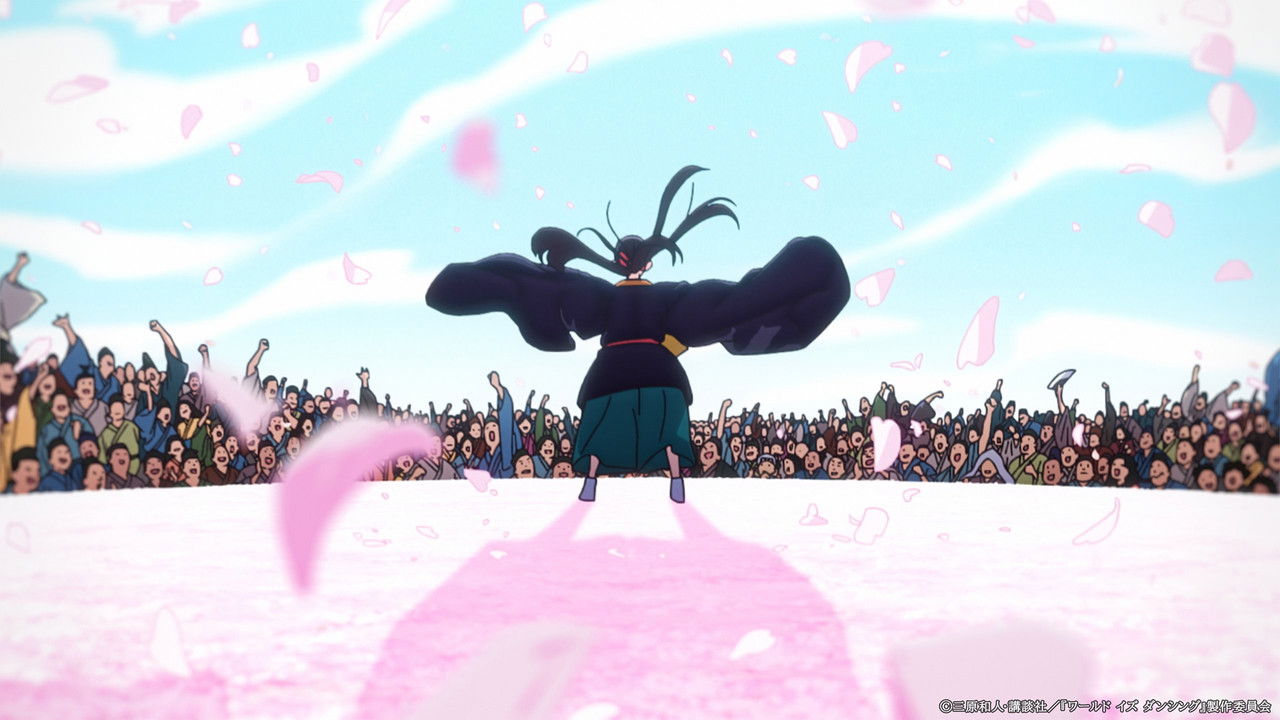
What makes this especially interesting is the subject itself. Noh is quiet, formal, and patient. It uses masks, measured movement, chant-like speech, and music that leaves room for silence. That sounds almost anti-anime at first glance. But let's stick with Noh for now, because the more you look at it, the more sense the adaptation makes.
What Noh theatre is, and why it still matters
Did you know that Noh is often described as one of Japan's oldest surviving performance arts? Its roots go back centuries, and its refinement is closely tied to Zeami, the actor, playwright, and theorist who shaped Noh in the 14th and 15th centuries. He wrote about 幽玄 (yugen, mysterious depth; subdued beauty), a sense of deep, restrained beauty. That idea still defines how many people think about Noh today.
The performance style is unmistakable. Actors move slowly, sometimes almost imperceptibly. Masks shift meaning with tiny changes in angle. A single step can carry emotional weight. If you've ever studied Japanese vocabulary around art, you may have seen words like 型 (kata, form; prescribed pattern), 間 (ma, interval; pause; negative space), and yugen. Those ideas aren’t just academic. They’re the engine of Noh.
What many overlook is that Noh is also living culture, not museum dust. In 2008, UNESCO inscribed Japanese 能楽 (Nohgaku, Noh theatre; Noh drama) theatre as Intangible Cultural Heritage, alongside several other traditional performing arts. That recognition helped frame Noh as something to protect, but also something still capable of speaking to the present. From my experience, that balance is where the appeal lies. Convinced yet?
Why Cygames Pictures is animating Noh now
The reason is simple: anime can translate atmosphere in ways live stage photography sometimes can’t. A Noh stage is minimal, but animation can bend that minimalism into something visual, emotional, and cinematic. Think of the mask becoming a moving image, or the stage space opening into memory, dream, or legend. That’s a strong match for the medium.
Cygames Pictures has been building a reputation for polished visual production, and this project feels like a deliberate extension of that identity. The studio's name is associated with ambitious animation work, and a Noh-inspired anime suggests confidence, not caution. It also suggests a willingness to trust viewers with something slower and stranger than the average action title. I’d say give projects like this room before deciding what they are.
While we're at it, this is exactly the kind of announcement that can slip past casual anime headlines and still become a major cultural talking point. A Noh anime is not obvious, which is part of the appeal. It invites you to discover a tradition through a medium you already know. For learners of Japanese, that is a very practical doorway. You get context, vocabulary, and aesthetic history in one place. Not bad, right?
Who is Kuroyanagi, and why fans should pay attention
Let me show you why the director matters here. Kuroyanagi is a name many anime fans will recognise from A Place Further Than the Universe, a series loved for its emotional timing and careful character work. If you know that show, you already know he understands how to pace feeling. That skill could be crucial for a Noh adaptation, because Noh does not rush its effect.
Here's the catch: adapting a traditional form is not the same as explaining it. The director has to make the material feel alive, not merely educational. That means rhythm, framing, silence, and visual restraint all have to work together. If Kuroyanagi brings even half of that sensitivity here, World Is Dancing could become a very unusual bridge between classical culture and modern anime language.
I especially like that this project seems to trust the audience. It does not look like a glossy shortcut to tradition. It looks like a conversation. And that’s a much better sign. Personally, I find that kind of ambition more exciting than a loud premise with no substance.
What to watch for before the premiere
Picture this: a trailer that uses stillness as a punchline, masks as emotional clues, and music that leaves space for breath. That's the sort of material that could make this anime stand out. If Cygames Pictures leans into the formal beauty of Noh, the result could be striking even for viewers who have never seen a live performance.
For Japanese learners, this is also a chance to pick up useful cultural terms. Noh itself is usually written as n-oh in English discussion, but in romaji you may also encounter nogaku, the broader umbrella term for Noh theatre. Zeami's name is another one to remember. If you like making language notes, this is the kind of project where those notes come with context, not just flashcards.
My tip: if you want to prepare, read a short introduction to Zeami and then watch clips of an actual Noh performance. After that, rewatch the trailer when more footage appears. The second viewing will probably tell you more than the first. And that's what makes this announcement so promising. It gives you a reason to look again.
If you've been following Japanese culture for a while, you know the best projects are often the ones that start a little quietly. World Is Dancing does exactly that. It connects a centuries-old stage art, a historically important figure, and a studio with strong production momentum. That's a very good combination. From my experience, those are the projects that end up leaving a mark.
Frequently Asked Questions
What is Noh theatre?
Noh is a traditional Japanese stage art known for masks, slow movement, chanting, and a highly stylised form of storytelling.
Why is Cygames making a Noh anime?
Because anime can translate Noh's atmosphere, symbolism, and visual restraint in a way that feels accessible to modern viewers.
Who is Zeami?
Zeami was a major historical figure who helped shape Noh theatre through his writing, performance theory, and artistic influence.