
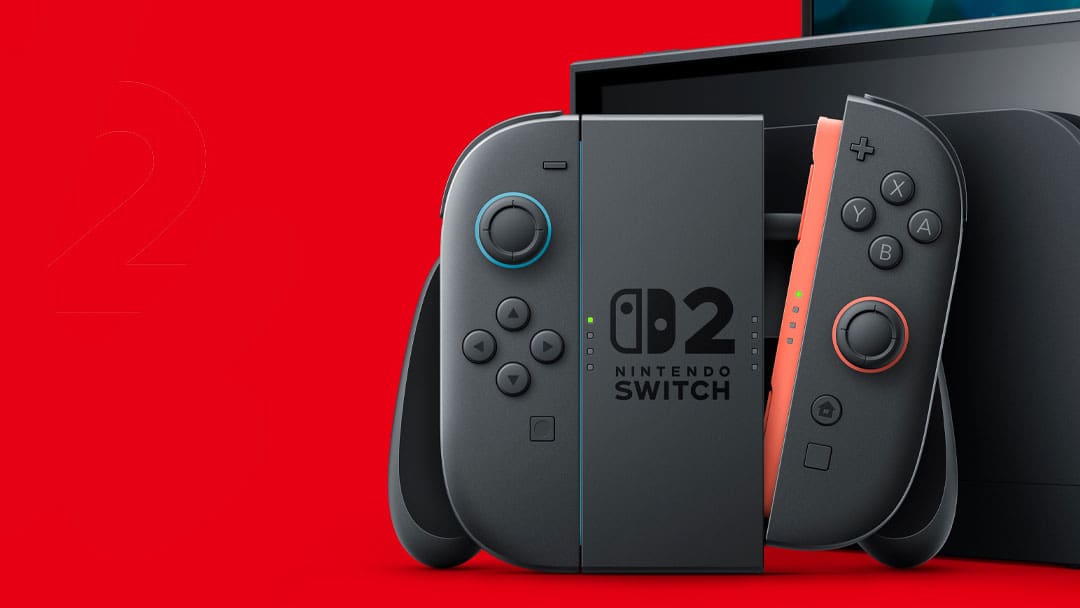
What the Latest Nintendo Switch 2 Update Actually Changes
Nintendo dropped a system update for the Switch 2 that puts a clear focus on the handheld experience. That's a big deal because the original Switch already built its entire identity around that concept. The Japanese word for portable gaming, 携帯ゲーム (keitai geemu), is practically synonymous with Nintendo's design philosophy since the Game Boy era.
![Dragon Ball Z: Kakarot [Master Edition]](https://s.pacn.ws/1/p/1eh/dragon-ball-z-kakarot-master-edition-908785.1.jpg?v=t8ja8t&width=400)
![Startup Company [Console Edition] (Limited Edition)](https://s.pacn.ws/1/p/157/startup-company-console-edition-limited-edition-741799.16.jpg?v=ry4mm8&width=400)
![Startup Company [Console Edition]](https://s.pacn.ws/1/p/157/startup-company-console-edition-741779.10.jpg?v=ry4ngq&width=400)
So what's new? The update addresses several pain points that players flagged since the console launched. Display calibration has been improved for outdoor and variable lighting conditions. There are also reported stability improvements for wireless connectivity when the console's used in handheld mode, which matters a lot when you're gaming on the go and relying on a mobile hotspot or public Wi-Fi.
Plot twist: the update also quietly adjusted the battery management system. Users on forums have reported slightly longer session times in handheld mode since installing the patch, though Nintendo hasn't officially published specific numbers. That brings us to the bigger picture: Nintendo's clearly listening to its portable-first audience.
Why Handheld Mode Is the Heart of the Switch 2
Know that feeling when you're on a long flight to Japan and just want to sink into a game without hauling a full setup? That's exactly the audience Nintendo's designing for. The Switch 2 launched with a stronger processor and a larger screen than its predecessor, but early adopters were quick to note that handheld performance didn't always feel as polished as TV mode.
Fun fact: Japan consistently ranks as one of the strongest markets for handheld gaming globally. Commuter culture, long train journeys, and compact living spaces all contribute to why portable gaming's so embedded in Japanese daily life. The concept of 隙間時間 (sukima jikan), meaning the small pockets of free time between activities, is something Japanese game developers have understood for decades. Nintendo, based in Kyoto, has built an entire design language around it.
What I especially like about this update is that it signals Nintendo's commitment to refining the experience post-launch rather than just moving on. Too many hardware companies ship and forget. Nintendo's treating the Switch 2 as a living product. Personally, I think that's exactly what separates them from the competition.
Performance Tweaks Worth Knowing
The update reportedly improves frame pacing in handheld mode for certain titles. Frame pacing refers to how evenly individual frames are delivered during gameplay. Even when a game runs at a stable 30 or 60 frames per second on paper, uneven delivery can make motion feel choppy or inconsistent. This's a technical issue that's easy to overlook in reviews but makes a real difference during extended play sessions.
By the way, if you've been playing something like a fast-paced action game and it felt slightly off in handheld mode before, this update might be the fix you didn't know you needed. Sounds good, right?
Nintendo Switch 2 Hardware Context: Where This Fits In
The Switch 2 launched in 2025 and represents Nintendo's first major hardware revision since the original Switch in 2017. It runs on a custom NVIDIA chip, features a larger 7.9-inch LCD display compared to the Switch OLED's 7-inch OLED panel, and supports magnetic Joy-Con attachment. The handheld improvements in this update build on hardware that was already a step up but clearly still had room to grow in software optimisation.
Quick detour: Nintendo's headquarters in Kyoto, Japan, has historically been conservative about hardware specs, preferring to focus on gameplay experience over raw power. That philosophy shows up in updates like this one, where the emphasis isn't on pushing new features but on refining what's already there. Classic Japan, isn't it?
No exaggeration: the Switch 2's currently one of the most discussed gaming devices in Japan and internationally. Communities on Reddit, including discussions across gaming subreddits, have been active with player feedback since launch, and Nintendo appears to be responding to that feedback in real time through updates like this one.
What This Means for Japan-Based and Japan-Loving Players
For anyone who's ever gamed on a shinkansen or sat in a Japanese game centre, or even just dreams of doing so, the appeal of a well-optimised handheld mode is real. The Japanese gaming market specifically tends to favour portability, and Nintendo knows its home audience well.
Did you know that the verb 遊ぶ (asobu), which means to play, is used in Japanese for both gaming and general leisure? It reflects how deeply play's woven into everyday culture. That brings us to why an update like this resonates beyond just the technical specs. Gaming on the go isn't just a feature; it's a lifestyle.
See what I mean?
Should You Install the Update Right Now?
Yes. There's no reason to wait. The update's available now for all Nintendo Switch 2 owners and installs automatically if you've got auto-update enabled. If you've turned that off, head to System Settings, select System, then System Update. The process takes a few minutes.
My tip: if you're a handheld-first player, pay attention to how your most-played games feel after the update, especially anything with fast movement or online components. The improvements are subtle in some areas but cumulative. After a week of play sessions, the difference becomes clearer.
Wild, isn't it? A software update can genuinely change how a piece of hardware feels in your hands. That's the kind of ongoing support that keeps a console relevant for years after launch.
Frequently Asked Questions
What does the Nintendo Switch 2 system update improve?
The update focuses on handheld mode, improving display calibration, wireless connectivity stability, battery management, and frame pacing for a smoother portable gaming experience.
Do I need to manually install the Nintendo Switch 2 update?
If auto-update's enabled, the update installs automatically. If not, go to System Settings, select System, then System Update to install it manually.
Why does Nintendo focus so much on handheld gaming?
Nintendo's based in Kyoto, Japan, and the Japanese gaming market has a strong portable gaming culture rooted in commuter lifestyles and the concept of sukima jikan, small pockets of free time. Handheld gaming's been central to Nintendo's identity since the Game Boy era.
For more gaming and tech news from Japan, check out more Japan news on jpnerd.com.


