

And if you’ve spent any time in Japan, you’ll know that a canned drink is never just a canned drink. Sometimes it’s a convenience-store fling, sometimes it’s a national habit, and sometimes it’s a very calculated attempt to steal a sip of someone else’s market.
Asahi’s Awa Matcha: what exactly is it?
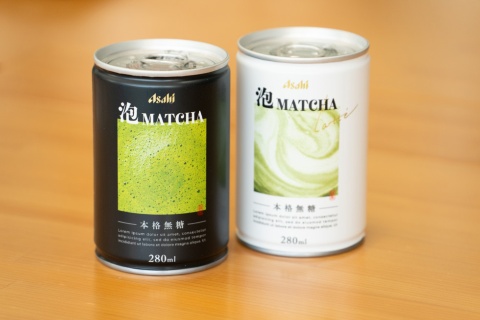
Asahi has launched 泡 (awa, foam) 抹茶 (Matcha, powdered green tea), a canned matcha drink priced at 300 yen, and the branding is doing a lot of work here. The word awa means foam, which is a sensible detail to emphasise, because this isn’t being sold as a sleepy, traditional bowl of matcha in a tea room with a 畳 (tatami, tatami mat) floor and a view of a moss garden. It’s matcha in a can, with a bit of theatre. Very modern Japan, really.

Here’s the kicker: the drink comes in a full-open can, a design that opens almost the entire top rather than just a small drinking hole. That makes the experience feel closer to opening a dessert tin or a premium canned cocktail than your standard tea. It’s a small gimmick, but the sort of small gimmick Japanese beverage makers love, because in a crowded convenience-store world, tiny differences can be the whole game.
What I especially like is that Asahi hasn’t simply slapped matcha into a can and called it innovation. The company is clearly trying to make the act of drinking matcha feel light, fizzy in spirit if not in carbonation, and a little more indulgent. The foamy presentation is part of the promise. You’re meant to notice it before you even take a sip.
Why 300 yen matters in Japan’s drink market
300 yen sits in a very interesting zone. It’s above the price of your average canned tea or bottled green tea, which often lives around 100 to 160 yen, but it’s still low enough to feel casual. That matters because the drink isn’t being aimed at the narrow lane of tea purists alone. It’s being pitched to people who might otherwise grab coffee, canned cocoa, or a seasonal premium soft drink because, well, why not?
To be fair, Japanese drink shelves are already a little absurd, in the best possible way. You’ve got hot coffee, cold coffee, tea, milk tea, fruity concoctions, seasonal oddities, and the occasional flavour that makes you stare at the label for a full minute. So if Asahi wants Awa Matcha to stand out, it needs a price that says “treat” without screaming “luxury”. 300 yen does that neatly.
For example, it’s close enough to the price of a can of craft coffee or a fancy canned latte that a commuter might try it on a whim. And once a product enters the “I might as well” zone, the battle is half won. Japanese beverage companies understand this instinct perfectly. They’ve built entire empires on it.
The strategy behind the can: a challenge to coffee
Ever wondered why Asahi would push matcha this way instead of just selling it as another tea? The reason is simple: coffee is still the heavyweight in Japan’s ready-to-drink market, and matcha has room to move beyond its old image. If Asahi can make matcha feel as habit-forming, accessible, and everyday as canned coffee, that’s a genuinely smart play.
Imagine a narrow alley in Tokyo. A サラリーマン (salaryman, office worker) stops at a vending machine, looking for something to keep him upright until the next meeting. Normally, that means coffee, maybe black, maybe with milk, maybe something labelled “bitter” as though the can itself has a personality disorder. A matcha drink that feels this convenient, this polished, could muscle into that exact moment of purchase. Not replace coffee overnight, obviously, but chip away at it. That’s how these things start.
Before I forget, the most interesting part of Asahi’s move is not just that it’s selling matcha, but that it’s trying to reposition matcha as a functional everyday beverage rather than a ceremonial one. In Japan, matcha already has a strong cultural identity, tied to tea ceremonies, 和菓子 (wagashi, Japanese sweets), and a certain calm refinement. But the market opportunity lies in making it less formal, more spontaneous, and easier to grab between train platforms. Wild, isn’t it?
Two earlier hits and why this launch feels familiar
Asahi isn’t exactly wandering into the woods here without a map. The company has a history of turning simple drink ideas into repeat buyers, and this new Awa Matcha feels like it’s borrowing from two familiar success patterns: first, the premium-but-approachable seasonal drink, and second, the can-as-experience product.

Plot twist: Japanese consumers often don’t just buy flavour, they buy format. A drink can taste fine and still flop if it feels boring. But give it a clever cap, a distinctive opening mechanism, or a bit of visual drama, and suddenly it’s newsworthy. Think of the way certain milk teas, coffee drinks, and fruit sodas have broken out simply because they felt a touch more special than the default option.
Asahi seems to be banking on exactly that. The company isn’t asking people to think hard about matcha. It’s asking them to see matcha, recognise it, and try it because the packaging promises a small moment of pleasure. That’s a classic Japanese convenience-store tactic, and when it works, it really works. The can becomes part of the product, not just the container.
The full-open can is not a throwaway detail
A lot of brands would treat the can design as decoration. Asahi is using it as the pitch. A full-open can changes the drinking ritual, the aroma, the foam, the first impression, everything. It also makes the drink look a bit more premium on the shelf, which matters more than people like to admit. We’re, all of us, terribly easy to seduce with aluminium and design language.
My tip: if you see Awa Matcha in Japan, don’t just glance at the price. Look at the can itself, because the format is the point. This is the sort of product that wants you to notice the packaging before the flavour, and then let the flavour do the quieter work afterwards. That’s a very Japanese sort of seduction, really. Subtle, controlled, and slightly smug.
Will it become the next cult drink?
No exaggeration: 300-yen drinks can absolutely become cult favourites in Japan, but only if they hit the sweet spot between novelty and habit. Too strange, and people try it once. Too ordinary, and it vanishes among the vending machine noise. Awa Matcha needs to be good enough to earn repeat purchases, not just headlines.
And that’s the real test here. If Asahi has nailed the texture, the foam, the balance of bitterness and sweetness, then this could become one of those drinks you suddenly notice in people’s hands at stations, offices, and family marts. If not, it’ll still have done its job by reminding everyone that matcha isn’t stuck in the past. Either way, it says something about where Japanese drink culture is headed.
What I find genuinely promising is the broader shift: matcha is being treated less like a heritage item and more like a competitive category in its own right. That opens the door to more experiments, more hybrid drinks, and probably a few disasters as well. Honestly, that’s part of the fun. The Japanese beverage market is one of the few places where corporate strategy can look almost playful.
So yes, Asahi’s Awa Matcha is more than a new can on a shelf. It’s a calculated attempt to take matcha into coffee territory, using price, packaging, and a bit of foamy drama to do the heavy lifting. Whether it becomes a cult drink or just a clever launch, it’s a very watchable move. And if you’re learning Japanese, it’s a good reminder that food vocabulary, packaging language, and consumer culture all live in the same neighbourhood. Believe it or not, that’s where some of the best Japanese happens.
It’s really exciting, and the can hasn’t even had to speak for itself yet.
In pictures
Frequently Asked Questions
What is Asahi Awa Matcha?
It is a canned matcha drink from Asahi, designed with a foamy presentation and sold as a more premium everyday beverage.
Why is the can design getting attention?
The full-open can changes how the drink looks, smells, and feels to open, which makes it stand out from ordinary tea or coffee cans.
Is the 300-yen price high?
It is higher than standard canned tea, but still low enough to feel like an impulse buy rather than a luxury purchase.


