
For Japan fans and language learners, these toys are also a lovely window into everyday vocabulary, festival culture, and the playful side of Japanese tradition.
Kendama: the wooden skill toy that still gets people hooked
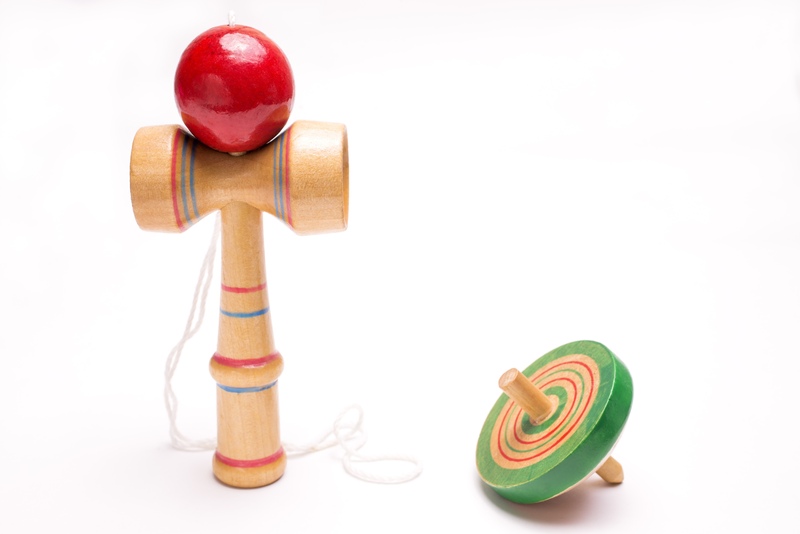
Did you know that the 剣玉 (kendama, skill toy with a ball and cups) has a very specific shape, and that shape is exactly why it works so well? It has a handle called a sarado, a ball on a string, and three cups for catching tricks. The modern version became widely known in Japan in the early 20th century, and the Japan Kendama Association has helped standardise the sport side of it since the 1970s. Sounds simple, right? It isn’t, not when that ball keeps bouncing away from you.
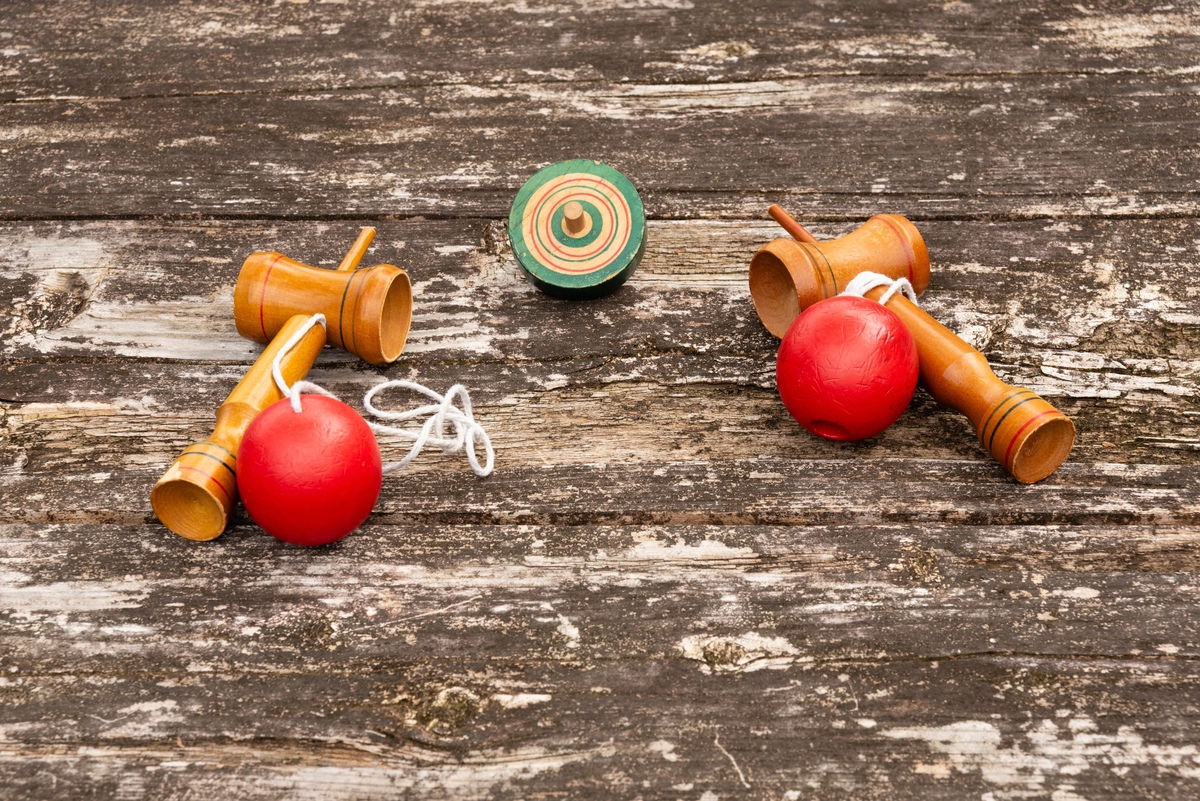
Here’s the deal: kendama is one of those toys that looks calm in a shop and turns into a tiny drama in your hands. The most basic trick is to land the ball in the big cup, then move up to the smaller cups, then the spike, which is called the 剣 (ken, spike; sword). No wonder, because the appeal is partly in the rhythm, catch, lift, balance, repeat. Japanese learners will also notice how often movement words come up around it, like ukeru for catching, or 操る (ayatsuru, to manipulate skillfully) for manipulating something skilfully. My tip? Start with the 大皿 (oozara, big cup), the large cup, and don’t rush the fancier tricks. Simply brilliant.
Why kendama feels so Japanese, without trying too hard
Let’s be honest: a lot of Japanese traditional play is about concentration, not just winning. Kendama fits that perfectly. You see it at school events, hobby stores, and even in global competitions, where players spend years refining tiny body movements. It’s also a great way to understand the Japanese value of 習慣 (shuukan, habit; daily practice), or daily practice, because progress is obvious and measurable. You’ll feel it the moment a trick finally lands.
What I especially like is how friendly kendama culture can be. Even serious players usually encourage beginners, and that makes it less intimidating than it looks on video. If you’re learning Japanese, it’s worth knowing words like waza for trick, kiso for basics, and renraku for a connected sequence of moves. From my experience, kendama is one of the easiest toy traditions to explain to friends who’ve never been to Japan, because the fun is immediate and the learning curve is honest. Sounds good, right?
Koma: Japanese spinning tops with serious history
Ever wondered why a simple spinning top can be so addictive? Koma have been played across Japan for centuries, and some regional styles go back to the Edo period, which lasted from 1603 to 1868. They’re often made from wood, sometimes painted in bright colours, and in certain areas they’re part toy, part local identity. Trust me on this one: if you watch a good koma spinning on a hard surface, it’s strangely calming.
That brings us to the action itself. Koma are launched with a string, hand movement, or even a flick, depending on the style. In Japanese, tomeru means to stop, and that’s the trick many players try to master after the initial spin. There are also battle styles, where two tops clash and try to knock each other out of the ring. It’s playful, but it has rules, technique, and a bit of swagger. Not bad, right?
Regional koma, and why they matter
To be fair, not all koma are the same. In Hiroshima, Yamagata, and other parts of Japan, local craft traditions have shaped the way tops are made and used. Some are sold as souvenirs, some as festival toys, and some are passed down in families. A few are decorated with kanji, lucky patterns, or seasonal motifs, which makes them feel less like mass-market items and more like tiny folk artworks.
For language learners, koma opens a nice side door into Japanese vocabulary around motion and balance. Words like mawaru, to spin, and chousetsu, adjustment, become easier to remember when you can actually see them happen. If you’re visiting a craft shop in Japan, ask whether the top is tegata, hand-finished, or locally made, and you’ll get a better feel for the object’s story. Personally, that human connection is half the joy. From my experience, small toys tell bigger stories than big museums sometimes do.

Taketonbo: a bamboo toy that feels like a tiny helicopter
Guess what? Taketonbo is one of the most charming Japanese toys ever made, and it barely needs any parts. The name literally points to its shape, taketombo, bamboo dragonfly, because it looks a little like a rotor. You rub the shaft between your palms, or spin it with a string, and it shoots upward. It’s simple physics, and it’s also pure delight. Sounds weird, but it’s true.
These toys have been made in Japan for generations, usually from bamboo and paper, and they’re closely tied to traditional handcraft. They’re especially common at festivals, museum shops, and cultural events where children can try old-style games. Here’s what makes taketonbo special: it gives you a fast reward. Unlike kendama, where practice can take a while, taketonbo works almost immediately if you’ve got the motion right. That instant lift is what makes people smile.
Why taketonbo is a great entry point for Japan fans
Speaking of which, taketonbo is a nice reminder that Japanese play often blends nature, craft, and engineering in the same object. Bamboo is light, strong, and easy to shape, which is why it shows up in so many Japanese tools and toys. If you’re learning Japanese, this is a good moment to connect taketombo with words like take for bamboo and tonbo for dragonfly. You’ll start spotting those building blocks all over the place.

What I especially like is that taketonbo doesn’t ask for perfection. It asks for a little coordination and a bit of curiosity. That makes it great for kids, but adults usually end up loving it too. And honestly, that’s the magic of a good folk toy, it works across ages without trying to be trendy. Everyone gets a turn, everyone laughs, and the toy does the rest. Personally...
Why these Japanese toy classics still matter
Japanese toy classics like kendama, koma, and taketonbo are more than nostalgia pieces. They connect craft, movement, and everyday language in a way that feels very alive. You can learn how to name parts, describe motion, and talk about play, all while handling objects that have survived because they’re simply fun. That’s a pretty strong test, if you ask me.
If you ever spot these in a shop, at a matsuri, or in a museum corner, give them a try. Kendama teaches patience, koma teaches rhythm, and taketonbo delivers that quick little burst of wonder. Together, they show how Japanese tradition can be hands-on, clever, and very approachable. And for learners, that’s the best kind of cultural vocabulary lesson. Sounds good, right?
In pictures
Frequently Asked Questions
Which of these toys is easiest for beginners?
Taketonbo is usually the easiest, because it works quickly once you get the motion right.
Is kendama only a children’s toy?
No. It’s also a serious skill toy with competitions, clubs, and experienced adult players.
Where can I see traditional Japanese toys in Japan?
Try festival stalls, toy shops, folk craft museums, and souvenir stores near temples or historic districts.


