
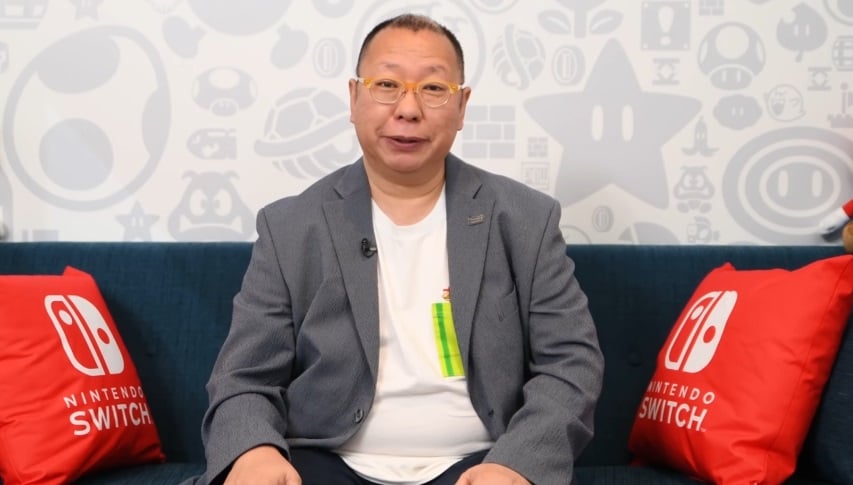
For Japan fans, this is more than a staff update. It’s a chance to look back at the people behind the games, the kind of names that shaped a whole language of play, from Yoshi’s grin to Hyrule’s sense of wonder.
![Dragon Ball Z: Kakarot [Master Edition]](https://s.pacn.ws/1/p/1eh/dragon-ball-z-kakarot-master-edition-908785.1.jpg?v=t8ja8t&width=400)


Takashi Tezuka retires, and Nintendo loses a quiet giant
What most people don't know is that some of the biggest Nintendo legends never became household names outside gaming circles, even though their work shaped childhoods across the world. Takashi Tezuka is one of those people. At 65, the veteran developer is stepping away after joining Nintendo in 1984, a year that sits right in the middle of the company’s rise from console maker to pop culture force.
His retirement matters because Tezuka wasn’t just another producer in a long credits list. He was there when Nintendo was turning ideas into icons, and he helped define the company’s tone: playful, polished, and always a little magical. That mix is one reason Mario and Zelda still feel alive decades later. Classic Japan, isn't it?
Why Takashi Tezuka matters to Mario and Zelda history
Imagine a narrow alley in Tokyo. One shop sells old game cartridges, another has a faded Super Famicom poster in the window, and a collector is talking about the first time they saw Super Mario Bros. on a CRT screen. That kind of nostalgia is exactly where Tezuka’s name belongs, because he was part of the team that made the 8-bit era feel bigger than the hardware.
Tezuka worked closely with Shigeru Miyamoto on Super Mario Bros., the 1985 release that helped turn side-scrolling platform games into a worldwide language. He also worked with Miyamoto on The Legend of Zelda, which arrived in 1986 and gave Nintendo a different kind of magic, one built on exploration, secrets, and player curiosity. Those two series alone would be enough to secure a legacy, but Tezuka stayed involved far beyond the early years.
The Miyamoto partnership that changed everything
By the way, Miyamoto often gets the spotlight, and fair enough, but the best Nintendo classics were rarely solo acts. Tezuka was part of the creative engine that made the games feel balanced and readable. He understood pacing, enemy placement, world structure, and that essential Nintendo quality where every screen seems to invite one more try.
That’s one reason his retirement hits retro fans so hard. We’re not just talking about a manager leaving a company, we’re talking about the fading of a direct link to the era when Nintendo’s design language was being invented in real time. The games still exist, of course, but the people who built that language are becoming fewer. And that's not all.
From Super Mario Bros. to Zelda and beyond
Hand on heart, if you love Nintendo history, Tezuka’s career reads like a highlight reel. Beyond Super Mario Bros. and The Legend of Zelda, he also contributed to projects tied to Yoshi and other major Nintendo properties. That’s important because it shows his influence wasn’t limited to one franchise or one era; it spread through the company’s broader identity.
The early Nintendo style often relied on restraint. Hardware was limited, memory was precious, and every choice had to count. Tezuka helped make those constraints feel like strengths. A few sprites, clean controls, and instantly readable goals could create a world that stayed with you for years. Simply brilliant.
For Japan enthusiasts, there’s also a cultural angle here. Nintendo’s greatest hits weren’t just products; they became shared reference points, the kind of things people mention in conversation the way they might mention ラーメン (ramen, noodle soup) shops in Osaka or train lines in Tokyo. If you want to understand modern Japanese pop culture, you really do have to understand Nintendo’s early creative teams. Convinced yet?
What his departure means for retro gaming fans
Quick detour: retirement doesn’t erase a legacy, but it does change how we read it. When a developer like Tezuka steps back, the old stories move from living memory into history. That’s a big shift for fans who still think of the 1980s Nintendo era as something current and immediate.
My tip is this: if you want to appreciate Tezuka’s impact, revisit the original Super Mario Bros. and the first The Legend of Zelda with fresh eyes. Watch how carefully the first world teaches you to run and jump, or how the original Zelda drops you into adventure with almost no hand-holding. Those design choices weren’t accidental, and they still shape action games today. The best part is you can feel the craft within minutes.
There’s also a learning angle for Japanese language fans. The names of Nintendo roles and classic game genres are a nice way to build everyday reading habits, especially if you follow Japanese gaming news, interviews, or fan discussions. Even simple terms like プロデューサー (purodyuseru, producer), デザイン (dezain, design), and プロジェクト (purojekuto, project) show up constantly in articles about game development, and they’ll start making sense fast once you see them in context. Insider tip: gaming news is one of the easiest ways to train your reading stamina.
So yes, Tezuka’s retirement is personal for retro gamers, but it’s also a reminder that Nintendo history is a human story. Not just mascots and cartridges, but people, teams, and creative chemistry across decades. Personally, I think that’s what makes this news worth pausing for. And that's not all.
Frequently Asked Questions
Who is Takashi Tezuka?
He is a longtime Nintendo developer known for his work on early Mario and Zelda games.
How long did he work at Nintendo?
He joined Nintendo in 1984 and is retiring at the age of 65.
Why does his retirement matter?
It marks the retirement of one of the key people behind Nintendo’s classic game history.


