
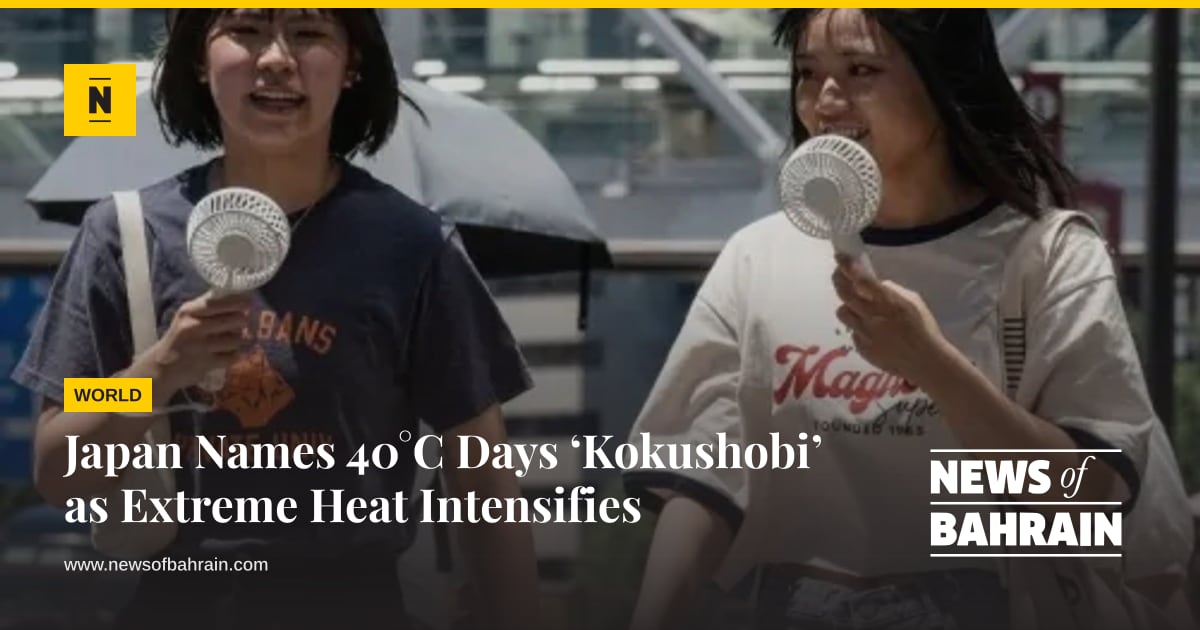
What is Kokushobi and why does it matter?
Did you know that the term Kokushobi literally combines words for "national" and "heat day" in Japanese-style coinage? No joke: authorities and media are starting to use Kokushobi to label days that reach 40 degrees Celsius, a threshold that used to be almost unimaginable in many parts of Japan. The reason's simple: calling something by a name changes how people react, prepare, and talk about it. Personally...
Kokushobi and the rise of 40°C days in Japan
Question: how often do 40°C days actually happen in Japan now? In 2018, Kumagaya in Saitama Prefecture recorded 41.1°C on July 23, a national high reported by the Japan Meteorological Agency. Since then, extreme summer temperatures have recurred in places like Gunma, Osaka, and Nagano. Take Tokyo, for instance, where urban heat islands push afternoon temperatures higher compared to nearby rural areas, making some city districts feel several degrees warmer.

Concrete numbers and trends
Fun fact: the Japan Meteorological Agency (JMA) maintains detailed records showing a clear upward trend in maximum temperatures across many prefectures. The number of days above 35°C, already common in the 1990s, has increased, and 40°C events have gone from near-zero to occasional by the late 2010s and early 2020s. And it gets better: the frequency of heat warnings issued by JMA and local governments has risen, prompting changes in public health guidance and event scheduling. Convinced yet?
How Kokushobi changes everyday life in Japan
Compared to back home, some Japanese summer routines feel more rigid because they're built around heat. Quick detour: festivals, commuter timing, and school practices shift to avoid peak heat. For example, many summer matsuri matsuri events now have earlier start times, and some school sports days move to spring or autumn. The reason's simple: people can't ignore 40°C when it affects children, seniors, and outdoor workers.
Work, festivals, and public spaces
Guess what? Convenience stores and train stations have become informal heat refuges. While we're at it, municipal offices distribute water and cooling vouchers in some cities. During Obon obon season, families planning trips or grave visits check forecasts obsessively. My tip: learn a few weather-related Japanese phrases to ask locals about heat measures; it’s useful and appreciated. My verdict: these small language moments help you connect and stay safe.
Language and culture: how a word reflects reality
Addressing readers directly: have you noticed how new words spread through social media? Take the term Kokushobi, it gains traction on Twitter and LINE groups before it appears in formal announcements. And it gets better: language learners can spot how society prioritises issues by watching vocabulary evolve. No big surprises here, but it's instructive.
Fun fact: public health campaigns now pair plain Japanese phrases with pictograms to warn about heatstroke and hydration. While we're at it, public bathhouses, or sento, sometimes see different peak hours as people change routines to avoid midday heat. What I especially like is seeing everyday language adapt to real weather risks; it makes vocabulary learning feel very practical. Not bad, right?
Practical tips for travellers and learners
Question: how should you prepare if you visit Japan during a Kokushobi period? My tip: carry a refillable water bottle, wear breathable clothing, and plan indoor activities during the hottest hours. Oh, almost forgot: learn the phrase for "heatstroke" and "cooling centre" in Japanese so you can ask for help. Personally, these small preparations make hot summers much more manageable and less intimidating.
Frequently Asked Questions
What does Kokushobi mean?
Short answer: a new term used to describe days when the temperature reaches 40°C in Japan.
Are 40°C days common in all of Japan?
Short answer: no, they're more frequent in inland and urban areas; coastal places are usually cooler but still affected by heat waves.
Should visitors cancel summer plans because of Kokushobi?
Short answer: not necessarily, but adjust timings, stay hydrated, and follow local advisories.
Sources
- News of Bahrain - Japan names new term for 40C days
- Japan Meteorological Agency (JMA)
- BBC - Japan swelters in record-breaking heat (2018)


