
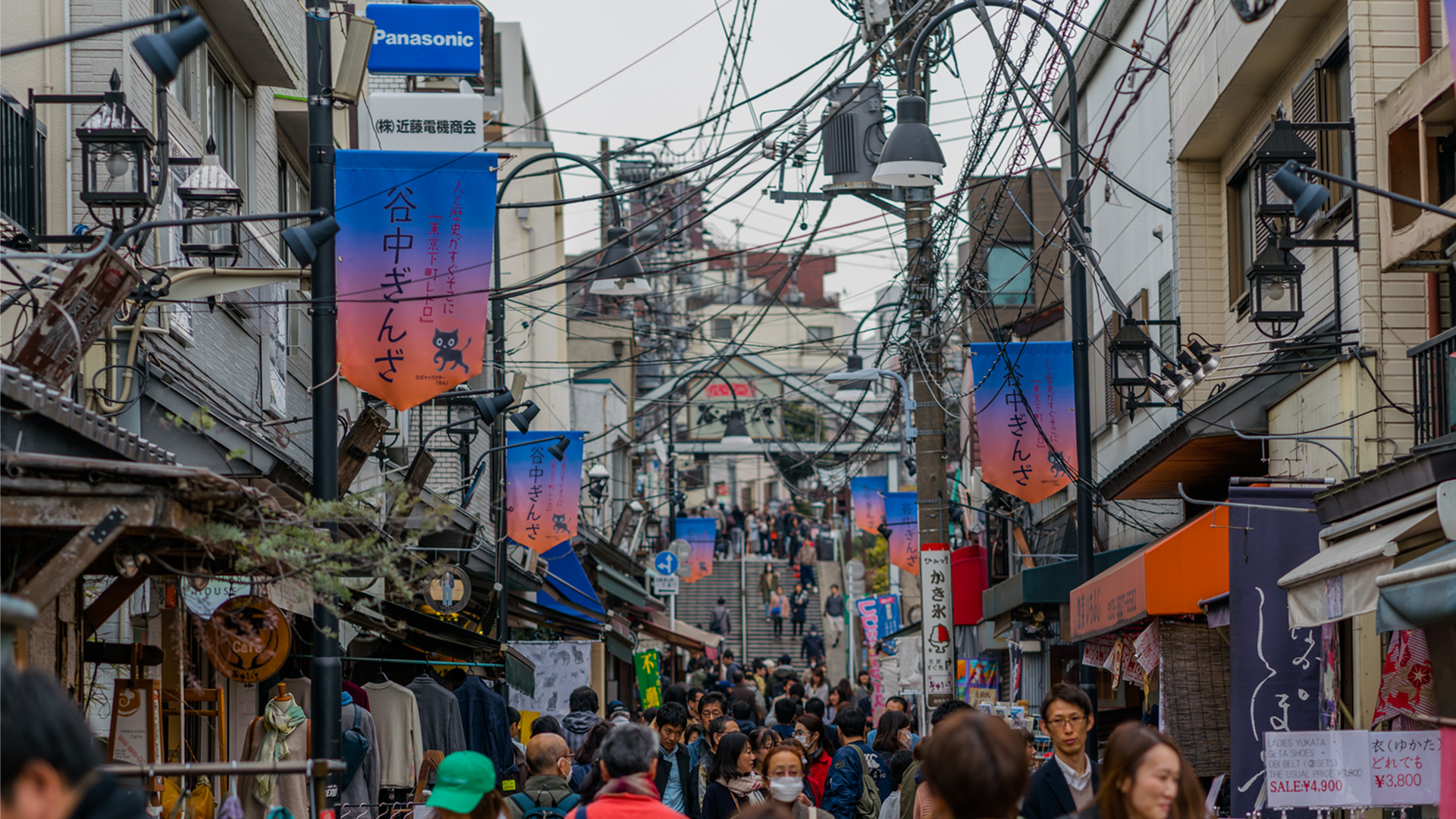
For Japan fans, this is useful because Yanaka gives you a version of Tokyo that’s easy to read on foot: 商店街 (shotengai, shopping street), cemetery lanes, tiny cafes, and enough temple names to keep your notebook busy. For Japanese learners, it’s also a good place to pick up place vocabulary in context, from shotengai and 寺 (tera, temple) to お土産 (omiyage, souvenir) and 喫茶店 (kissaten, traditional cafe), without needing a theme park version of the city.
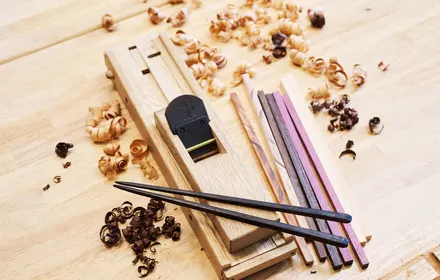


Yanaka keeps a prewar feeling in central Tokyo
Yanaka isn’t frozen in time, but it does preserve something most of Tokyo lost in the 20th century: a low-rise, walkable texture of place. According to Voyapon and other local reporting, the area survived the 1923 Great Kanto Earthquake and much of the 1945 firebombing largely intact, and that matters because the neighbourhood still reads like a lived-in district rather than a rebuilt stage set.
The scale helps. You get narrow lanes, modest storefronts, temple roofs, and the kind of human-sized distances that make you slow down without trying. That’s rare in Tokyo, where the city often feels like a series of fast transitions between stations, escalators, and convenience stores. Yanaka asks for another rhythm.
There’s also a practical reason people come here: the area is close to Ueno, but it feels quieter and older than the station district. Hand on heart, that contrast is half the point. You can move from one of Tokyo’s busiest transport nodes into streets that are almost stubbornly local, and the shift lands immediately.
What to walk in Yanaka
The easiest way to understand Yanaka is on foot. Start around Nippori or Sendagi, then let the neighbourhood pull you through its side streets, temple grounds, and the main shopping strip known as Yanaka Ginza. The whole area rewards wandering, but not in the vague, incense-and-postcard sense. It rewards attention. You notice shop fronts, lanterns, cats painted on signs, weathered wood, and the small irregularities that make a district feel inhabited.
Yanaka Ginza is the best-known stretch, and it’s a compact shotengai with around 60 shops, according to local guides. That number matters less than the function: it’s a working shopping street, not a decorative one. People come for snacks, household goods, flowers, and the ordinary errands that keep neighbourhood life visible. If you want a place to watch daily Tokyo without turning it into a performance, this is the street.
My tip: walk slowly enough to notice the side alleys. The main street gets attention, but the side lanes hold the better texture. They’re lumpy in the best sense, with turns that feel accidental and corners that open onto temples, small homes, and the sort of silence that makes your own footsteps feel louder than they should.
Useful Japanese terms for this walk
If you’re studying Japanese, Yanaka is a nice place to keep a short vocabulary list in your head. Shotengai means shopping street. Tera means temple. Kissa-ten refers to a traditional cafe, usually calmer and more old-school than the modern chains. Omiyage means souvenir, though in a neighbourhood like this it often means a snack or local confection rather than anything grand. These words are easy to memorise when they’re attached to real streets, signs, and choices.


You’ll also hear and see plenty of practical place language, the sort that helps you read maps and shopfronts without constantly translating in your head. That’s a different kind of fluency. Smaller, but useful.
Temples, cemetery paths, and the older fabric of the district
One reason Yanaka feels different is temple density. Local sources describe the area as having more than 70 Buddhist temples, which is a lot by central Tokyo standards and a clue to how the neighbourhood developed. The temples aren’t there to create atmosphere for visitors. They’re part of the street fabric, part of how the district still makes sense.
Yanaka Cemetery is another piece of that fabric. It’s open to the public and has become one of the area’s most recognisable walking routes, with broad paths, old stones, and a calm that feels almost formal. The cemetery isn’t a side attraction in the casual sense. It helps explain the shape of the district, the continuity of land use, and the way older Tokyo can still surface inside the modern city grid.
That continuity gives the walk a different emotional register. You’re not chasing spectacle. You’re moving through a district where memory has physical weight, and where the city’s past isn’t tucked into a museum but spread out across lanes, gates, and weathered markers. More soon.
How to read Yanaka as a Japan fan
For Japan fans, Yanaka is useful because it shows how a Tokyo neighbourhood can remain local without becoming a theme of itself. The cafes are small. The shops are practical. The temples are active. Even the famous cat associations around the area feel less like branding than a matter of local habit that got noticed by the rest of us dorks later on.
If you only have a few hours, keep the route simple: arrive by rail, walk the shopping street, drift into the temple lanes, and spend time in the cemetery area if you want the quieter half of the district. If you have longer, slow the pace further and let the alleys do the work. That’s usually the better method in Tokyo anyway. The city gives more when you stop trying to conquer it and start reading it at street level.
And yes, Yanaka is still Tokyo. That’s the point. It isn’t outside the city, not sealed off from it, not pretending to be another era. It’s simply one of the places where Tokyo’s older, smaller scale has survived long enough to be legible. That alone makes it worth the kilometres.
Frequently Asked Questions
Where is Yanaka in Tokyo?
Yanaka is in Taito ward, near Ueno and Nippori, in central Tokyo.
What is Yanaka best known for?
It is best known for its old street feel, temple density, Yanaka Ginza, and the cemetery area.
Is Yanaka a good place for a short walk?
Yes. The neighbourhood is compact, walkable, and easy to explore in a few hours.