I think that’s part of their appeal. The festival asks for patience, warm clothes, and a willingness to watch craft, chant, and movement unfold at their own pace, the way many old regional traditions still do.
What Shimotsuki Festival is, and why it matters
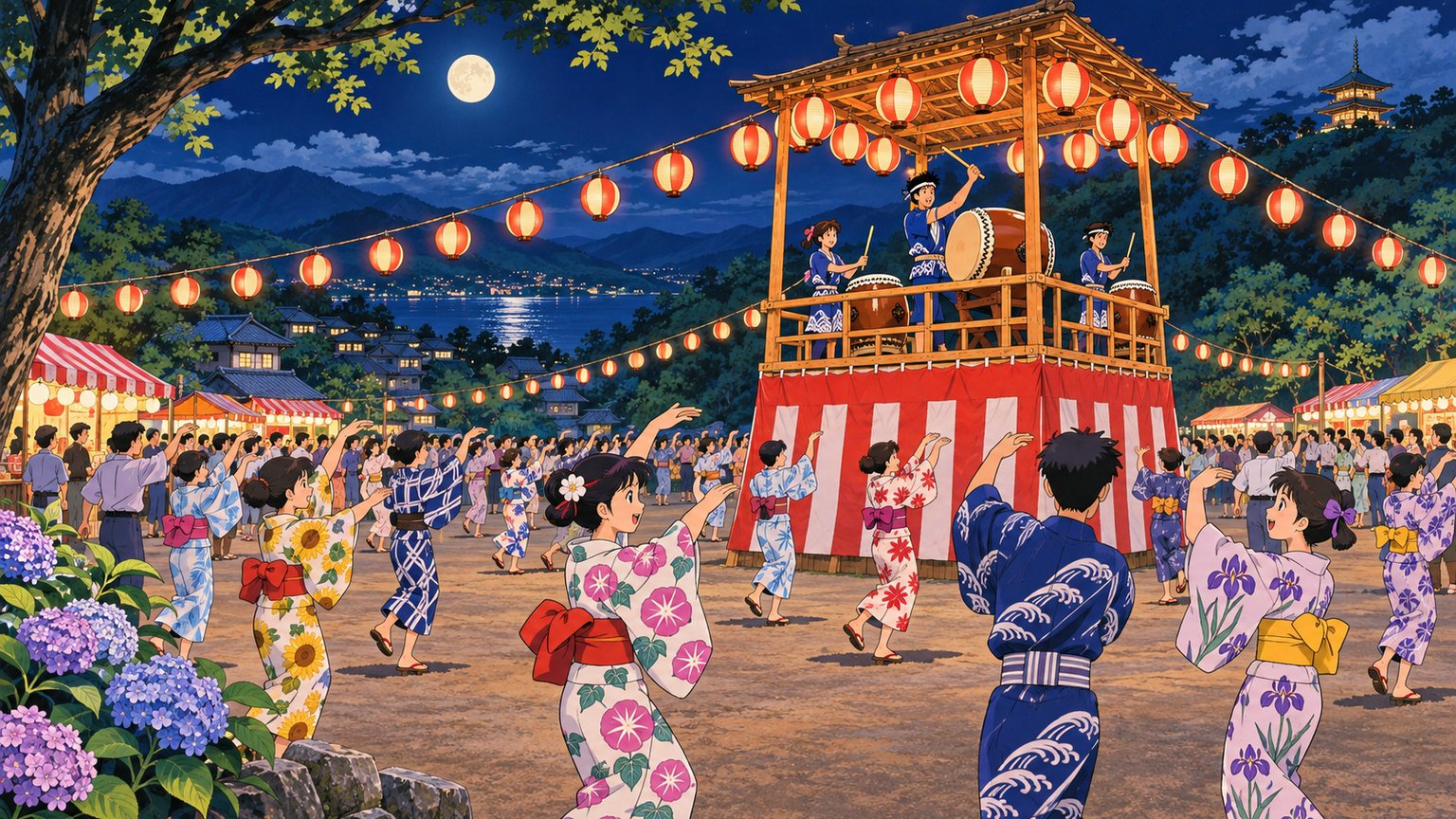
霜月 (Shimotsuki, the eleventh month of the old lunar calendar) Festival appears in the coldest part of the calendar, when the landscape has gone spare and the body notices the season first. It’s a winter festival in which local people gather for ritual fire, purification, music, and prayer, with traditions that differ from place to place but share a common feel of austerity and endurance. GaijinPot’s travel article places the festival in Nagano and southern Iwate, where communities continue to maintain it as a living practice rather than a performance made for visitors.
The name itself gives a useful clue for Japanese learners. Shimotsuki means the eleventh month in the old lunar calendar, a term that still appears in historical writing and seasonal language. It sounds old because it is old, and that matters here. The festival belongs to a calendar of cultivation, weather, and village ritual, when people marked time by what could be stored, burned, protected, or prayed over.
What I especially like is the way the festival resists easy packaging. There’s no single polished version of Shimotsuki Festival, no one-size-fits-all itinerary. Instead, it lives in local variations, each one shaped by its own shrine, its own community, its own memory of winter.
Fire, masks, and the work of ritual
Fire is the centre of gravity in many descriptions of Shimotsuki Festival. It warms, purifies, and marks a boundary between the everyday and the sacred. In some places, the rite includes masked figures, rhythmic movement, chanting, and the controlled use of heat and steam. The details differ, but the logic is familiar across many Japanese seasonal observances: remove impurity, invite renewal, and keep the community in step with the year’s turning.
For readers learning Japanese vocabulary, this is a good place to notice how the language of festival carries practical meaning. Words such as 祭り (matsuri), 待つ (matsu, to wait), and 晴れ (hare, formal; festive occasion) are common in cultural writing, but the important thing isn’t the gloss alone. It’s the way those words point to atmosphere, timing, and social space. A matsuri is not just an event. It’s a shared action with rules, roles, and a rhythm that people inherit.
The craftspeople of the festival, if I can use that word broadly, are the people who keep the forms intact. They prepare the fire, manage the space, maintain costumes and masks, and pass on lines, gestures, and sequences that would be easy to lose if no one bothered to repeat them carefully. That repetition isn’t empty. It’s the whole point.

Travelling to a winter festival without flattening it
A winter trip for Shimotsuki Festival asks for a different pace than a cherry blossom detour or a museum day in the city. Rural festival travel in Japan often depends on trains, buses, and a little extra time at the edge of the route, where the roads narrow and the last stretch takes longer than expected. The reward isn’t spectacle in the tourist sense. It’s proximity to a community event that still feels accountable to the people who made it.
Travel writers often describe festivals as if they are designed to be consumed, but this one seems to ask for a quieter posture. Stand back enough to watch, close enough to notice hands at work, and patient enough to let the ritual explain itself in sequence. My tip: plan for cold weather, small crowds, and the possibility that the most memorable moment will be a pause rather than a climax.
That also makes it useful for Japan fans who want to understand regional culture through place rather than through slogans. In Nagano, mountains shape timing and transport. In southern Iwate, winter has its own weight, and the festival feels rooted in that climate rather than floating above it. The watershed between city habits and village rhythms becomes visible in how people gather, move, and wait.
Why this festival stays with travellers
Shimotsuki Festival isn’t a glossy winter attraction, and that’s exactly why it lingers in the mind. The fire is practical before it is picturesque. The chanting is communal before it is theatrical. The masks, if present in a given locality, are not decorative extras but part of a system of meaning that has survived because people kept doing the work.
For Japanese language learners, festivals like this are also reminders that vocabulary and culture are inseparable. Terms tied to the lunar calendar, to shrine life, to seasonal purification, all carry traces of older ways of reading the year. A learner can study them from a textbook, but they make fuller sense when attached to place, weather, and people who still live by those cycles.
The festival’s quiet power lies in that continuity. It doesn’t need reinvention to justify itself, only steady hands and local belief. And so it became a plan.
Frequently Asked Questions
What is Shimotsuki Festival?
It is a winter ritual festival in parts of Japan, known for fire, purification, and community prayer.
Where is Shimotsuki Festival held?
According to GaijinPot’s travel coverage, it is associated with communities in Nagano and southern Iwate prefectures.
Is Shimotsuki Festival easy for travellers to visit?
Not always. It is a local event in cold-season rural settings, so travel can take extra time and conditions can be simple.