
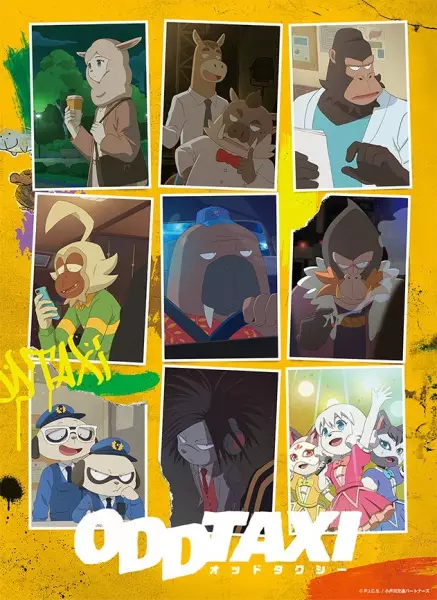
Why Odd Taxi feels fresh after five years
Question: what makes a compact 13-episode anime stay in conversations five years later? Odd Taxi's clarity is the reason. The 2021 series was tightly written by Kazuya Konomoto. Each episode focuses like a short story, yet the threads link into a coherent mystery that rewards careful watching. Here's the catch: the script treats character beats with respect, not spectacle, so every line feels like it matters. Personally, I think that economy of writing is rare, and the payoff still lands.



Script and narrative craft by Kazuya Konomoto
Here's the kicker: Kazuya Konomoto kept the dialogue grounded, using ordinary Tokyo rhythms to sell extraordinary stakes. The show uses everyday motifs, like taxi rides and late-night convenience stores, to explore themes of isolation and urban anonymity. Compared to back home, this version of Tokyo feels lived-in, not just stylised. You know that feeling when a throwaway line suddenly explains a plot point? That's written pacing working, and it's a clear signature of Konomoto's episodes.
Concrete examples of tight plotting
Speaking of which, episode structures rarely waste time. Clues are seeded in background conversations, newspaper clippings, and character routines. The result is that the mystery rewards repeat viewing, and the tight 13-episode count keeps momentum high. My tip? Rewatch episodes with notes; you'll spot dialogue callbacks and small visual cues that hint at character motivations.
Direction and style under Baku Kinoshita
It's early morning in Kyoto, or rather, in the anime studio. Baku Kinoshita's direction makes the city itself a character. The framing is often static, with tight close-ups on faces and objects, which builds tension by forcing you to listen. The reason is simple: his staging prioritises performance and atmosphere over flashy movement. That's why the series feels cinematic even at TV resolution.
Visual restraint and sound design
Here's the deal: the animation choices are minimal but deliberate. Backgrounds and layouts echo real Tokyo neighbourhoods like Ikebukuro and Shibuya, so the setting is recognisable to Japan fans. The sound design, from footsteps to distant train announcements, is used like punctuation. By the way, sound cues often signal emotional beats before dialogue explains them, so pay attention. Sounds good, right?
Tokyo milieu, social detail and cultural texture
Let me show you why Odd Taxi feels authentically Tokyo. The show leans into social rituals and everyday language, from office drinking culture to convenience store moments. It doesn't explain everything, which mirrors urban life where people keep their own private stories. Here's the catch: that kind of naturalism makes Japanese learning interesting because you hear often-used conversational patterns in context.
Learning Japanese with Odd Taxi
Know that feeling when a character uses a phrase you know but in a new tone? Odd Taxi is rich in colloquial speech. Look out for examples of giri (義理) and honne (本音) dynamics in conversations, and for compact expressions that Japanese learners can pick up, like short sentence endings that show politeness level. My tip? Pause and write phrases, then practice them aloud. Insider tip: noting pitch and rhythm helps when you're training listening skills.
Why style, sound and setting matter for fans
Here's the kicker: the show's modest budget is turned into an advantage because constraints forced creativity. Backgrounds, voice performances, and a patient soundtrack create a mood that big-budget spectacle sometimes misses. What I especially like is the way an ordinary Tokyo taxi ride turns into a stage for confession and confrontation. Classic Japan, isn't it?
Personally, I think Odd Taxi's continued relevance on its fifth anniversary owes to three things working together: script, direction, and milieu. The precision of Kazuya Konomoto's writing, the atmosphere Baku Kinoshita creates, and the honest Tokyo details form a whole greater than its parts. My verdict? This is one of those shows you'll keep revisiting, each time catching a new thread.
Frequently Asked Questions
When did Odd Taxi first air?
Odd Taxi originally aired in 2021 as a 13-episode TV series.
Who wrote and directed Odd Taxi?
The series script was by Kazuya Konomoto, and the director was Baku Kinoshita.
Is Odd Taxi useful for Japanese learners?
Yes, the series features natural conversational Japanese and Tokyo daily life scenes that are good for listening practice.

