

Overview
温泉 (onsen, hot spring; hot-spring bath) culture in Japan is not just about sitting in hot water and calling it a day. It is a living system shaped by place, hygiene, hospitality, social order, timing, water quality, and the local geology that brings mineral-rich thermal water to the surface. In other words, an onsen is both a bath and a community story… and that is exactly why it keeps drawing people in. If you are looking for an Onsen Culture guide, it helps to start with that bigger picture first: the bath is the visible part, but the town, the inn, the rules, and the people around it matter just as much.


Japan has several thousand registered onsen sites and hot spring sources, with strong concentrations in places like Oita, Kagoshima, Hokkaido, and Nagano. Many of these towns depend on their springs as a local economic engine, supporting 旅館 (ryokan, traditional inn), small shops, bus routes, food stalls, and neighborhood life. That local dependence is also why preservation tends to happen through micro-economies and community effort, not a single decision from Tokyo. And what's more, that makes the whole scene feel more human… a little fragile, sometimes, but very alive.
If you want a broader look at how the next generation is helping preserve this world, the story of How Young People Are Saving Japan's Onsen Culture is a useful starting point. It shows the balance between old infrastructure and newer communication, between tradition and practical reinvention. I think that balance is where a lot of the magic sits.
What makes an onsen different from an ordinary bath
The word onsen refers to naturally heated thermal waters, usually with high mineral content. That makes them culturally and legally distinct from ordinary baths, which is why the term matters so much in everyday Japanese life. A bathhouse can be relaxing, sure, but an onsen carries a specific sense of place, with water chemistry, local landscape, and long-held customs all folded together.
Some of the most recognizable parts of onsen culture are also the simplest: the ryokan, or traditional inn where many people stay; the 浴衣 (yukata, light cotton robe), a light cotton robe often worn around the inn; the 露天風呂 (rotenburo, outdoor bath), an outdoor bath; and the 女将 (okami, innkeeper or hostess), the innkeeper or hostess who often helps set the tone of hospitality. These are not just decorative details. They are part of the social rhythm of a hot spring stay, and they help first-time visitors understand how to move through the experience with confidence.
For readers who are studying language as they travel, Onsen Culture 漢字 (kanji, Chinese characters used in Japanese writing) and vocabulary come up constantly in menus, signs, and booking pages. Even if you are only learning the basics, words like onsen, ryokan, yukata, rotenburo, and okami will appear again and again, so they are worth keeping close. If you are using this as part of Onsen Culture japanisch lernen, the nice part is that the vocabulary is practical immediately, not abstract or classroom-only.
How younger locals are keeping hot spring towns alive
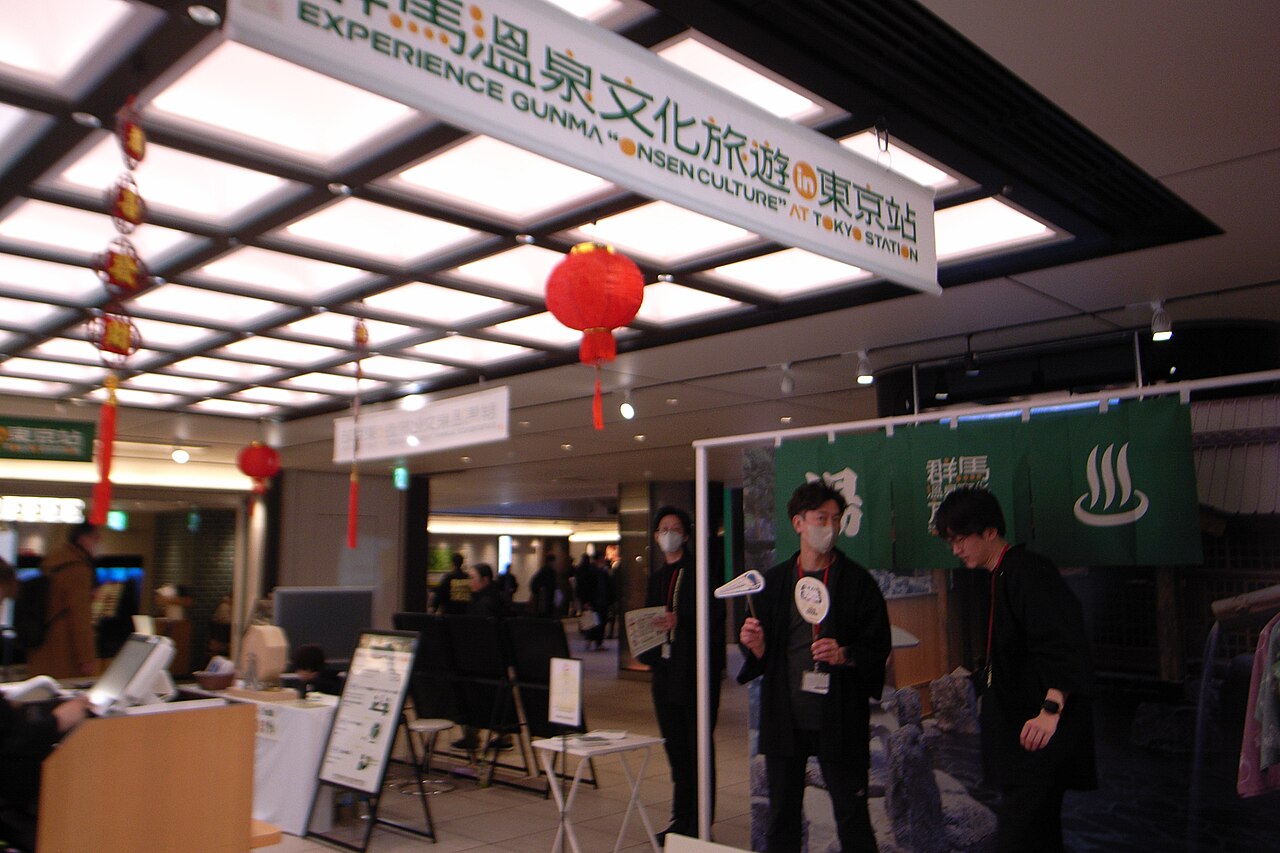
Many onsen towns are facing the same pressures: aging buildings, older operator families, and weakening rural economies. That combination can make even beloved hot spring districts feel vulnerable. But the response has been encouraging. Younger operators and local residents are stepping in with renovations, clearer visitor guidance, digital reservation systems, bilingual and multilingual signs, redesigned town maps, and local events that make these places easier to understand.
One of the most interesting shifts is that preservation is becoming more communicative. A town does not only fix a building and hope for the best. It also explains itself better. Cafes in old buildings, neighborhood events, and map redesigns help first-time visitors figure out where to go, what to do, and how not to feel awkward. That sounds small, but in onsen culture small things matter a lot. A clearer sign, a friendlier route from the station, or an easier 予約 (yoyaku, reservation), meaning a reservation, can make the difference between a place being admired from afar and a place being actually used.
This is also where the newer generation’s practical creativity shows up. Some initiatives focus on preserving the atmosphere of a town while making it more readable for visitors. Others create spaces that blend daily life with tourism in a gentler way, so the area does not become a theme park version of itself. If you want a sense of this newer energy, the local coverage around Wie junge Leute Japans Onsenkultur retten offers a good window into the local side of the story.
Why hospitality and etiquette matter so much
Onsen are not only about soaking; they are also about shared behavior. The culture is built on timing, order, and a kind of quiet mutual respect that helps many people use the same space comfortably. This is why おもてなし (omotenashi, thoughtful, anticipatory hospitality), the carefully considered hospitality Japan is known for, shows up so naturally in onsen towns. It is not just about being nice. It is about anticipating what a guest needs before the guest has to ask.
When people talk about onsen etiquette, they are usually talking about a whole system of habits rather than a single rule. That includes washing before entering the bath, keeping voices low, and understanding the unspoken flow of the space. For a visitor, that can sound intimidating at first… until you realize the system is designed to make shared use easier, not harder. Once you understand the rhythm, it becomes one of the most welcoming parts of the experience.
And beyond that, the hospitality is local. Different hot spring towns have different personalities, because the water, the streets, the inns, and the people are different. Some feel lively and busy, some feel quiet and reflective, some are deeply tied to surrounding farms or mountain communities. That variation is a big reason onsen culture remains so compelling: it is not one single style, but a family of places.
Where to experience onsen culture in Japan
If your goal is to experience onsen culture in Japan, think in terms of towns rather than isolated baths. A good hot spring stay usually combines the bath itself with a ryokan stay, local food, a walk through the town, and maybe a stop at a small shop or cafe. The point is to spend enough time to feel the place around the water, not just the water alone.
- Look for established hot spring towns in regions with strong onsen traditions, especially in prefectures such as Oita, Kagoshima, Hokkaido, and Nagano.
- Choose a ryokan if you want the full onsen experience, including yukata, local hospitality, and easy access to baths.
- Check whether the town has multilingual signs or digital reservation systems if you are traveling independently.
- Visit places with active local renewal projects, since those often make first-time visits smoother and more welcoming.
- Use local maps and visitor guidance when available, because onsen districts often blend neighborhood life with tourism rather than separating them.
For travelers who care about practical access, that last point matters a lot. The best onsen experiences often happen in places that still feel lived in, not overly packaged. And if a town has updated its signs, map design, or booking flow, that is often a sign the local community is making a serious effort to keep the culture usable as well as beautiful.
There is also growing international attention. JTB’s KAWAII-themed promotion shows how onsen are being framed for overseas audiences with a softer, design-forward image that emphasizes accessibility and photo-friendly appeal. It is a very modern angle, and if it helps more people feel comfortable visiting, I think that can be a good thing. The trick is keeping the charm without flattening the culture into a poster.
For a look at how that kind of outreach is being discussed, see JTB wirbt mit KAWAII-Onsens weltweit. It connects neatly with the bigger story here: onsen culture survives when it can speak to new audiences without losing its local roots.
Why this tradition still matters now
Onsen culture matters because it ties together environment, economy, and everyday life in a way few other travel experiences do. The water comes from the land, the town grows around it, the inns and buses rely on it, and the hospitality gives it meaning. That whole system is worth protecting, not just the bath itself.
And I think that is the quiet lesson here. Onsen culture is not frozen in the past. It changes when younger residents open cafes in old buildings, when towns redesign their maps, when multilingual signs help more people understand the rules, and when new projects like Jalan ONSEN BATON reframe hot spring travel for the future. The old and the new are not enemies. They are usually in conversation.
So if you are planning where to experience onsen culture in Japan, go with curiosity. Stay long enough to notice the small things. Read the signs. Follow the local flow. Ask questions when you can. You will eventually find your own place in Japan… and onsen towns are a very good place to begin that search.
Frequently Asked Questions
What is onsen culture in Japan?
Onsen culture is the wider system around hot springs, including the water, the town, etiquette, hospitality, and local identity, not just bathing itself.
How is an onsen different from a regular bath?
An onsen uses naturally heated thermal water with mineral content, and it is culturally and legally distinct from ordinary baths.
Where can I experience onsen culture in Japan?
The best places are established hot spring towns, especially in prefectures such as Oita, Kagoshima, Hokkaido, and Nagano, often through a ryokan stay.
Why are younger people important to onsen culture?
Younger operators and local residents are helping preserve hot spring towns through renovations, bilingual signs, map redesigns, digital reservations, and local events.
What Japanese words should I know for an onsen trip?
Useful words include onsen, ryokan, yukata, rotenburo, okami, and yoyaku, since they appear often in onsen travel and hospitality.