
Seriously, this is the kind of local event that tells you a lot about Japan, especially if you're learning the language and culture at the same time. You get a place name, a seasonal festival, and a simple but memorable kanji symbol, all tied together in one evening. Not bad, right?
Hakone Gora Onsen Domonji-Yaki 2026 is confirmed for August 16
The 105th Hakone Gora Onsen Domonji-Yaki will take place on August 16, 2026, in Hakone-machi, Kanagawa. According to the announcement, about 2,000 fireworks are planned for the event, making it a compact but highly memorable summer night rather than a giant citywide spectacle.
Let me show you why this matters. Hakone already has strong name recognition among Japan fans thanks to its ryokan, hot springs, lake views, and mountain scenery, but this festival adds a very local layer. If you're studying Japanese, this is the sort of event where words like onsen, 祭り (matsuri, festival), and 山 (yama, mountain) stop being textbook vocabulary and start feeling connected to real places. Convinced yet?
The Domonji-Yaki tradition and the 'Dai' symbol on Myojogatake
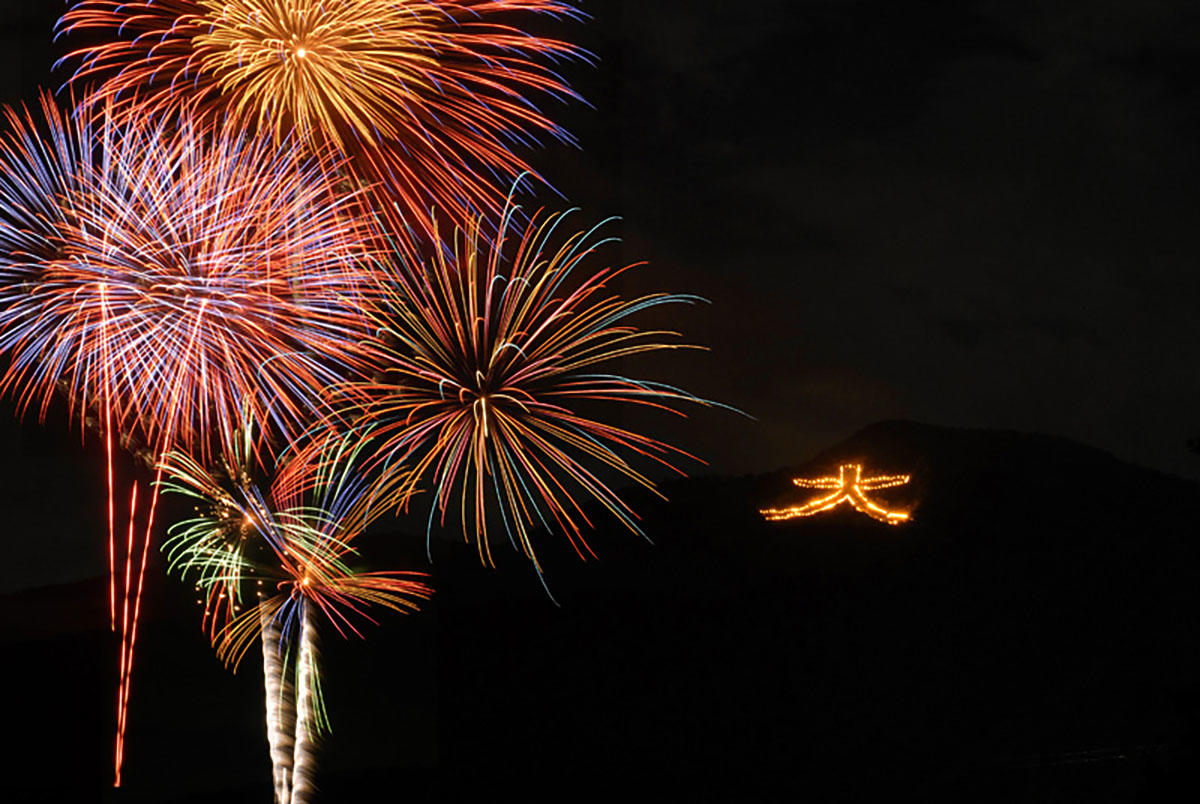
The reason's simple: the event is built around a mountain ritual, not just fireworks. The famous '大 (Dai, big; great)' character, written as a huge kanji shape, is set ablaze on Myojogatake mountain, and that image has become the heart of Hakone's summer identity.
What many overlook is that this isn't just for drama. In Japan, fire has long carried meanings of purification, farewell, and seasonal marking, so a mountain-burning ritual like this has cultural weight beyond the visuals. For learners, the kanji itself is a nice bonus, since dai means 'big' or 'great', and it's one of those basic characters you'll see everywhere from signs to names. Sounds good, right?
Why the kanji angle helps Japanese learners
A great example is this: if you can spot dai in everyday Japanese, you start noticing how kanji works in real life, not only in flashcards. That makes festivals like this more useful than they first appear, because they connect language, geography, and tradition in one clean snapshot.
My tip is to pay attention to the place name too when you read about local events in Japan. Hakone-machi, Kanagawa, and Myojogatake are the kind of names you'll keep seeing in travel guides and news stories, and they help build that all-important reading confidence. Simply brilliant.
Why Hakone's summer events still draw attention
Before I forget, Hakone is one of those places that feels especially strong in summer, because the area already has a built-in rhythm of travel, nature, and evening entertainment. A fireworks count of about 2,000 might sound modest compared with massive national displays, but in a mountain setting it can feel much more intimate and atmospheric.
Trust me on this one: smaller local festivals can be easier to appreciate than the biggest headline events. You can focus on the setting, the mountain silhouette, the timing, and the tradition itself instead of being overwhelmed by scale. For Japan enthusiasts, that's often where the real charm sits, and it gives you a better sense of how regional culture works on the ground. Insider tip:
The best part is the combination of the burning 'Dai' on Myojogatake and the fireworks in Hakone-machi, which creates a clear seasonal image that sticks in your head. If you're building Japanese vocabulary, this is a good moment to learn how one event can blend festival language, landscape terms, and seasonal atmosphere. My verdict:
Frequently Asked Questions
When will Hakone Gora Onsen Domonji-Yaki 2026 take place?
It is scheduled for August 16, 2026.
Where is the event held?
It takes place in Hakone-machi, Kanagawa, with the mountain ritual centred on Myojogatake.
How many fireworks are planned?
About 2,000 fireworks are planned for the 2026 event.


