
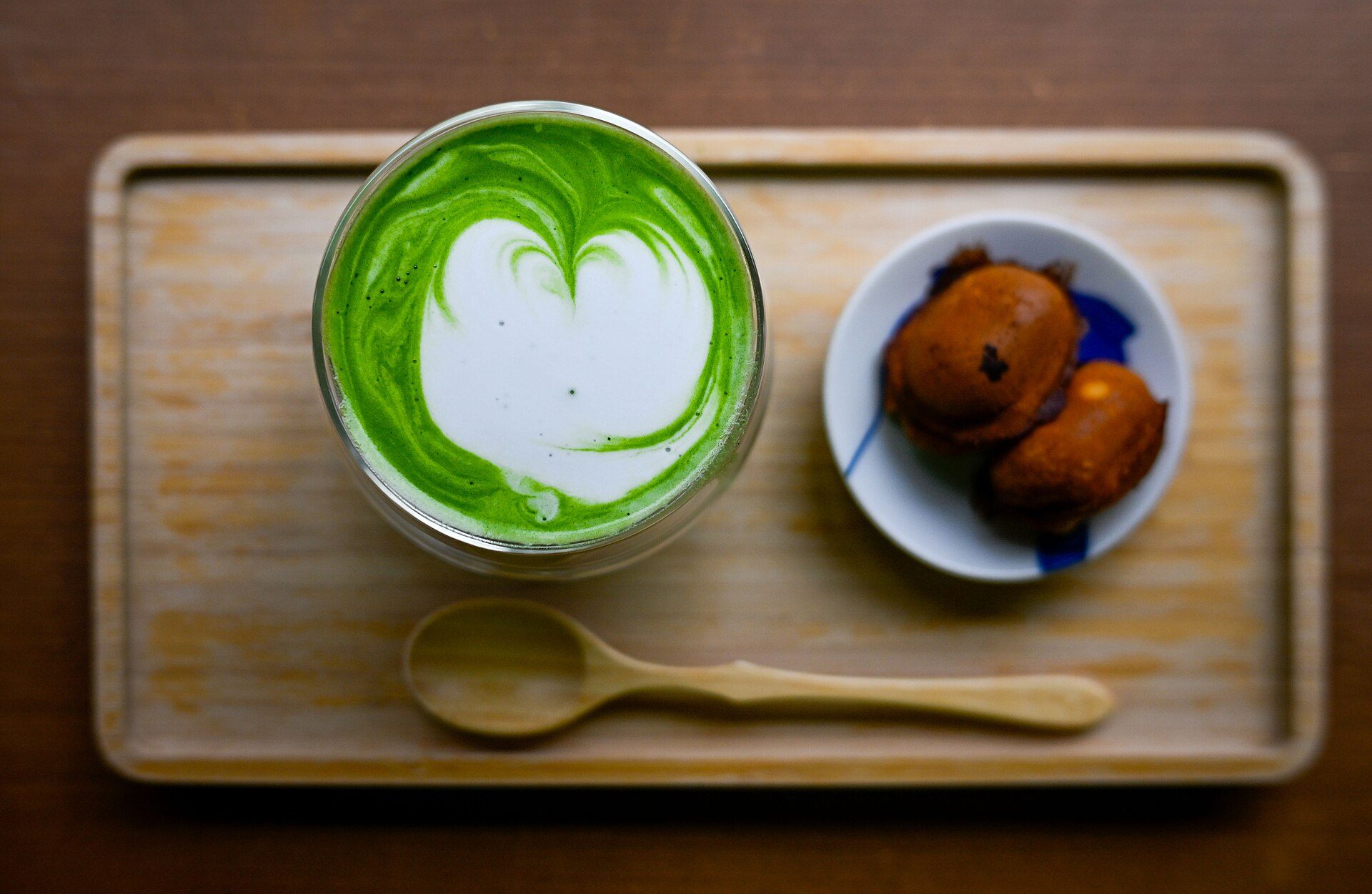
If you’ve ever wondered why some 抹茶 (matcha, powdered green tea) tastes sweet and creamy while other green teas feel sharper, this is the part of Japanese tea culture worth knowing. It’s a small detail, but it explains a lot. Sounds good, right?
Shade-grown matcha starts with a covered tea field
Imagine a narrow alley in Tokyo. Now swap the concrete for rows of tea bushes, and you’ll get a rough picture of how careful Japanese tea farming can be. For shade-grown matcha, the tea plants are covered before harvest, usually with reed screens, black netting, or other materials that block sunlight for several weeks.
No exaggeration: this isn't a random tradition for show. The goal is to reduce direct light so the leaves change how they grow. Less sun means the plants produce more chlorophyll, which gives the leaves a stronger green colour, and they also build up more theanine, the amino acid linked to that mellow, almost 旨味 (umami, savory taste; umami)-like sweetness. That’s why matcha can taste soft and round instead of grassy and sharp. But that’s not all.
Why tea plants are shaded before picking
Quick detour: the Japanese word to know here is 被せ (kabuse, shade covering), often used for shaded tea, while very highly shaded tea for premium matcha can be covered longer and more deeply. The exact method varies by region, farm, and grade, but the basic idea stays the same. Covering the plants before harvest helps create leaves that are better suited for stone-grinding into fine powder.
To be fair, shading isn't just about flavour, it's also about texture and colour. Matcha makers want a vivid green powder, not something dull or yellowish. When the leaves are shaded, they stay tender and chemically different from regular 煎茶 (sencha, unshaded green tea) leaves. After picking, they’re steamed, dried, and processed into 碾茶 (tencha, tea leaves for matcha), then ground into matcha. If you’ve seen matcha used in sweets, lattes, or 和菓子 (wagashi, Japanese sweets), this is why the taste holds up so well. Once you know this, you start noticing the difference immediately.
What shade-grown matcha tastes like in the cup
Know that feeling when a drink surprises you by being smoother than expected? That’s often shade-grown matcha. Compared with non-shaded green tea, it usually has less bitterness, more body, and a deeper umami note. People often describe it as creamy, marine, nutty, or slightly sweet, even when nothing has been added.
My tip: if you’re learning Japanese, this is a nice food vocabulary moment too. The tasting notes often come up in cafés and tea shops, and words like 甘い (amai, sweet) for sweet, nigai for bitter, and umami are easy to remember when you connect them to a real cup of tea. You’ll also hear saika used for bright colour in some contexts, and that green hue is one of the first signs of good shade-grown tea. Wild, isn't it?
A small farming method with a big cultural footprint
Compared with back home, tea often gets treated like a simple pantry item, but in Japan the production side matters a lot. Shade-grown matcha is part of a longer tea culture that includes Uji in Kyoto, Nishio in Aichi, and other regions known for careful cultivation. In premium settings, growers may shade the plants for around 20 days or more before harvest, sometimes longer for very high-end tea.
No wonder, because the demand for matcha has spread far beyond tea ceremony rooms. It shows up in soft serve, cheesecakes, KitKat bars, and café menus from Osaka to Paris. Still, the best matcha starts in the field, not in the blender. When tea plants are covered before harvest, the farmer is shaping flavour long before the leaves reach your bowl. Personally, that’s the part I love most, because it turns one cup into a story about light, patience, and craft. This is my absolute hidden gem!


