
Overview: Six Years, One Bag
Walk any residential street in Japan in the first two weeks of April — a couple of kilometers of ordinary neighborhood blocks is usually enough — and you'll see them: clusters of six-year-olds, stiff-backed and slightly overwhelmed, hauling boxy, hard-shelled backpacks that look built for something more strenuous than a two-block walk to school. That's the ランドセル (randoseru, sturdy backpack carried by Japanese elementary school students), and it is, without much exaggeration, the most recognizable object in Japanese childhood. The word itself is a loanword — it comes from the Dutch "ransel," meaning simply "backpack," a small linguistic souvenir of Japan's old trade contact with the Dutch. The bag as we know it has been standard elementary-school gear since the Meiji era, and its central rule hasn't changed since: one randoseru, bought before first grade, carried every school day through sixth. Six years, one bag. No swapping it out because you're bored of the color.
For most families it isn't just supply-closet gear; it's a rite of passage, often gifted by grandparents in the months before a child starts school, sometimes at real cost to make the moment matter. I've watched enough of these handoffs, half-overheard on trains and in shopping arcades, to recognize the specific pride in it — a grandmother naming the color her granddaughter picked, unprompted, twice.
Leather, Clarino, and the Anatomy of a Well-Built Pack
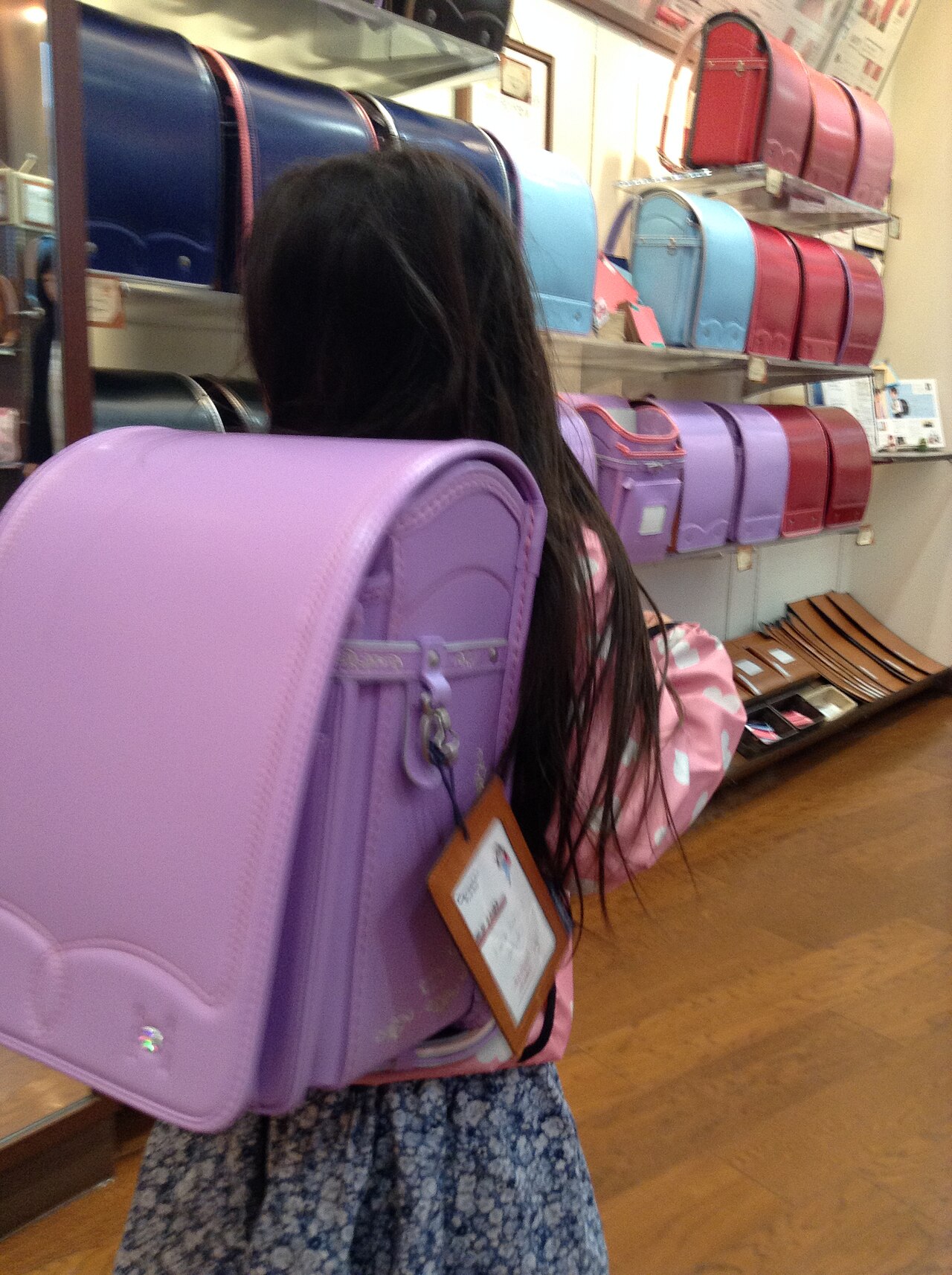
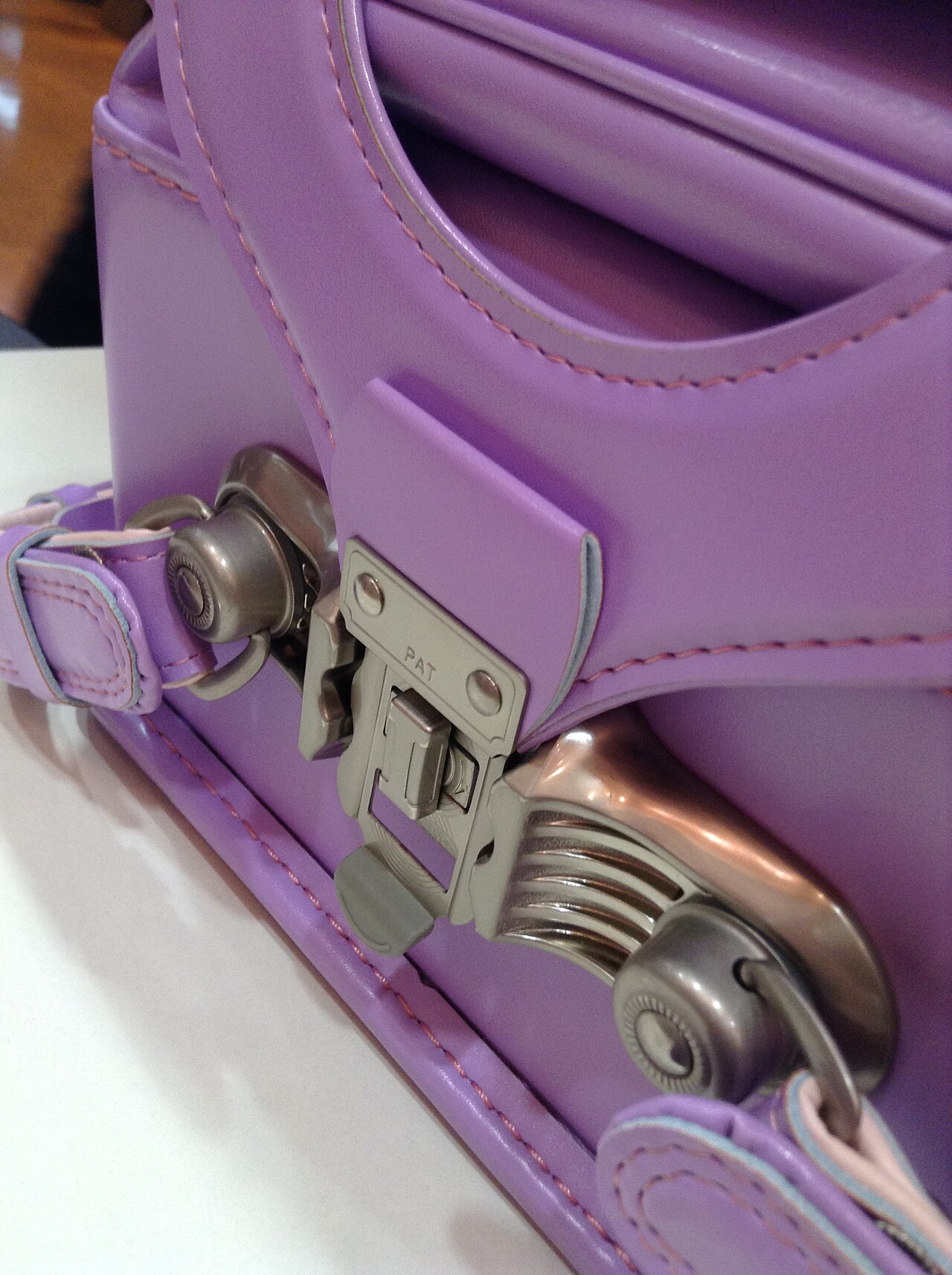
Six years of daily abuse — tossed on classroom floors, sat on, rained on, dragged — is a serious engineering brief, and randoseru makers treat it as one. Most modern bags are built from Clarino, a synthetic leather developed by the Japanese company Kuraray specifically because it balances weight, strength, and water resistance better than real hide does. Premium models go the other direction: full-grain cowhide leather, heavier and pricier, that develops a rich texture and patina over its six years of service the way a good pair of boots does. Either way, the construction underneath is the real story — reinforced edges and corners, brass or nickel hardware, dense or doubled stitching at every stress point, and reinforced base plates so the bag survives being dropped, sat on, and used as an impromptu stool without ever going lumpy under the weight of textbooks. Interiors are engineered for weight distribution as much as storage: padded backs, adjustable shoulder straps, rain-resistant seams, compartments sized for books rather than whatever a kid wants to cram in. Most manufacturers back all of this with a six-year warranty — not a marketing flourish so much as a direct match to the bag's intended lifespan.
Color has loosened considerably from the old default of red for girls and black for boys. A department-store randoseru floor now stocks lavender, caramel brown, and dozens of shades in between, alongside the classics.
Why Randoseru Prices Keep Climbing
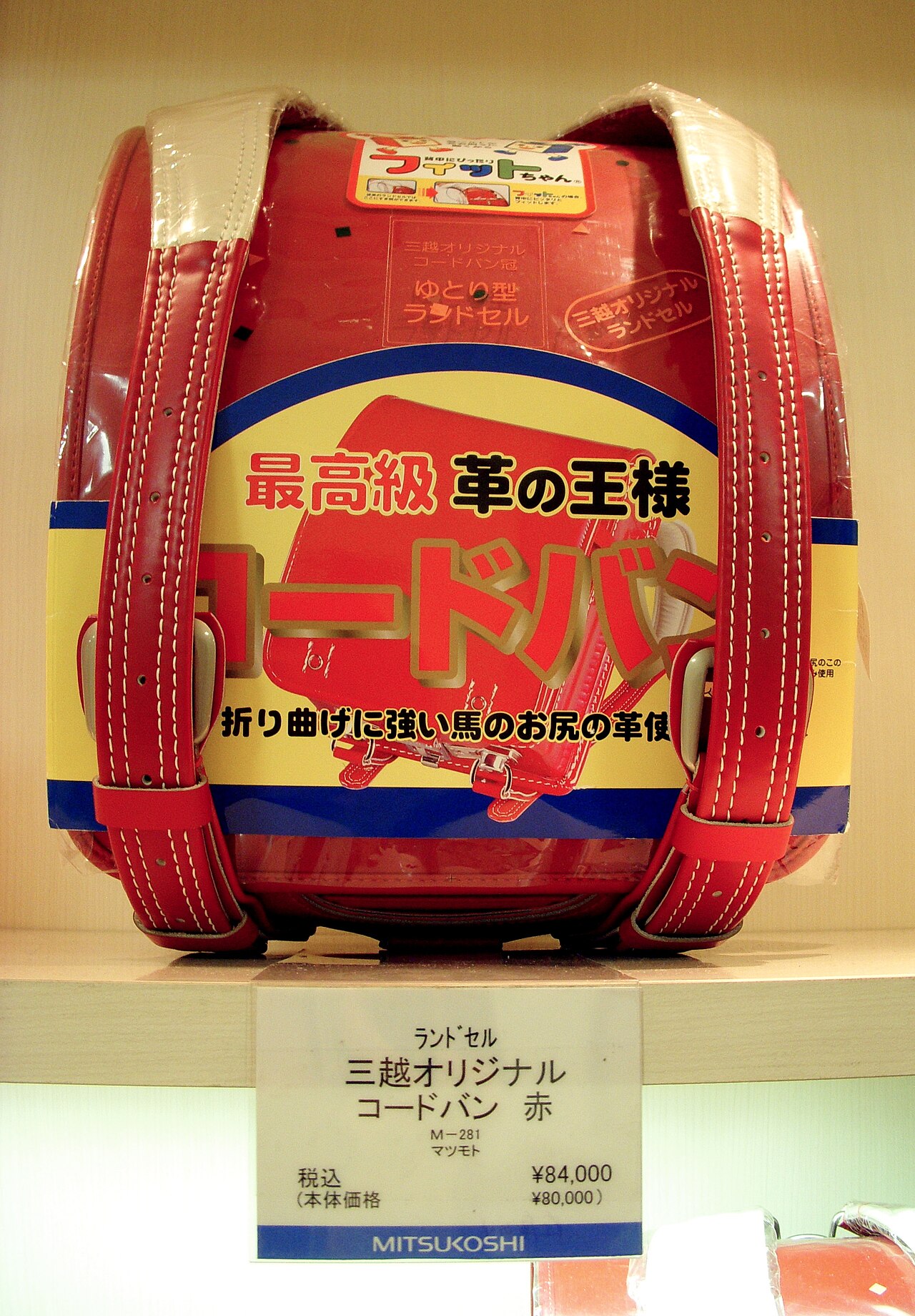
Here's the part that's changed the character of randoseru shopping: the price. A Kyodo News report on the market noted average prices climbing noticeably in recent years, with premium models now regularly clearing 80,000 yen. Entry-level bags still start around 30,000 yen, and the broad middle of the market — the typical randoseru most families actually buy — runs roughly 30,000 to 80,000 yen. Above that, luxury models reach up toward 100,000 yen and, at the very top, well past it: Tsuchiya Kaban's high-end and collaboration lines, including the HERTE series, run up to around 190,000 yen, while Seiban, another major maker, generally keeps its lineup at or under 100,000 yen. Worth noting for reference: at exchange rates from mid-2026 (roughly 159 yen to the dollar), that 100,000-yen threshold works out to about $630 USD — easy to round up to a bigger, scarier number than it actually is.
The reasons behind the climb are fairly ordinary, even if the bags themselves aren't: higher raw material costs, a broad shift toward premium synthetics as the baseline rather than the upgrade, and a marketing turn toward the language of craftsmanship — atelier production, hand-stitching, limited colorways sold as small-batch drops rather than plain inventory.
The Sales Battle: Timing a Purchase Around Golden Week
There's a name for the retail scramble around all this: ランドセル商戦 (randoseru shousen, the seasonal sales battle/rush for school backpacks), the "randoseru sales battle," and it's exactly as competitive as it sounds. The main season runs from January through Golden Week — the late-April-to-early-May holiday stretch — even though the Japanese school year actually starts in April, a full season before Golden Week even arrives. That gap is the point. Families deliberately buy early to coordinate household budgets, to give relatives (grandparents, again) time to contribute as gifts, and to avoid the real risk of a preferred color or model selling out before the following spring's entrance ceremony. Retailers, if anything, keep pulling the whole calendar earlier year over year — sales pushes for next year's incoming class often start before the current school year is even finished.
If you're paying attention to the incentives rather than the sticker price, the pattern is worth knowing: special or limited colors, free monogramming, and outright discounts are mostly early-bird tools, offered from January or February through spring to pull orders forward. Once the season actually peaks, around Golden Week into May and June, that logic flips — popular colors and models sell out rather than get marked down further. Buy early for the deal; buy late and just hope your color's still on the shelf. Retailers also lean on installment payment plans, dedicated "grandparent gift" purchase options, free engraving, and hybrid setups where a child tries bags on in person and the family finalizes the order online.
Spotting the Season on the Ground in Japan
You don't need a child enrolled in Japanese elementary school to take in randoseru season — you just need to be walking the right streets at the right time of year. April mornings are the obvious window: any residential neighborhood near a 小学校 (shougakkou, elementary school) will have sidewalks full of new randoseru, backs a little too straight, straps a little too new. Department stores are the other entry point — flagship stores in Ginza and their counterparts in Osaka typically dedicate real floor space to randoseru displays from January onward, letting you see the full range of colors and construction side by side, from entry-level Clarino to leather pieces that will outlast their owners' patience for them. There are unverified reports that some neighborhood shops — Kichijoji and Nakameguro in Tokyo have been mentioned — stock extra sample bags and add staff for the seasonal rush, though I haven't been able to pin that down to a source solid enough to state as fact, so take it as a lead rather than a plan. What I can vouch for, on foot, is the department-store fair itself: go in January or February, before the early-bird window closes, and you'll get an unhurried look at genuinely wide-ranging craftsmanship — plus, if you're the type (I am), a decent excuse to handle some very well-made brass hardware.
A Small Vocabulary Detour
Randoseru is a good word to learn early if you're studying Japanese, precisely because it isn't native — it's an old loan from Dutch, filtered through Japanese phonetics until "ransel" became "randoseru." Around it sits a small, useful cluster of vocabulary: 小学生 (shougakusei, elementary school student), an elementary school student; 入学 (nyuugaku, school entrance / enrollment), school entrance or enrollment, the event the whole randoseru season is really organized around; and randoseru shousen itself, that "sales battle" phrase retailers use without apparent irony. None of these are obscure or textbook-only — they show up in real conversations every spring, on the news, in shop windows. Learning them is a small, concrete foothold into a much bigger seasonal ritual, and a decent argument for spending a January afternoon in a department store aisle instead of just reading about one.
