

Overview
There's a specific kind of quiet on the platform at Hakata Station just before a Kyushu 新幹線 (shinkansen, bullet train / new trunk line) pulls in, and then it breaks into that soft whoosh of a train arriving right on time, like it's nothing. I still get a small thrill from it. The Kyushu Shinkansen 燕 (tsubame, swallow (bird)) is JR Kyushu's shinkansen service running between Hakata Station in Fukuoka and Kagoshima-Chuo Station down at the southern end of the island, a route of about 257 kilometers that's been running end to end since the full Kyushu Shinkansen line opened in 2011. It's a genuinely practical way to move through Kyushu. But it's also, for reasons I'll get into, become something more than that for a lot of people here.
The Route and the Trains You'll Actually Board
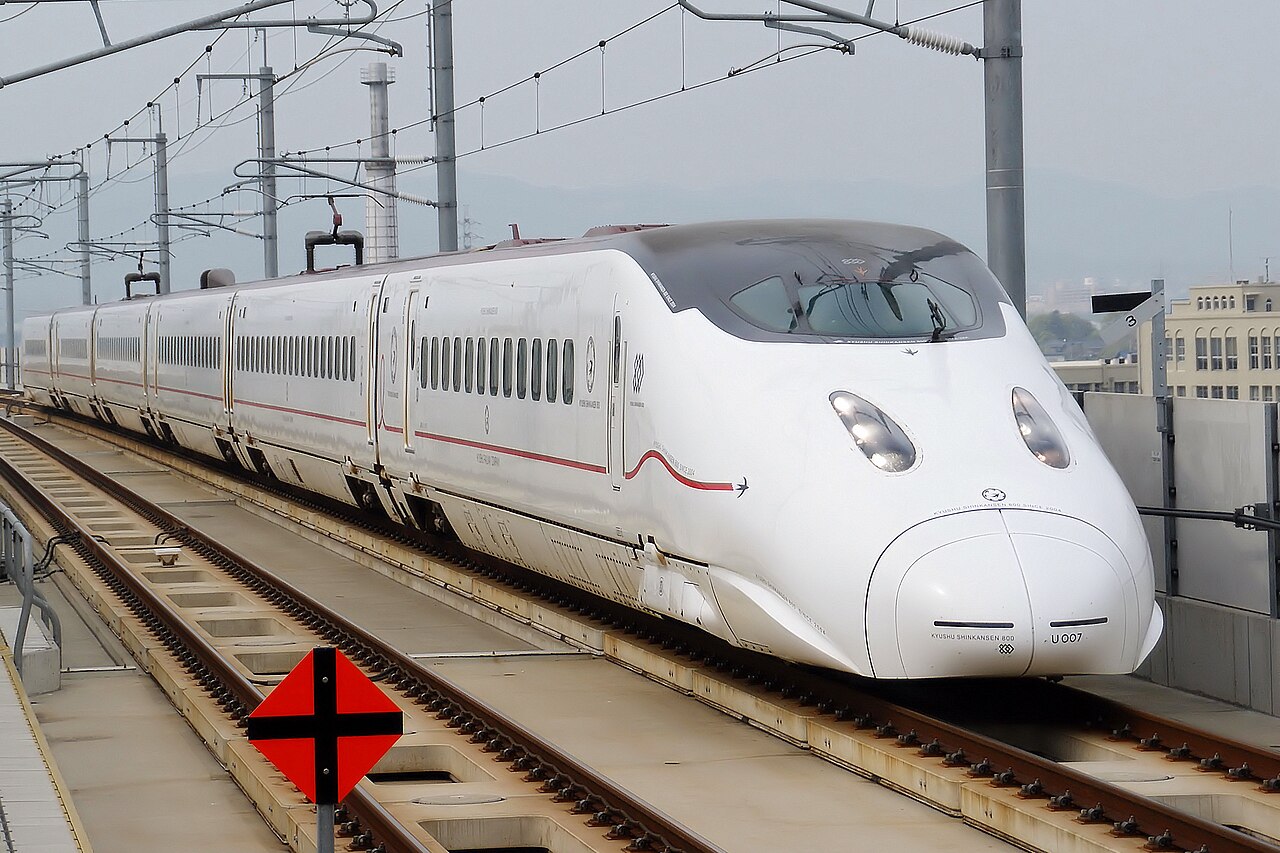
The Tsubame generally runs as the more local, all-stations option on the Kyushu Shinkansen tracks, and you'll most often find it riding on 800 series trainsets, trains introduced back in 2004 and specifically engineered to handle Kyushu's tighter curves more smoothly than a straight import of an older shinkansen design could. Tsubame services run as either six-car or eight-car sets depending on the time of day. JR Kyushu also runs N700 series variants on some of the faster through services sharing these same rails, so if you've got your heart set on a particular train, it's worth double-checking the timetable rather than assuming, because Kyushu's shinkansen fleet is a genuinely mixed one.
What the Name Tsubame Actually Means
Tsubame simply means "swallow," the bird, and it's not a new name invented for the shinkansen era. It previously belonged to a legendary limited express train that ran through Kyushu long before bullet trains ever existed here, so when JR Kyushu brought the name back for its shinkansen service, they were reaching into railway history rather than starting fresh. I love that about train naming in Japan generally: so much of it is inherited, a small nod passed down from one generation of rolling stock to the next.
What Actually Happened in the 2016 Kumamoto Earthquakes
This is where the story gets heavier, and where a lot of the details floating around online get a little muddled. In April 2016, Kumamoto was hit by two major shocks: a magnitude 6.2 quake on the 14th, followed by a much stronger magnitude 7.0 quake on the 16th. Together they killed more than 270 people and left tens of thousands homeless. Kumamoto Castle, long a symbol of strength and dignity for the region, was severely damaged. Shinkansen service across the affected area was suspended while crews inspected track geometry and tunnel integrity before anything could run again.
You may have heard a version of this story where eight Kyushu Shinkansen trains derailed at the Kumamoto depot. That's not quite what happened. In reality, only a single out-of-service train, with no passengers aboard, derailed, and it happened on elevated track south of Kumamoto Station while it was heading to a rail yard, not at the depot itself. And the line's recovery wasn't the years-long ordeal some accounts suggest, either: full Kyushu Shinkansen service was restored within about two weeks, reopening with reduced speed and frequency on April 27, 2016. That speed of recovery is honestly a big part of why the Tsubame carries the weight it does here now.
Depots, a Streetside Parade, and Where the Trains Actually Live
A quick correction that trips up even people who've lived here a while: the huge shinkansen depot near Hakata, the Hakata General Rolling Stock Center, belongs to JR West, not JR Kyushu. JR Kyushu's own main shinkansen maintenance depot is the Kumamoto General Rolling Stock Center in Kumamoto itself, a lesser-known detail that says something about how the two companies' Kyushu networks actually overlap and divide.
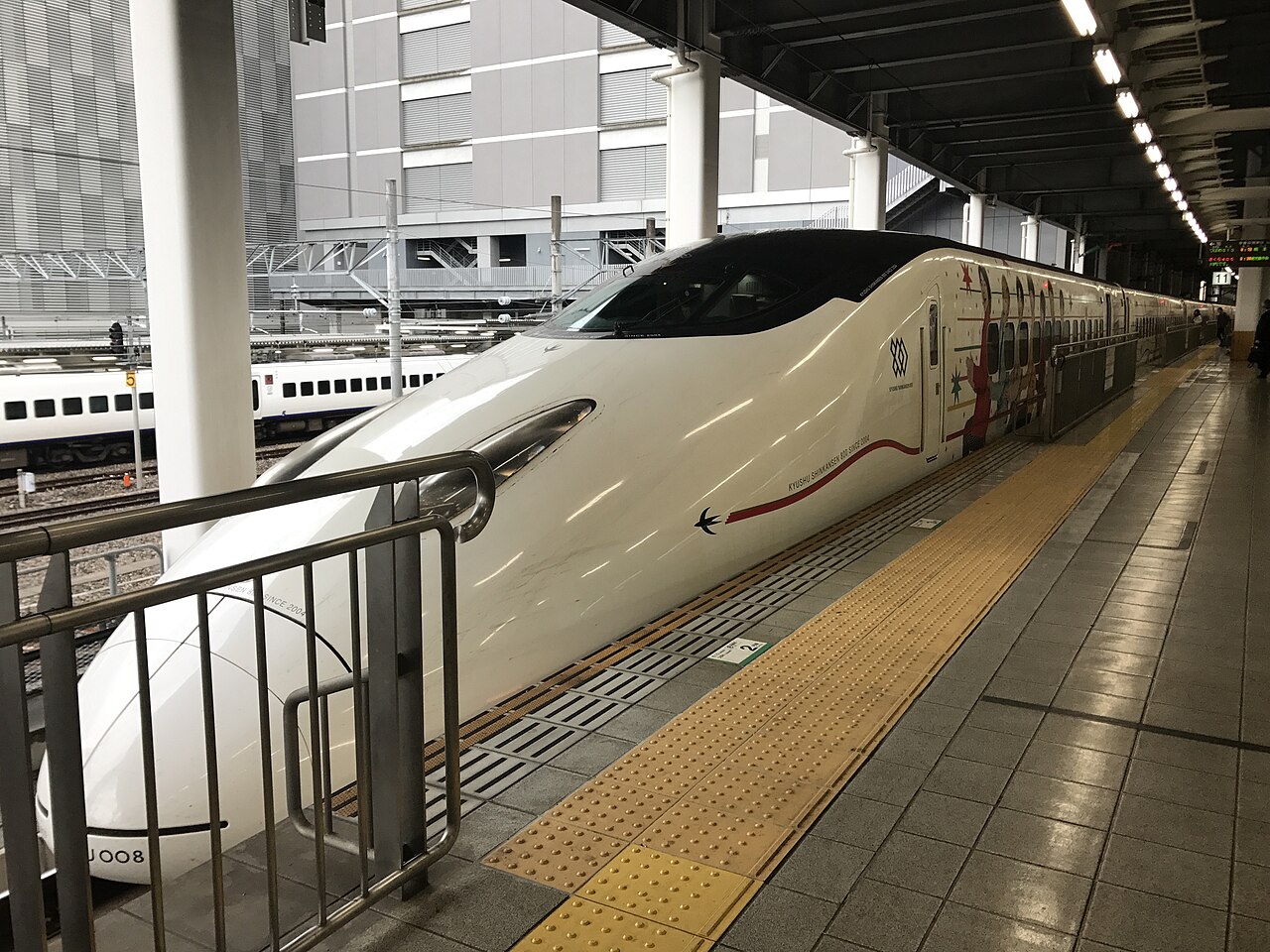
And what's more, one of my favorite recent Tsubame stories has nothing to do with an emergency repair at all. In April 2026, marking fifteen years since the Kyushu Shinkansen fully opened, the damaged lead car from the 2016 earthquake was hauled overland by road cranes through the streets of Fukuoka City in the early hours of April 8, then put on display at JR Hakata Station Plaza through April 19. Picture a shinkansen nose cone rolling slowly past shuttered shopfronts before dawn. That's the kind of detail that turns a transit line into a piece of local memory.
Where Things Stand Right Now
Here's the part that keeps this an evolving story rather than a closed one. A new magnitude 7.1 earthquake struck Kumamoto on July 28, 2026, roughly ten years after the original disaster, and it halted Shinkansen service again. The northern section reopened within days, and the southern segment between Shin-Minamata and Kagoshima-Chuo followed on August 7, though currently at greatly reduced frequency. The middle section, between Kumamoto and Shin-Minamata, remains closed as of this writing and isn't expected to reopen before September 2026. What's striking, though, is that despite more than 200 recorded locations of rail and infrastructure damage in this newer quake, no Shinkansen trains derailed at all, which says something about how much the line's engineering has been reinforced since 2016. If you're planning a trip along this route, it's worth checking JR Kyushu's own service updates before you go, since the situation is genuinely still moving.
Riding the Tsubame Yourself
None of this history changes the fact that riding the Kyushu Shinkansen Tsubame end to end, or even just a stretch of it, is one of the more satisfying ways to get a feel for the island. A few things I'd suggest if you're going to do it:
- Start at Hakata Station in Fukuoka, where the Tsubame platforms sit alongside the faster Mizuho and Sakura services, so you can watch the different rolling stock roll through.
- Consider breaking the journey in Kumamoto, both to see the reconstructed Kumamoto Castle in person and to feel, at least a little, the weight of what this route represents locally.
- Grab a reserved seat on the Fukuoka side, especially around holidays, since the Tsubame's local, all-stations character makes it popular with commuters as well as travelers.
- Check current JR Kyushu service status before finalizing plans, particularly for any leg between Kumamoto and points further south, given the ongoing 2026 disruptions.
Picking Up Some Japanese Along the Way
If you're using train-watching as an excuse to study, and honestly, why wouldn't you, the Tsubame is a nice, small entry point. Tsubame itself means swallow, the bird; shinkansen breaks down roughly as "new trunk line," which is a wonderfully unglamorous way to describe a bullet train; and 駅 (eki, station) is the everyday word for station that you'll hear announced constantly if you ride. Learning the story behind a train name, the swallow that used to race across Kyushu long before anyone imagined shinkansen speeds, makes the vocabulary stick a lot better than flashcards alone ever do.
You'll eventually find your own Kyushu somewhere along this line, whether that's a window-seat view of the countryside between Hakata and Kumamoto, or just the quiet satisfaction of watching a train that's been through a lot pull into the station right on schedule.

