
Overview
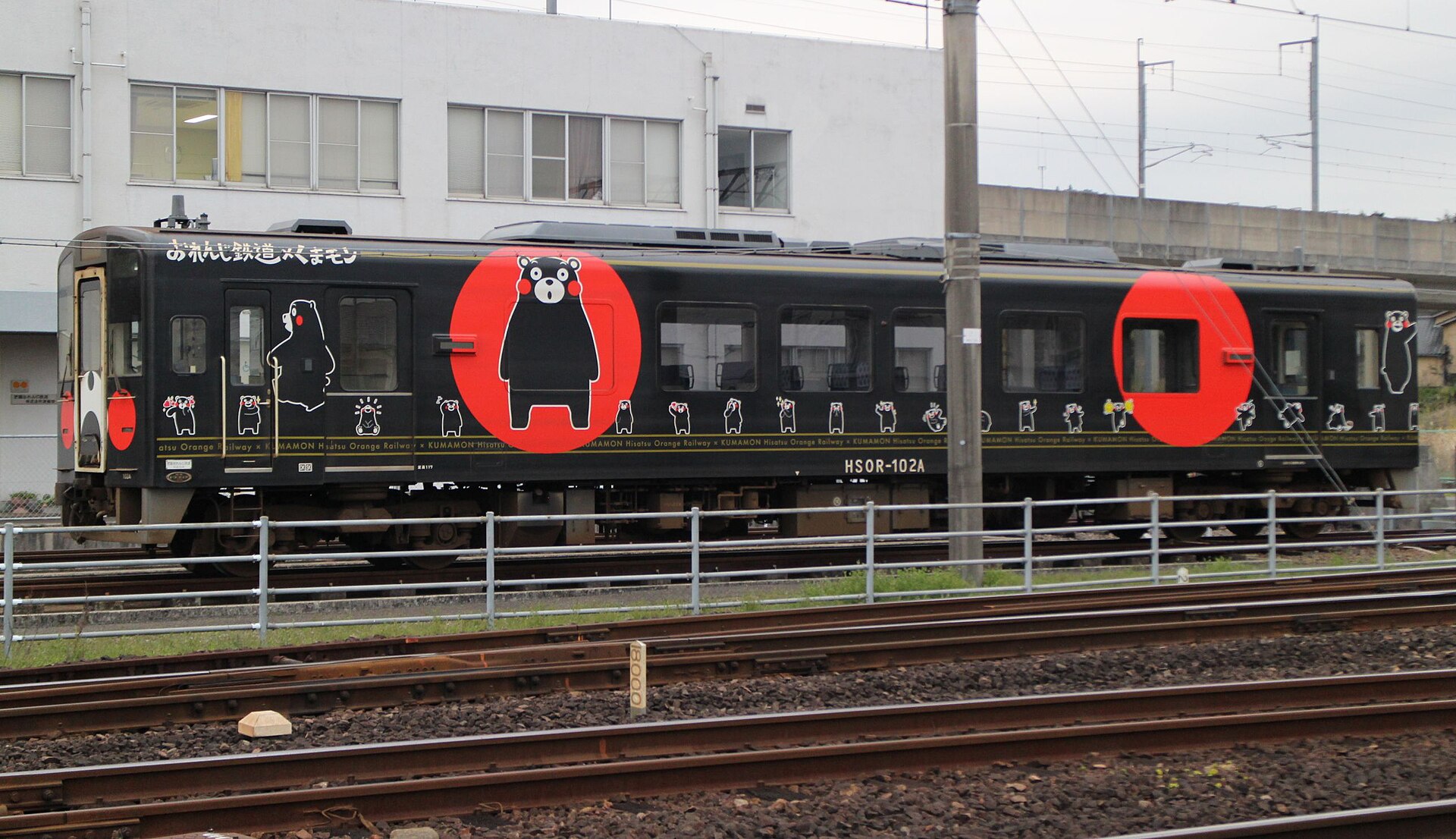
Somewhere between Hakata and Kagoshima-Chuo, a bullet train pulls into the light with a bear's face painted across its nose cone, and even commuters half-asleep on the platform look up. That is the premise of the JR Kyushu Kumamon Train Series, a mascot-themed design campaign running across the railway's network from July through December 2026. It is not a single train but a rolling gallery: multiple Kumamon designs, applied to different local trains and 新幹線 (Shinkansen, bullet train / high-speed rail line) sets, appearing and disappearing across the timetable like a slow-moving exhibition you have to go find.
What the Campaign Actually Involves
JR Kyushu has confirmed that the series spans both its everyday local lines and its Shinkansen services, which means the character shows up in two very different registers: the unhurried, window-open local trains that thread through rice paddies and mountain tunnels, and the high-speed sets that link Kyushu's cities in a matter of minutes. Several distinct Kumamon designs are expected to circulate over the campaign's run, rather than one fixed livery repeated everywhere. For riders, that turns an ordinary commute into something closer to a scavenger hunt, each new sighting worth a photograph, each route worth checking twice.
A Timeline Worth Marking on the Calendar
The campaign is scheduled to run from July through December of 2026, a six-month window that covers the height of summer travel season through the quieter, colder months at the year's end. That length of run suggests JR Kyushu intends the trains to be seen by as broad a cross-section of travelers as possible, commuters, school groups, and visitors arriving for the Kyushu Shinkansen alike, rather than treating it as a brief, single-weekend promotion.
- Start: July 2026
- End: December 2026
- Coverage: JR Kyushu local lines and Shinkansen services
- Format: multiple rotating Kumamon designs rather than one fixed livery
Following the JR Kyushu Kumamon Train Series in Person
There is no single station where the whole series can be seen at once, which is, I think, part of the point. JR Kyushu operates across the island's prefectures, from Fukuoka in the north down through Kumamoto, Kagoshima, Nagasaki, Oita, and Miyazaki, and the Kumamon-liveried trains are woven into that existing network rather than parked as a static exhibit. Spotting one means paying attention to ordinary schedules: checking local timetables before a trip, watching for announcements on JR Kyushu's own channels, or simply keeping a camera ready while waiting on a platform in Kumamoto Prefecture, where the odds of an encounter are naturally highest. Riders who plan multi-city Kyushu trips already tend to pass through several of the lines involved, which makes the campaign easy to fold into a normal itinerary rather than something that requires a special detour.
How Kumamon Became Kyushu's Most Recognizable Bear
To understand why a railway would wrap its trains in a cartoon bear, it helps to go back to 2010, when Kumamoto Prefecture introduced Kumamon as its official mascot. The character was not cultivated in a vacuum; Kumamon was created specifically to promote the opening of the Kyushu Shinkansen line, tasked with the very unglamorous job of making a piece of transit infrastructure feel like an invitation. It worked, more thoroughly than almost anyone involved could have predicted. What began as a regional ゆるキャラ (yuru-kyara, laid-back local mascot character), one among hundreds produced by prefectures and towns across Japan competing for attention, grew into something closer to a watershed case study in regional marketing: Kumamon is now shorthand for Kumamoto itself, stamped across snack packaging, hospitality campaigns, tourism posters, and, once again, the trains that first gave the character its purpose.
Is a 2027 Continuation Planned?
Readers searching ahead to 2027 will find, at least for now, no confirmed word from JR Kyushu about extending the design series beyond its stated December 2026 close. Mascot campaigns of this kind are sometimes quietly renewed and sometimes end cleanly on schedule, and the honest answer at this point is that it is simply unclear. Anyone hoping to plan a 2027 trip around Kumamon trains specifically should treat that as an open question rather than an assumption, and watch for further news as the current run approaches its final months.
Picking Up Japanese Along the Platform
Trains make unusually good language teachers, mostly because their vocabulary repeats until it sticks without effort. Kumamon itself is a small piece of local wordplay: 熊 (kuma, bear) means bear, and 者 (mon, person (friendly dialect term)) carries the flavor of a friendly local dialect term for a person, a bit of Kumamoto pride folded directly into the name. Riding the Shinkansen or a local line during the campaign offers a low-pressure way to absorb related terms: 駅 (eki, station) for station, 電車 (densha, train) for train, and of course Kumamoto and Kyushu themselves, place names already familiar to anyone who has spent time with the prefecture's tourism materials. For learners, a mascot this visible is a useful anchor, a recurring, friendly face that turns vocabulary practice into something closer to recognition.
How to Get Started or Learn More
The most direct way to follow the series is to watch JR Kyushu's official announcements and station postings as the campaign progresses, since specific train numbers, routes, and design reveals are the sort of detail a railway tends to release incrementally rather than all at once. Travelers building a Kyushu itinerary between July and December 2026 can simply keep the possibility in mind; Kumamoto Station and the Kyushu Shinkansen corridor are sensible places to start, with any sighting along the way treated as a bonus rather than a guarantee. For those further from Kyushu, following Kumamoto Prefecture's tourism updates and JR Kyushu's own communications remains the most reliable way to track new designs as they roll out, and to catch word of whatever comes after the campaign closes at year's end. And so, for travelers already headed to Kyushu this year, watching for a bear-faced train becomes less an extra task than a small, welcome habit. And so it became a plan.
