
Overview
Kanda 祭り (matsuri, festival) is one of Edo's three great festivals, and every year it settles over the streets around Kanda Myojin shrine like some quiet reminder that Tokyo was a shrine town long before it was a skyscraper town. In 2026, the festival runs from May 11 to May 17, threading through Kanda, Nihonbashi, and parts of Chiyoda. I've walked these blocks on ordinary Tuesdays and barely noticed the shrine gate. During Matsuri week, you notice everything.
The scale changes from year to year, and that's worth understanding before you plan a visit. 2026 is an even-numbered year, which means this edition falls under the smaller 陰祭 (Kage-matsuri, shadow (smaller-scale) festival), or Shadow Festival, rather than the sprawling 本祭 (Hon-matsuri, main/grand festival) procession that closes down central shopping streets near Akihabara and Nihonbashi. More on that distinction below, because it genuinely changes what you'll see.
Kanda Myojin and the Neighborhoods It Watches Over
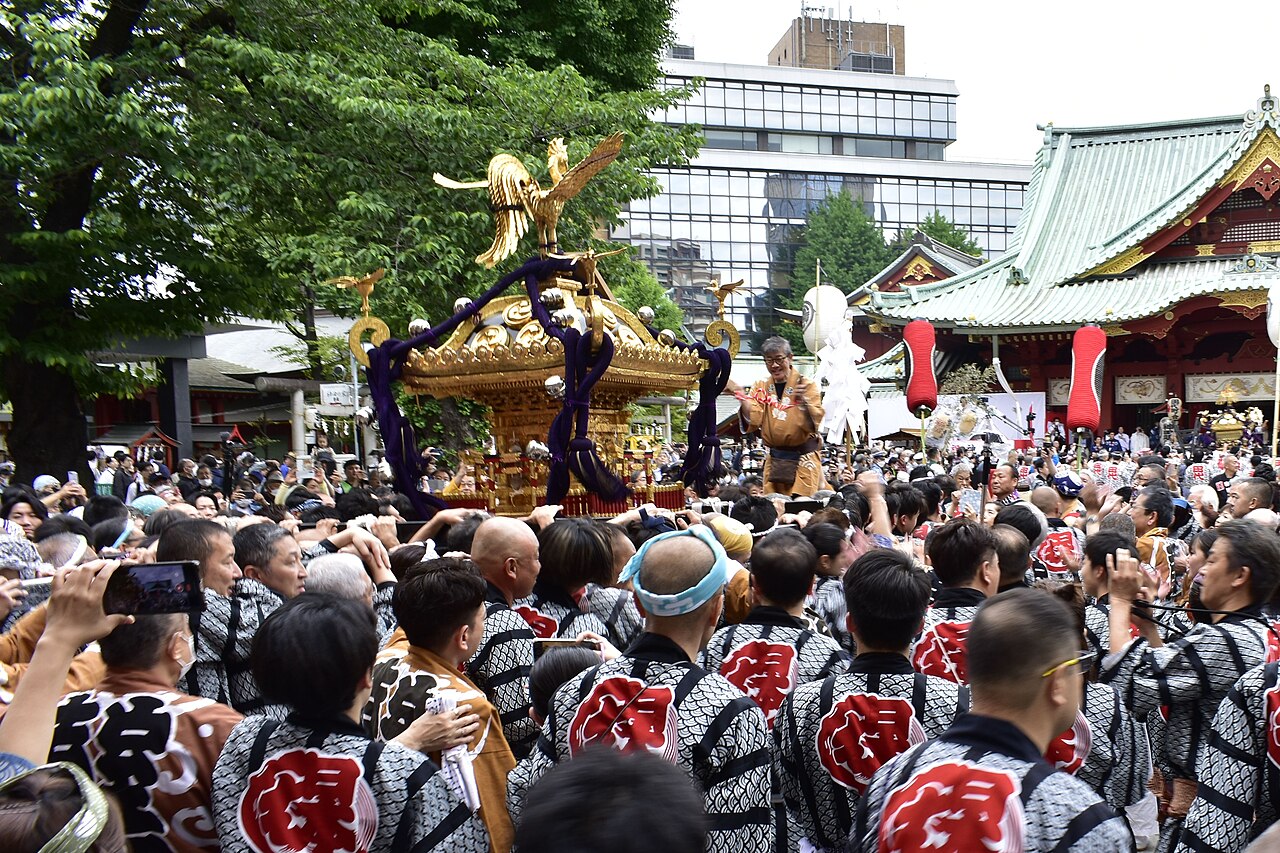
Kanda Myojin is the spiritual center of the whole event, and it has been for centuries. The shrine's parish, though, is enormous by shrine standards: it covers Kanda, stretches into Nihonbashi's old merchant quarter, and reaches parts of Chiyoda, including neighborhoods that now house some of Tokyo's biggest financial institutions. That's part of what makes Kanda Matsuri so interesting to me. It isn't only a religious observance tucked away from modern life. It's a festival where history, commerce, and community all show up in the same procession, sometimes literally shoulder to shoulder.
What Happens Before the Procession Even Starts
Long before any 神輿 (mikoshi, portable shrine) hits the street, there's a preparation phase that most visitors never see. Priests at Kanda Myojin perform purification rituals and formal prayers, and from there the blessings extend outward to local businesses and residents who ask for a good year of trade and safety. During the ceremonies themselves, priests recite 祝詞 (norito, formal Shinto prayer), formal Shinto prayers, alongside offerings and further acts of ritual purification. It's slow, deliberate, and honestly kind of mesmerizing if you get the chance to watch. Nothing about it is rushed, which says something about how seriously this community takes the festival.
Behind the scenes, the real labor is organizational. Roles are distributed among local 町 (cho, town/neighborhood association), the neighborhood associations that have carried this responsibility for generations, along with companies and clubs based in the parish. These groups rehearse for weeks beforehand, working out routes, timing, and coordination so that when the day comes, nothing looks improvised. Because it isn't.
Reading a Mikoshi: More Than a Portable Shrine
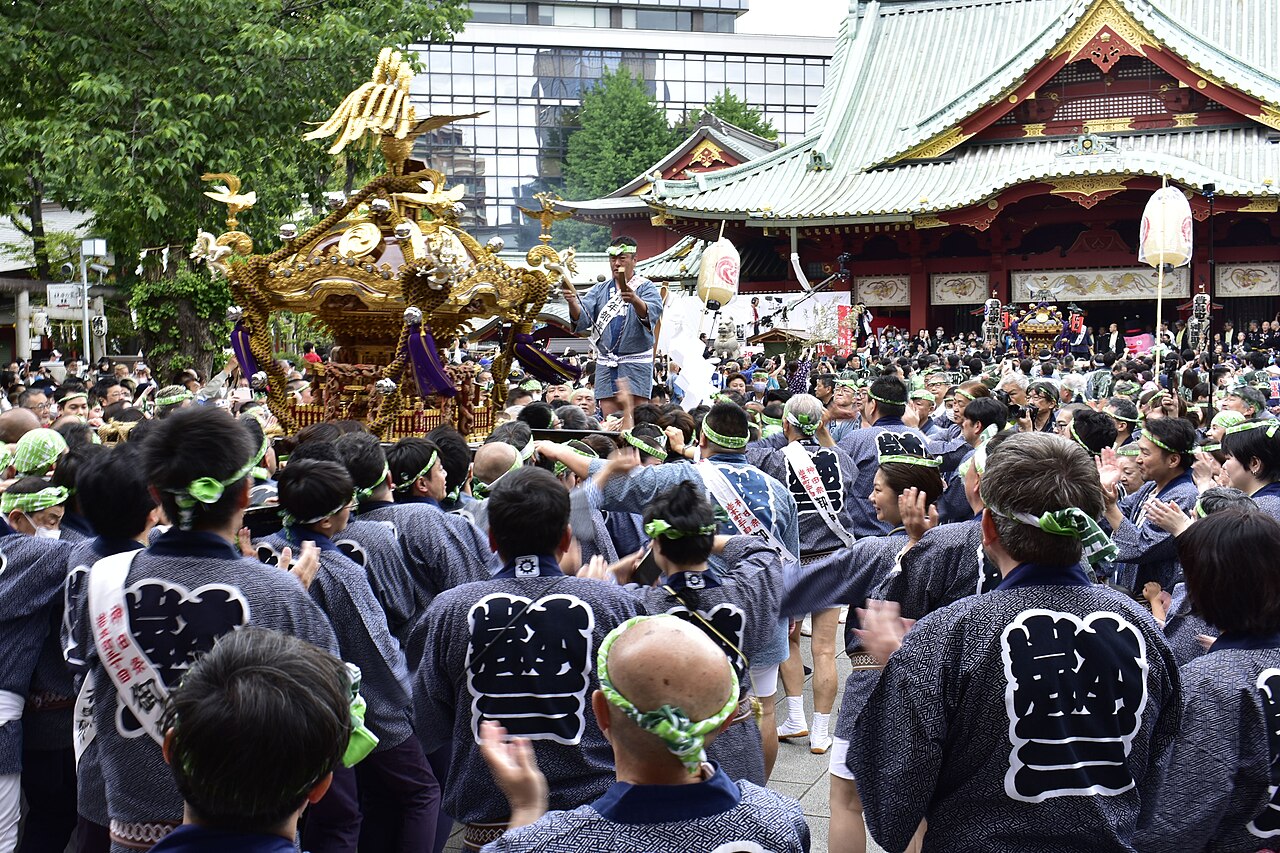
Here's something I didn't fully appreciate the first time I watched a mikoshi go by: it's not decoration, and it's not just a heavy box on poles. A mikoshi is a 依り代 (yorishiro, object serving as a vessel for a deity), an object built to serve as a temporary seat for a deity, and carrying one is treated as an act of genuine spiritual weight. It's also, unmistakably, a symbol of social cohesion. The group hoisting it is showing you who they are.
Once you know what to look for, the details stop being background noise. The color of a 法被 (happi, short festival coat) coat identifies which cho or company a carrier belongs to. The choreography, the specific carrying style, the rhythmic calls, even the timed pauses, all of it is code, refined over generations, not something improvised in the moment. Stand at the roadside for twenty minutes and you'll start reading the crowd the way locals do. It takes more attention than you might expect, but it's worth it.
Hon-matsuri and Kage-matsuri: Why the Year Matters
This is the detail that trips up a lot of first-time visitors, so let's be precise about it. Kanda Matsuri's largest expression, the Hon-matsuri, with its grand mikoshi procession winding through the central shopping streets near Akihabara and Nihonbashi, is held only in odd-numbered years. 2026 is an even-numbered year, which places it under the Kage-matsuri, the Shadow Festival: smaller in scale, without the large citywide procession, but still built around the same rituals, prayers, and neighborhood participation described above. If it's the full-scale spectacle you're after, mark your calendar for 2027, when the Hon-matsuri and its grand procession return.
Following the Route
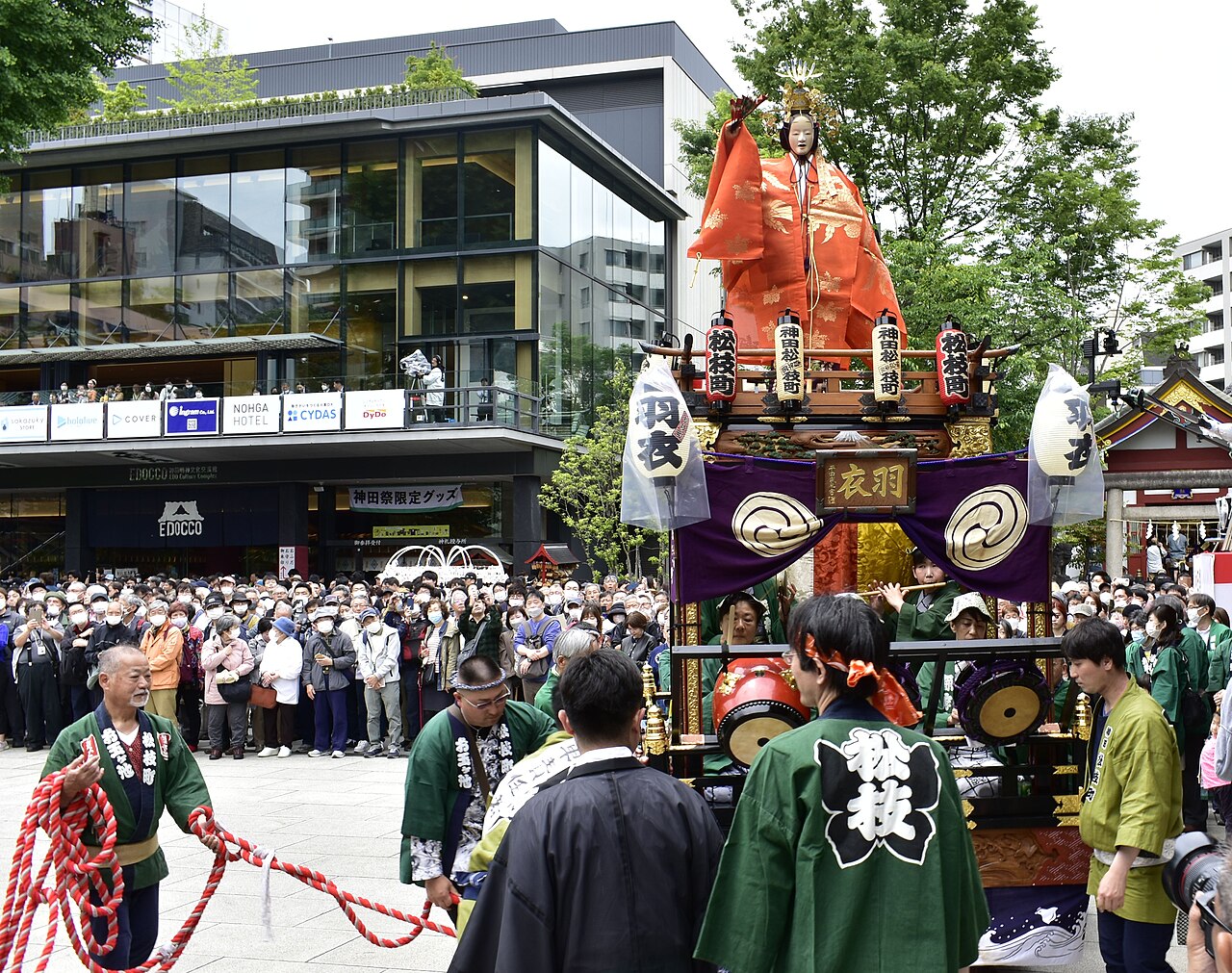
Even in a Kage-matsuri year, the geography of the festival tells its own story. Key stops along the mikoshi procession route include Kanda Myojin itself, Otemachi, and Nihonbashi, tracing a path that connects the shrine to the old merchant district and straight into Tokyo's modern financial core. Walking that route, even outside festival week, gives you a real sense of how tightly this shrine's identity is woven into the city around it.
How to Get Started: Visiting and Following Along
If you want to experience Kanda Matsuri 2026 firsthand, base yourself near Kanda Myojin, which sits an easy walk from Ochanomizu and Akihabara stations, and plan around the ceremonial days in mid-May rather than assuming a single festival date. Because this is a Kage-matsuri year, expect a more intimate atmosphere: smaller processions, easier viewing, and more room to actually watch the ritual details rather than fight a crowd. Local cho associations and the shrine itself typically post schedules closer to the date, so it's worth checking before you go, especially since exact ceremony times can shift year to year.
If you can't make it in person, following Kanda Myojin's own updates is the most reliable way to track the festival's exact schedule and any changes. And if 2026's smaller scale leaves you wanting the full spectacle, treat it as a preview: 2027 brings the Hon-matsuri back in full.
Building Your Japanese Around the Festival
One of my favorite things about a festival like this is how much vocabulary it hands you almost for free. Matsuri simply means festival. Mikoshi is the portable shrine itself. Yorishiro describes its role as a vessel for a deity. Norito are the formal prayers priests recite. Happi refers to the short coats worn by carriers, and cho names the neighborhood associations that organize everything. Learn those half-dozen words and Kanda Matsuri stops being a spectacle you're watching from the outside. It starts being something you can actually follow, word by word, the way the people carrying the mikoshi already do.
