
Overview
Autumn Drift 祭り (matsuri, festival) 2026 is a drift event at Ebisu Circuit in Nihonmatsu, Fukushima Prefecture, Japan. It is one of those gatherings that says a lot about Japanese car culture without trying too hard. The mood is grassroots, festival-like, and deeply practical. Drivers book track time, mechanics keep working, spectators move between corners and paddock areas, and the whole place feels alive from morning into the night.
Ebisu Circuit has been tied to drift culture since the 1990s, so this is not a new scene built for short-term hype. It is part of a long-running motorsport ecosystem. That matters because the event is not just about watching cars slide. It is about the routines around drifting too: preparation, repair, quick adjustments, shared knowledge, and the tiny rituals that keep a car on track. The Japanese term 組 (kumi, a set or run; group/shift), meaning a run or set on track, is often useful here because the day is built around repeated sessions rather than a single main show. Another term you will hear in drift circles is 全開 (zenkai, wide open; flat out), which means going flat out. At Matsuri, that energy is everywhere, even when the atmosphere stays friendly.
If you want a broader look at how the event culture feels in motion, a report like Ebisu Drift Matsuri 2025: Rubber, Smoke and JZX100s in Fukushima helps set the scene well. It shows how quickly this event can fill up with character, noise, and very specific machinery.
Why Ebisu matters to drift culture
Ebisu Circuit is important because it is not a single-purpose showcase. It is a multi-course venue with Nishi, Minami, and Kita among its layouts, and that variety gives the place depth. Different courses suit different lines, speeds, and styles, so the circuit can host a wide range of driving. That flexibility is part of why the site has remained central to drift culture for so long.
The venue’s significance also comes from its reputation as a place where people learn by doing. In drift culture, the word 峠 (touge, mountain pass) often refers to mountain passes where driving skills were once refined on public roads, but Ebisu gave that spirit a safer, organized home. It became a place where drivers could practice the same instincts with more structure and less guesswork. That is a major reason the circuit still matters. It preserves the informal edge of drift while giving it a proper venue.
And then there is the atmosphere. Tire smoke hangs in the air. Engines are loud enough that conversations become half-gestures. Repairs happen in the paddock between runs. It feels messy in the best possible way.
How the event actually works
Autumn Drift Matsuri is a festival rather than a formal competition. That distinction is important. You are not mainly there for podiums or a rigid schedule. You are there for track time, motion, improvisation, and the shared rhythm of the day. Drivers come with their cars ready, buy sessions, and spend the event drifting throughout the facility. Some runs happen in daylight. Others continue at night, which gives the circuit a different mood altogether.
The event also reflects the kind of practical planning drift fans recognize immediately. A 予約 (yoyaku, reservation; booking), meaning a reservation, is often part of the experience when track time or access is managed in advance. A pit lane, or ピット (pitto, pit area; garage lane) in the drift context, is where the real work happens between sessions. That is where you see tools, spare parts, quick adjustments, and drivers talking through setups. The appeal is not just watching from afar. It is seeing how much effort goes into making each run possible.
The whole facility becomes active at once. Drivers are focused, mechanics are busy, and spectators are often close enough to feel part of the action. That hands-on community vibe is a big reason people keep coming back.
The cars and style fans tend to talk about
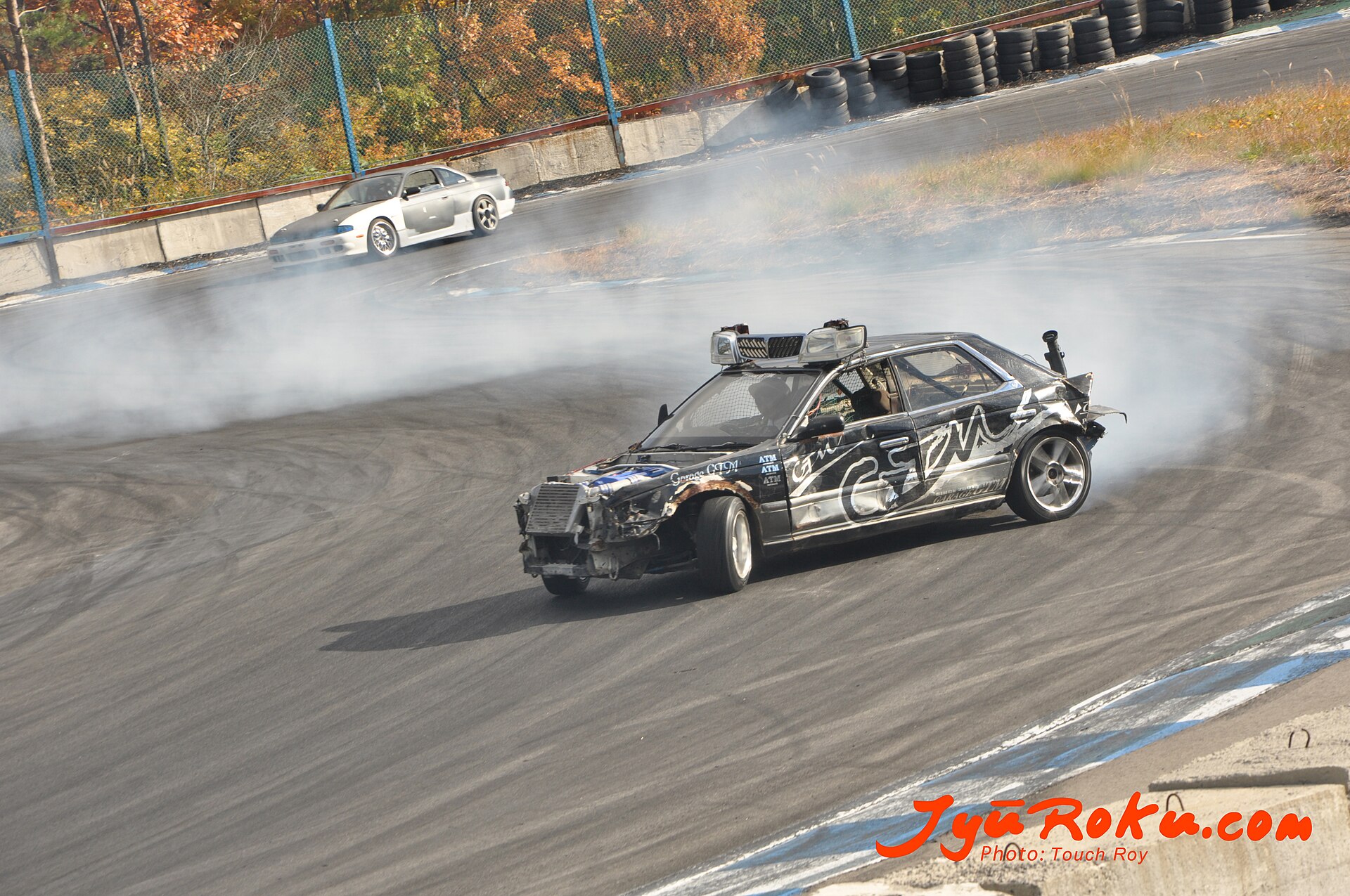
One of the strongest memories from recent Matsuri coverage is the mix of machinery. The 2025 event featured many Toyota JZX100 Chasers and Mark IIs, along with other missile cars. In drift slang, a missile car is usually a machine that prioritizes function over polish. It may look tired or patched together, but it is built to slide hard and keep going. That rough-edged honesty fits Matsuri perfectly.
This is also where you start to understand the visual language of Japanese drift. Wide angle, aggressive stance, mismatched panels, and practical repairs all tell part of the story. The cars are not there to sit still and be admired in silence. They are built to be used. That makes the event feel authentic rather than staged.
If you want to compare how that culture is documented from different angles, the linked piece Ebisu Matsuri: Drift-Action mit dem S15 Alpha Car is a useful companion. For a more atmosphere-focused take, Ebisu Matsuri und Drift-Kultur: DriftSquids Video 500 offers another angle on the same living scene.
Places and details to keep an eye on
At Ebisu, certain course areas become local landmarks in their own right. Nishi Course Pit No. 13 has been identified as a key location for Matsuri activity, including hot laps and pit-side preparation, although that specific detail should be treated as unconfirmed in the current source base. Even so, it fits the broader pattern of the event: the most interesting things often happen where the track meets the paddock. That is where the work, noise, and last-minute decisions gather together.
For readers who are new to drift events, a few Japanese terms come up often enough to be worth knowing. Matsuri means festival, and here it captures the open, celebratory feel of the event. Paddock spaces are where cars are maintained between sessions. 力 (chikara, power; strength), meaning power, is often talked about in a car setup context, especially when people discuss whether a build has enough torque for a given course. These terms help you read the scene more clearly. And yes, learning them makes the experience feel less mysterious very quickly.
How to get started if you want to follow or attend
If you are new to Ebisu Drift Matsuri, start by learning the layout of the circuit and the rhythm of a drift day. Read event reports, watch onboard clips, and pay attention to how different cars use different courses. That gives you a much better sense of the event than a simple highlight reel. The circuit’s multi-course setup means there is always more happening than you can see from one spot.
I also recommend learning a little drift vocabulary before you go deeper. Search for Ebisu Drift Matsuri kanji if you want to understand how the event is written in Japanese sources, and look up Ebisu Drift Matsuri japanisch lernen if your goal is to follow Japanese coverage more comfortably. Even a small bit of vocabulary helps, because drift reporting often mixes car parts, course names, and event-specific slang. That is part of the fun, honestly. It is a niche with its own language.
If you are approaching this as a fan of Japanese car culture, Ebisu is a great entry point because it shows the social side of motorsport as clearly as the driving itself. You do not just discover cars here. You uncover a whole ecosystem built around effort, noise, timing, and community. That is what makes it lasting.
Why this event keeps drawing attention
Autumn Drift Matsuri 2026 matters because it sits at the intersection of tradition and motion. Ebisu Circuit has history. The Matsuri format has identity. Together they create something that feels bigger than a single event date. It is a recurring moment when the circuit becomes a concentrated version of Japanese drift culture, complete with the smell of rubber, the pressure of track time, and the constant need to keep a car alive for one more run.
This is your chance to discover Ebisu Drift Matsuri for yourself through the stories, the cars, and the way the day unfolds. Spreading my love and admiration for Japan’s car culture to the rest of the world: that is what this is about. Ebisu Drift Matsuri is an experience so rich it would be worthy of its own chapter, maybe even a whole afternoon of reading and watching. There is always something more to explore.
Frequently Asked Questions
What is Autumn Drift Matsuri 2026?
It is a drift event at Ebisu Circuit in Nihonmatsu, Fukushima Prefecture, Japan. The format is festival-like rather than a formal competition.
Why is Ebisu Circuit important?
Ebisu Circuit has been associated with drift culture since the 1990s. Its multiple courses and long-running role make it a central venue for the scene.
What kind of cars appear at Matsuri?
Coverage of the 2025 event highlighted Toyota JZX100 Chasers and Mark IIs, along with other missile cars. The focus is on cars built to drift hard and keep running.
Is Nishi Course Pit No. 13 confirmed as a key spot?
It has been identified as a key location for hot laps and pit-side preparation, but the source base notes that detail as unconfirmed.
How should a beginner learn more about the event?
Start with event reports, onboard videos, and basic drift vocabulary. Looking up Ebisu Drift Matsuri kanji and Ebisu Drift Matsuri japanisch lernen can also help with Japanese-language coverage.


