Overview
Ivars d'Urgell sits in the Pla d'Urgell, a stretch of irrigated farmland in Lleida province where canals cut through fields of alfalfa and fruit orchards, and where, on paper, little would suggest a connection to Japan. And yet for several years running, in late spring, the town has filled with the sound of 太鼓 (taiko, drum) drums and the murmur of a 琴 (koto, traditional Japanese stringed instrument), hosting 祭り (matsuri, festival) de Ponent, also written Matsuri Ponent, a festival dedicated to Japanese culture that has quietly become one of the more notable Japan-focused events in Catalonia. Its fifth edition took place on 23 May 2026, and it arrived with an honor few small municipalities anywhere in Europe can claim: Japan's own Ministry of Foreign Affairs recognized Ivars d'Urgell with the Premi al Merit, an award for merit, citing the town's sustained work in cultural promotion.
From Local Gathering to Recognized Cultural Bridge
Matsuri de Ponent did not arrive fully formed. It has been organized in Ivars d'Urgell for several years, built edition by edition by local clubs, schools, and gastronomy businesses that gradually folded Japanese themes into the town's civic calendar. What began, as these things often do, as a modest cultural curiosity has become something closer to a genuine cultivation of relationship, the kind that takes years of repetition to earn. The name itself signals the intent: matsuri is simply the Japanese word for festival, and organizers have chosen to use it plainly, without translation or softening, rather than treat it as a marketing flourish borrowed for effect. Reports from recent editions describe cooperation with cultural institutions in Barcelona, and instructors invited specifically to keep workshops and demonstrations grounded in practice rather than pageantry, though the full details of these partnerships have not been independently confirmed and should be read as reported rather than verified.
The Premi al Merit and Official Recognition
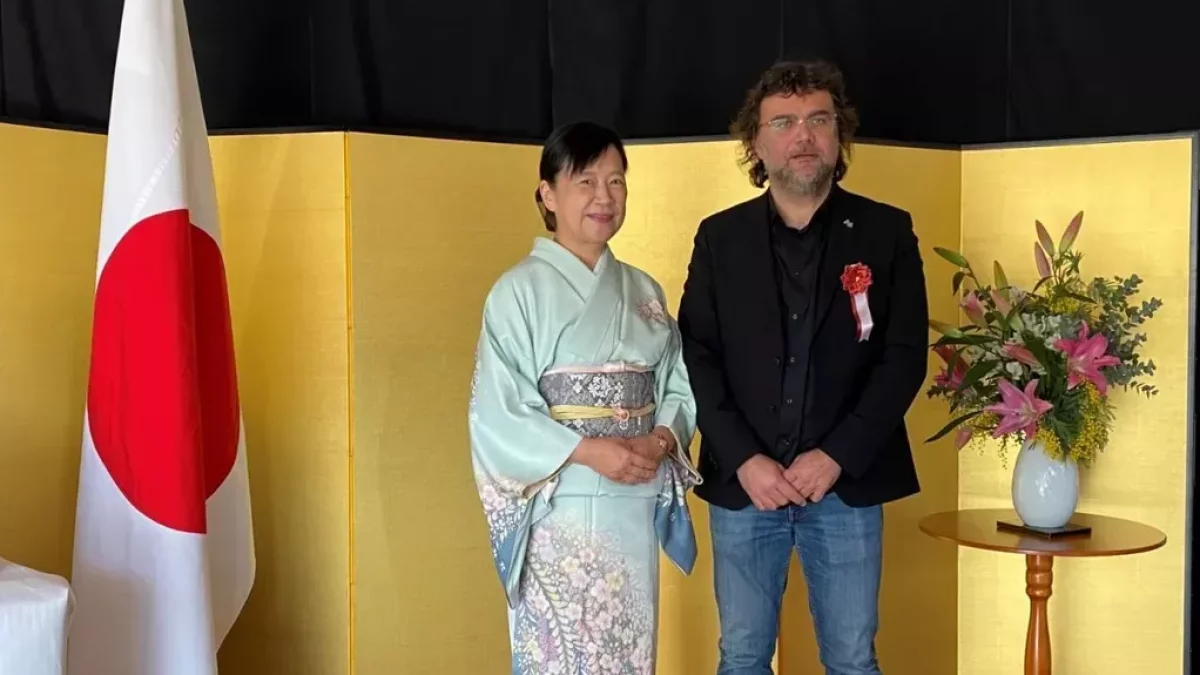
The Premi al Merit, awarded by Japan's Ministry of Foreign Affairs, is not the kind of prize handed out casually. It typically recognizes individuals or institutions abroad whose long-term work has meaningfully advanced understanding of Japan, and its arrival in Ivars d'Urgell marked a watershed moment for a town whose population is a small fraction of nearby Lleida city. The recognition did not appear out of nowhere. The Japanese Consul General in Barcelona has made official appearances at festival events over the years, received local delegations, and spoken publicly about the festival's role as a point of cultural mediation between Catalonia and Japan. Some accounts also point to growing coverage of the festival beyond Spain's borders as a contributing factor to the award, though this connection remains unconfirmed rather than officially stated.
What the Festival Program Looks Like
Matsuri de Ponent brings in Japanese artists, drummers, and speakers to perform and to lead workshops directly, rather than relying solely on local interpretation of Japanese forms. According to descriptions of the event circulating around recent editions, though not all independently verified, the program has included:
- Taiko drumming performances and hands-on sessions
- 盆踊り (bon-odori, Bon festival circle dance) dance workshops, teaching the circle dances associated with summer festivals in Japan
- 生け花 (ikebana, Japanese flower arranging) demonstrations, showing the principles of Japanese flower arranging
- 漫画 (manga, comic / graphic novel) drawing workshops for younger visitors and hobbyists
- Demonstrations of Japanese crafts by visiting artisans
Unverified reports also describe the last three editions drawing several thousand visitors, including tourists from both France and Japan, which would make it a rare instance of Japanese travelers crossing an ocean to see Japanese culture presented abroad. That figure has not been confirmed through official festival statistics.
Inside the Fifth Edition: Omachi, Koto, and Cherry Trees
The 2026 edition, held on 23 May, is the best documented of the festival's history, and it shows an event confident enough to hold two different registers at once. On one side sat a program of cultural exchange with real specificity: a live video link connecting Ivars d'Urgell with Omachi, a town in Japan, a koto concert, a joint dance performed by participants from both places, and the planting of Japanese cherry trees, a gesture meant to root the relationship in something that will keep growing after the festival tents come down. On the other side sat a full slate of large-scale public activity built around manga, アニメ (anime, animation), and Japanese popular culture: contests and workshops that pulled in a broader, younger crowd less interested in ceremony than in spectacle. The festival did not treat these two impulses as being in tension with each other. It let the quiet formality of the koto concert and tree planting share a program with manga contests, which is, in its way, a fair reflection of how Japanese culture is actually experienced by most people encountering it from a distance: partly through careful tradition, partly through pop culture that reaches far wider audiences.
Who Makes It Happen
Festivals like this one are rarely the work of a single organizing body. Matsuri de Ponent draws on the town's own institutions, its clubs, its schools, its restaurants and food producers, to handle the logistics that visitors never think about: staffing, local promotion, the practical work of feeding several thousand people over the course of a day. Layered on top of that local infrastructure is the involvement of visiting Japanese artists, drummers, and speakers, whose presence is what separates a festival with real content from one that simply borrows aesthetics. It is this combination, a small town's sustained civic effort matched with direct participation from Japan, that the Ministry of Foreign Affairs appears to have recognized when it named Ivars d'Urgell for the Premi al Merit.
How to Get Started: Visiting and Learning More
Matsuri de Ponent is held annually in Ivars d'Urgell, generally in late spring, and it remains, for now, a free and open public event rather than a ticketed affair, though visitors planning a trip from outside the region should confirm dates and logistics as the edition approaches, since exact scheduling can shift year to year. For those in Barcelona or elsewhere in Catalonia, Ivars d'Urgell sits within a reasonable drive or train-and-connection trip through Lleida province, making a day visit realistic even without an overnight stay.
For readers newer to the vocabulary involved, matsuri is worth learning as a first piece of practical Japanese: written with a single kanji character, it is one of the more commonly encountered words for anyone studying Japanese through culture rather than through textbooks alone, and it shows up constantly in the names of local festivals across Japan itself. Following the festival's own program is a reasonable entry point into related vocabulary, taiko, bon-odori, ikebana, koto, each a small, self-contained subject with its own history and its own practitioners. Those wanting to go deeper might look into the sister-town relationship between Ivars d'Urgell and Omachi, which offers a smaller, more specific case study in how two municipalities on opposite sides of the world build a working cultural relationship over years rather than a single event.
And so, for anyone drawn to Japan but not yet able to travel there, a spring afternoon in a farming town in Lleida province is, at minimum, a reasonable place to begin.