
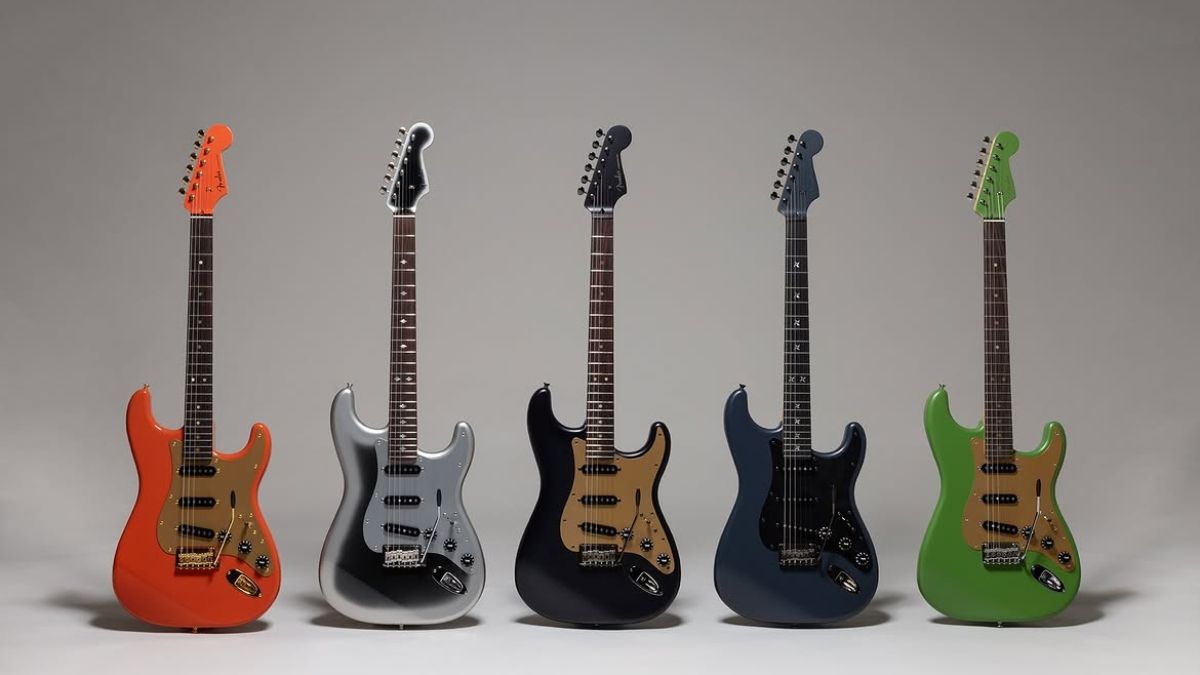
The new Made in Japan Limited Japan-Inspired Collection Stratocaster models pull from place, texture, and taste, not just from a vague idea of “Japanese style”. I like that restraint. It gives the guitars a clearer identity, and it makes the design read almost like a set of cultural notes translated into lacquer, hardware, and wood.
Fender’s Japan-inspired Stratocaster collection feels like the kind of release that makes both guitar nerds and Japan fans lean a little closer. The models draw from Kyoto, 抹茶 (matcha, powdered green tea), and denim, and the result is less costume, more conversation. For players, that matters.
What most people don't know: Fender Japan has long had a knack for treating the Stratocaster not as a fixed icon, but as a surface for careful variation. Here, the variations are rooted in Japanese imagery and colour rather than in flash for its own sake. The source report from Toonippo notes the new Made in Japan Limited Japan-Inspired Collection, and Fender’s own Japan release details, also covered by Guitar World, point to three distinct models: Kyoto Orange, Matcha Green, and Indigo Denim.
For language learners, there’s a small bonus here. Kyoto is, of course, Kyoto, but the flavour of the collection comes from words that already carry texture in Japanese: matcha for powdered green tea, and denim as a borrowed term that sits comfortably in everyday Japanese fashion talk. I’ve always liked how Japanese pop culture can turn a material, a season, or a place into a design language. This release does that quietly. Convinced yet?
Kyoto Orange, Matcha Green, and Indigo Denim
Did you know that...? These three Strats aren’t merely different colours in a catalogue, they each borrow a mood. Kyoto Orange takes its cue from the vivid vermilion often associated with 鳥居 (torii, Shinto shrine gate) gates and shrine architecture, which gives the guitar a bright, ceremonial pulse. Matcha Green moves in the opposite direction, softer and more contemplative, echoing the tea bowl calm of Japanese matcha culture. Indigo Denim lands somewhere more urban and wearable, a shade that feels like a jacket you’ve owned for years. But let's stick with the instruments for now.
Take Kyoto Orange, for instance. According to the coverage, it pairs a one-ply gold anodised aluminium pickguard with gold hardware, gold dot inlays, and a matching headstock. That’s a serious amount of visual coordination, and it works because the palette is disciplined. The Matcha Green model keeps the same broad Japan-inspired idea, while the Indigo Denim version shifts into black nickel hardware and a sleeker overall look. Classic Japan, isn't it?
Design details that guitar fans will notice
What I especially like: these guitars do not rely only on paint. Fender is using hardware, inlays, and pickguard treatment to carry the theme all the way across the instrument. That is where design stops being a sticker and starts becoming an object. A matching headstock changes the silhouette immediately. Gold hardware changes the temperature of the whole guitar. Even from a distance, you can tell these were made to be read as complete compositions, not just standard Strats with new names.
For gear fans, the pleasure is in that specificity. The Kyoto Orange model’s gold anodised aluminium pickguard is a strong signal of intent. The Indigo Denim’s black nickel hardware cools everything down. The Matcha Green, by contrast, leans into a softer Japanese association, one that feels seasonal and understated rather than loud. Simply brilliant.
Why Kyoto, matcha, and denim make sense together
Quick detour: Japanese-inspired product design often succeeds when it avoids piling on obvious symbols. A torii silhouette, a tea leaf, a temple roof line, a bolt of indigo cloth, each carries a different kind of memory. Fender seems to have understood that the strongest reference points aren’t always the loudest ones. The reason is simple: material culture in Japan is often about restraint, seasonality, and careful surfaces.
Kyoto brings heritage and formality. Matcha brings ritual and taste. Denim brings workwear, fashion, and a more modern, street-facing Japan. Put together, they sketch a wider picture of the country than a single cherry blossom ever could. That breadth gives the collection room to feel thoughtful rather than opportunistic. It also gives players a reason to choose one model over another based on mood, not just specs. Wait, there's more.
By the way: this is exactly the kind of release that tends to excite Japan enthusiasts who also collect records, sneakers, jackets, and kitchenware. The attraction is the same. You are not only buying an object. You are buying a story about craft, place, and the way a culture can be translated through design without flattening it. Fender’s Japan line has often operated in that space, where the familiar American shape of the Stratocaster meets a Japanese sensitivity to finish and detail.
And that is where the collection gets interesting for learners, too. If you are studying Japanese, this is a useful reminder that cultural vocabulary travels with objects. Kyoto suggests temple streets and old capital memory. Matcha evokes tea houses, sweets, and a whole set of seasonal associations. Denim points to Japan’s deep relationship with fabric culture and careful everyday dressing. These are not just words. They are entry points. Highly recommended: keeping an eye on how Japanese brands turn such words into design cues.
What this says about Fender Japan and collector culture
Unlike what we're used to, this kind of release is not trying to shout about rarity for its own sake. It is speaking in a more considered register, the one collectors tend to trust. Fender Japan has a strong history of releases that feel tailored to local aesthetics, and this collection continues that line. The limited nature of the models, paired with the named finishes, makes them feel like objects meant for both playing and shelving, which is, in the guitar world, a very specific kind of praise.
My tip: if you follow Japanese design, it helps to look at how brands combine surface, hardware, and naming. That trio often tells you more than the headline. Here, the names Kyoto Orange, Matcha Green, and Indigo Denim do more than identify colourways. They frame the emotional register of each guitar. That is where the collection becomes interesting beyond the usual gear release cycle. And so it became a plan.
For readers who care about Japan as a place of makers and 職人 (shokunin, craftsman; artisan), there’s something appealing about that seriousness. Even when the subject is a mass-produced electric guitar, the best Japanese-influenced design still tries to honour surface, method, and context. It does not have to be antique to feel careful. It only has to be thought through. For those of us who love both Japan and instruments, that care is the real hook. But that's not all.


