
Overview
Aoi 祭り (matsuri, festival; traditional seasonal ritual) is among Kyoto’s three great festivals, alongside Gion Matsuri and Jidai Matsuri, and it takes place every year on May 15. The festival is rooted in the Heian period, when ceremony, rank, and ritual order shaped public life as closely as architecture and dress. What remains today is not a loose street celebration but a disciplined procession, one that feels preserved through attention rather than spectacle.
The word aoi, literally “hollyhock,” points to the lush emblems carried and displayed through the festival. In the context of an event like this, matsuri means more than “festival” in the tourist sense; it is a seasonal ritual with historical memory attached. As I read through the details, I keep returning to the same impression: this is a living pageant of cultivation, not in the modern self-improvement sense, but in the older sense of forms carefully tended over time.
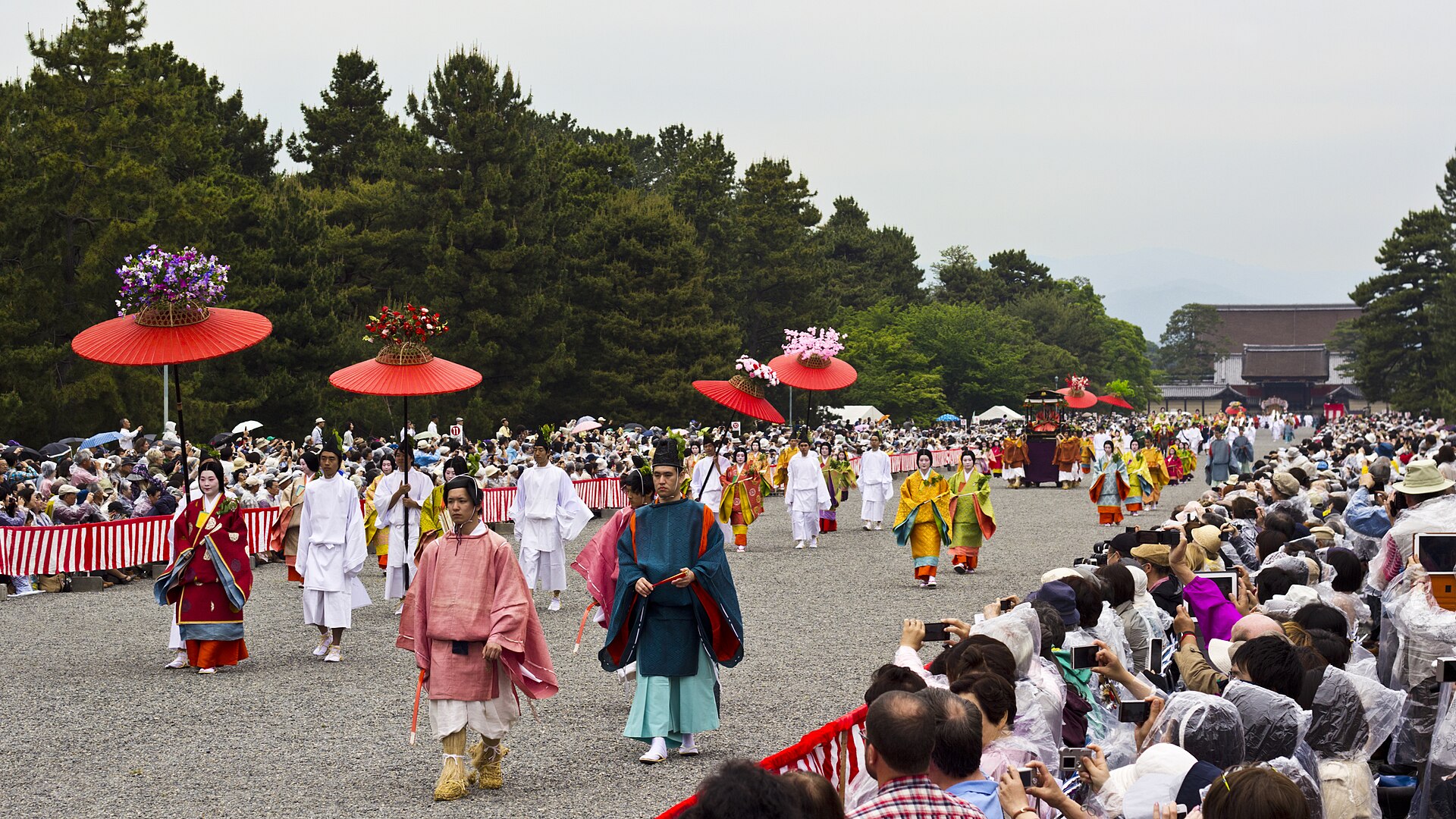
For readers following aoi matsuri news and planning a visit, it helps to know that the procession is highly structured, with fixed roles and a set route. The event is also one of the best places to see how Kyoto continues to stage history in public, not as a museum display but as a civic act. I also recommend reading more about paid viewing seats and parade tips for Kyoto’s Aoi Matsuri if a reserved place along the route matters to your plans.
The route, the rhythm, and the people in motion
The main procession begins at the Kyoto Imperial Palace and travels through the city to the Kamo Shrines, Kamigamo Shrine and Shimogamo Shrine. That route matters. It ties the imperial center to the sacred landscape of Kyoto’s northern districts, and it gives the festival a sense of movement from court to shrine, from political order to ritual offering.
In a typical year, the procession includes around 500 participants, among them carts, mounted riders, and court officials. The sequence is tightly controlled, with each element placed in a specific order. That strict choreography is part of the festival’s meaning. Nothing appears casual, and nothing seems left to improvisation.
The costumes are equally deliberate. The historical garments draw on the court fashion of the Heian period, with layered silhouettes and a gravity that feels almost architectural. Here the festival shows its deepest link to the past: not through vague nostalgia, but through forms that were once practical signs of rank and now function as cultural memory.
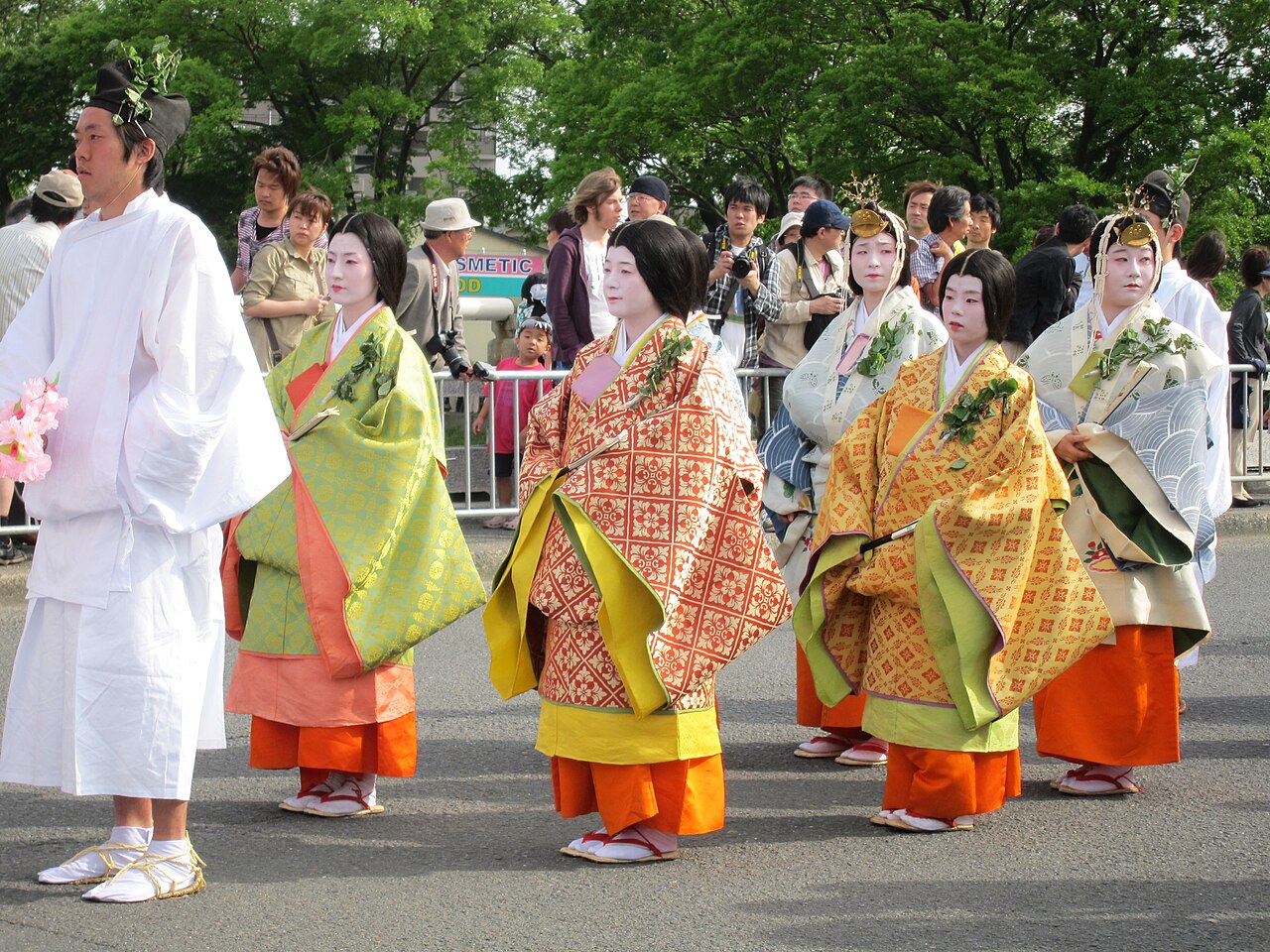
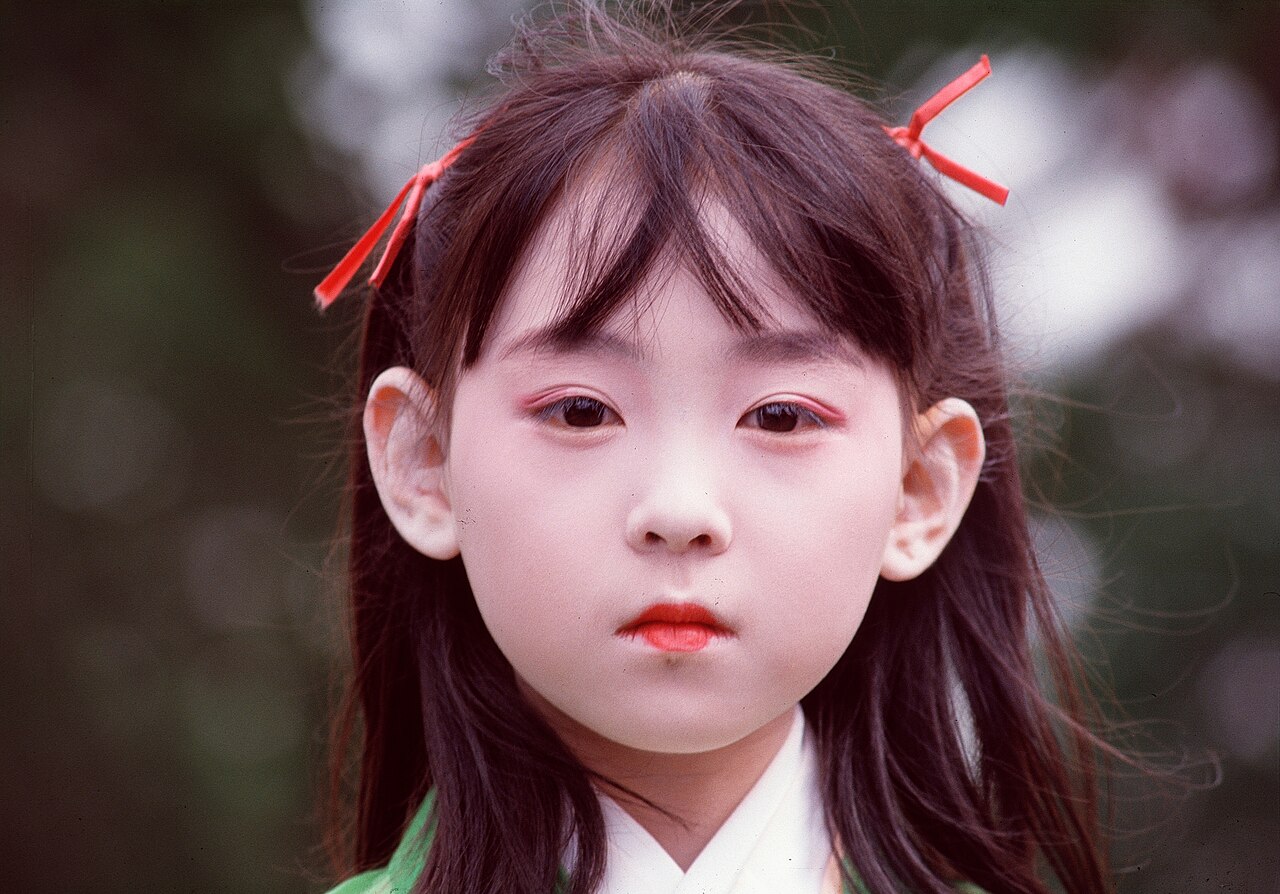
One of the central figures is the 斎王代 (Saio-dai, woman who represents the historical Saiō in the festival), the young woman who stands in for the historical Saiō, the imperial court lady who once carried out rituals at the Kamo Shrines during the Heian era. Her presence gives the procession its human focus. The role is not merely decorative; it carries the weight of representation, memory, and ceremonial continuity. The current 68th Saio-dai is a 21-year-old Doshisha University student, which shows how the role continues to be entrusted to a new generation while remaining tied to older forms.
How the Saio-dai is chosen
The selection of the Saio-dai is not public, and that quietness is part of the festival’s character. The Aoi Matsuri 行列 (gyoretsu, procession; parade) Hozonkai, the preservation association responsible for the procession, chooses the Saio-dai through confidential recommendations rather than public interviews or contests. The process is private, with suggestions reportedly coming from circles such as tea ceremony communities, and the chosen woman is generally unmarried and connected to Kyoto, with social standing, education, and good reputation considered important.
That behind-the-scenes process tells us something important about the festival itself. Aoi Matsuri is not built around open competition or performance-style selection. It depends instead on restrained institutions, inherited etiquette, and the kind of trust that is built slowly among 職人 (shokunin, craftsman; artisan) and other guardians of form. The public announcement usually comes in April, but the selection itself remains out of sight, which suits a festival that values composure over display.
Watching the procession with ease
For those planning to attend, reserved seating is available along the route and near the shrines. These paid viewing seats are limited, and they offer a more settled way to watch the procession without jostling for a standing place. Typical prices range from 5,000 to 20,000 yen depending on location and the kind of service included. Some ticket options also come with a brief explanation or guide, which can be especially useful for first-time visitors trying to follow the order of the procession.
That kind of support matters because Aoi Matsuri rewards attention to detail. The route, the sequence of officials, the costumes, and the ceremonial roles all carry meaning. I think a little preparation goes a long way here. A basic aoi matsuri guide can make the experience feel less like a passing pageant and more like a coherent public ritual.
If the festival raises wider questions about court culture, ritual vocabulary, or the Heian period, it can also be a useful doorway for aoi matsuri japanisch lernen. Terms such as Saiō, Saio-dai, matsuri, and gyoretsu all appear naturally in discussions of the event, and they are easier to remember when anchored to an actual procession rather than memorized in isolation. For anyone interested in aoi matsuri kanji, the festival name itself is a small study in how language carries seasonal and historical meaning, even when read only in romaji.
Why it still matters in Kyoto’s festival calendar
Kyoto’s three great festivals each present a different face of the city. Gion Matsuri is sprawling and summer-heavy, Jidai Matsuri is a pageant of historical eras, and Aoi Matsuri is the most formally courtly of the three. Its significance lies not in scale alone, but in its precision. The festival preserves a view of Kyoto in which shrine ritual, imperial memory, and city life remain linked.
That is why the event continues to attract attention year after year. It is not simply a reenactment of the past. It is a maintained tradition, one that asks craftspeople, organizers, and participants to keep a difficult balance between continuity and present-day public life. In a city where so much history is visible, Aoi Matsuri stands out for the quietness of its authority. Before long, the procession has moved on, and the city resumes its ordinary pace, but the image remains.
And so it became a plan.
Frequently Asked Questions
When is Aoi Matsuri held?
Aoi Matsuri is held every year on May 15 in Kyoto.
Where does the Aoi Matsuri procession start and end?
The procession starts at the Kyoto Imperial Palace and goes through the city to Kamigamo Shrine and Shimogamo Shrine.
Who is the Saio-dai?
The Saio-dai is the young woman at the center of the parade, representing the historical Saiō linked to rituals at the Kamo Shrines.
Are there reserved seats for watching the festival?
Yes. Paid viewing seats are available along the route and near the shrines, and they are limited.
How many people take part in the procession?
The procession usually includes around 500 participants, including carts, riders, and court officials.

