

Hiragana: soft curves, everyday grammar
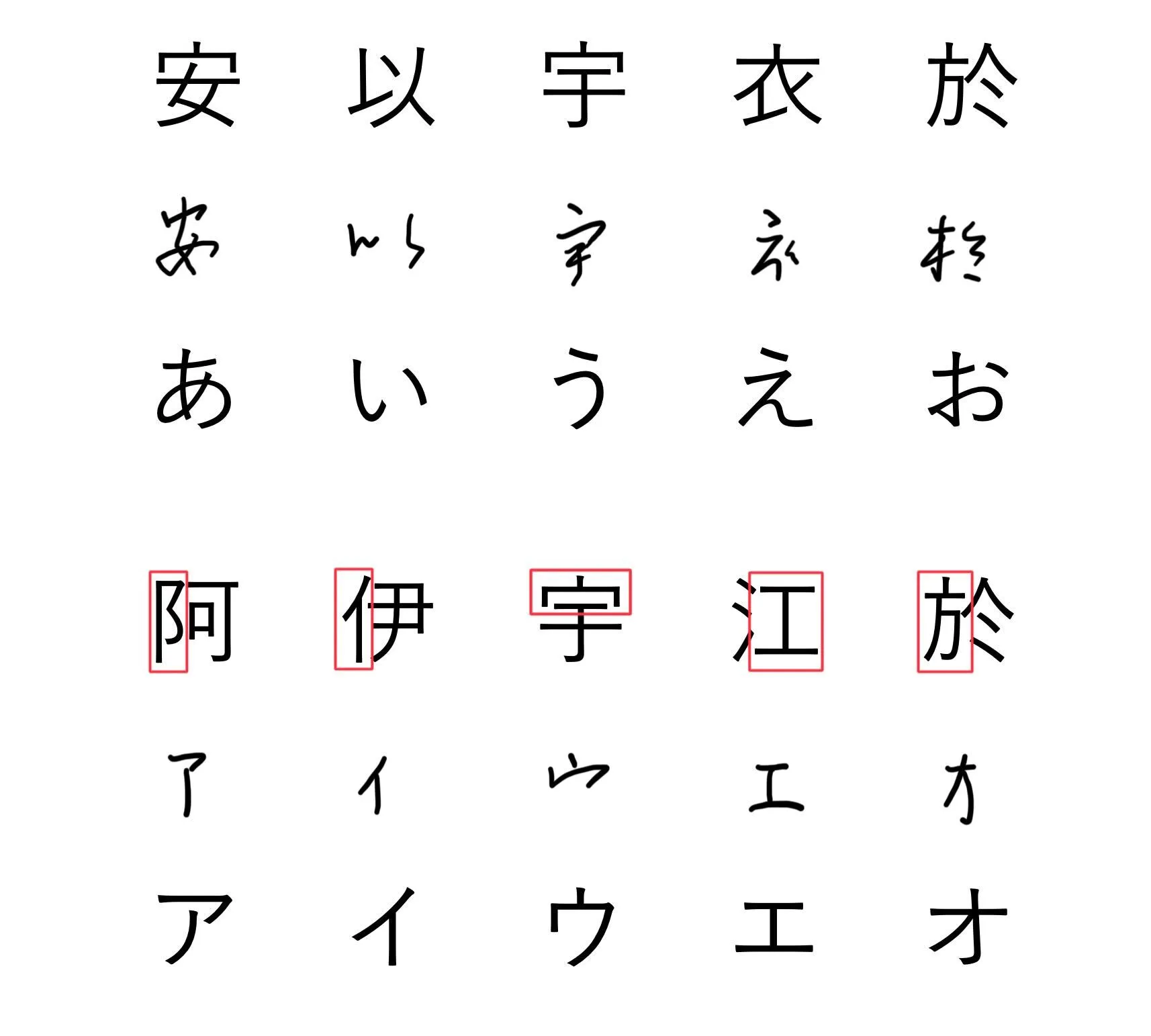
Why do beginners usually start with hiragana? Because hiragana represents native Japanese sounds and grammar particles, so it’s the backbone of sentence structure. Imagine a narrow alley in Tokyo, where handwriting often looks fluid and fast. That’s the vibe of hiragana, with rounded strokes and flowing motion. Did you know hiragana evolved from Man'yōgana in the 8th and 9th centuries and became common during the Heian period, around 794 to 1185? That’s why practising basic stroke order helps you write legibly, not just correctly. My tip: learn the gojūon (50-sound table) and pair each character with a mnemonic and a stroke-order animation, for example from TCJ. And there’s more.
Practical handwriting tips for hiragana
Here’s the thing: neat hiragana is about rhythm, not perfection. Start at the top-left of each square on genkō yōshi, follow common stroke orders, and keep proportions consistent. Use fountain or gel pens to feel the flow, and practise the 46 basic kana in short daily sessions. See what I mean?
Katakana: sharp, modern, and for foreign words
Fact: katakana is used for loanwords, onomatopoeia, technical terms and emphasis. Take "computer", for instance. You’ll see it as a loanword in katakana in many shop signs and menus. Know that feeling when you instantly recognise foreign words in a sentence? That’s katakana doing its job. What many overlook is that katakana characters are derived from parts of kanji by Buddhist monks in the 9th century, originally as a shorthand tool. Not bad, right?
How to learn katakana fast
Did you know that katakana has the same sound inventory as hiragana? So once you know the sounds, you only need shape recognition. Here’s the kicker: drill with real-life material like food menus, anime subtitles and product packaging. Before I forget, studying katakana through English loanwords helps you map pronunciation changes, such as how "coffee" becomes konnichi-style approximations. Personally, I recommend flashcards plus 10-minute copying drills every day. See what I mean?
Kanji: meanings packed into characters
Want to read newspapers and signs? You’ll need kanji. Kanji arrived from China around the 5th to 6th century, via Korea and Chinese scholars. That’s why modern Japanese keeps thousands of characters, but the government list Jōyō kanji currently contains 2,136 characters as of the 2010 revision. What many overlook is that kanji aren’t only words, they encode history, like the radicals that hint at meaning or pronunciation. My tip: learn common radicals first, then focus on high-frequency kanji used in the news and manga you like.
Study tactics for kanji
Imagine writing your first complete kanji-laden sentence. Start with the 1,000 most frequent kanji, practise readings (on and kun) separately, and attach a simple English cue to each character. Here’s the twist: knowing stroke order speeds up memorisation because it gives your hand a motor pattern to recall the shape. And there’s more.
How the scripts interact and practical style advice
When do you use which script in real life? Hiragana fills grammar and native words, katakana flags borrowed words and emphasis, and kanji carries the lexical core. Take manga, for instance. Authors mix scripts to control tone, using katakana for scientific terms and hiragana for emotion. That’s why reading varied materials matters: children’s books, NHK News Web Easy and signage teach different balances.
Fact: typography matters too. Printed books often use Mincho for body text and Gothic for headings. Handwriting tends towards cursive hiragana and simplified kanji, while formal documents stick to standard stroke forms. What many overlook is that calligraphy, Shodo, shows how expressive written Japanese can be, where variations aren’t errors but style. Personally, I love trying Shodo lessons to feel how stroke pressure changes a character’s mood. See what I mean?
Quick checklist for daily practice
Here’s the catch: consistent short sessions beat marathon study. Mix drills: 10 minutes of kana repetition, 15 minutes of kanji writing and 20 minutes of reading real text. Use apps for spaced repetition, but always pair digital review with pen-based practice to lock strokes into muscle memory. Not bad, right?
Frequently Asked Questions
Which script should I learn first?
Start with hiragana, then katakana, and begin basic kanji after you can read simple sentences.
How many kanji do I need to read a newspaper?
About 2,000 characters (the Joyo Kanji list) covers most daily newspaper content.
Sources
- Original Threads post on writing styles
- TCJ Blog: Are There Actually Three Types of Japanese Characters?
- Man'yōgana on Wikipedia


