
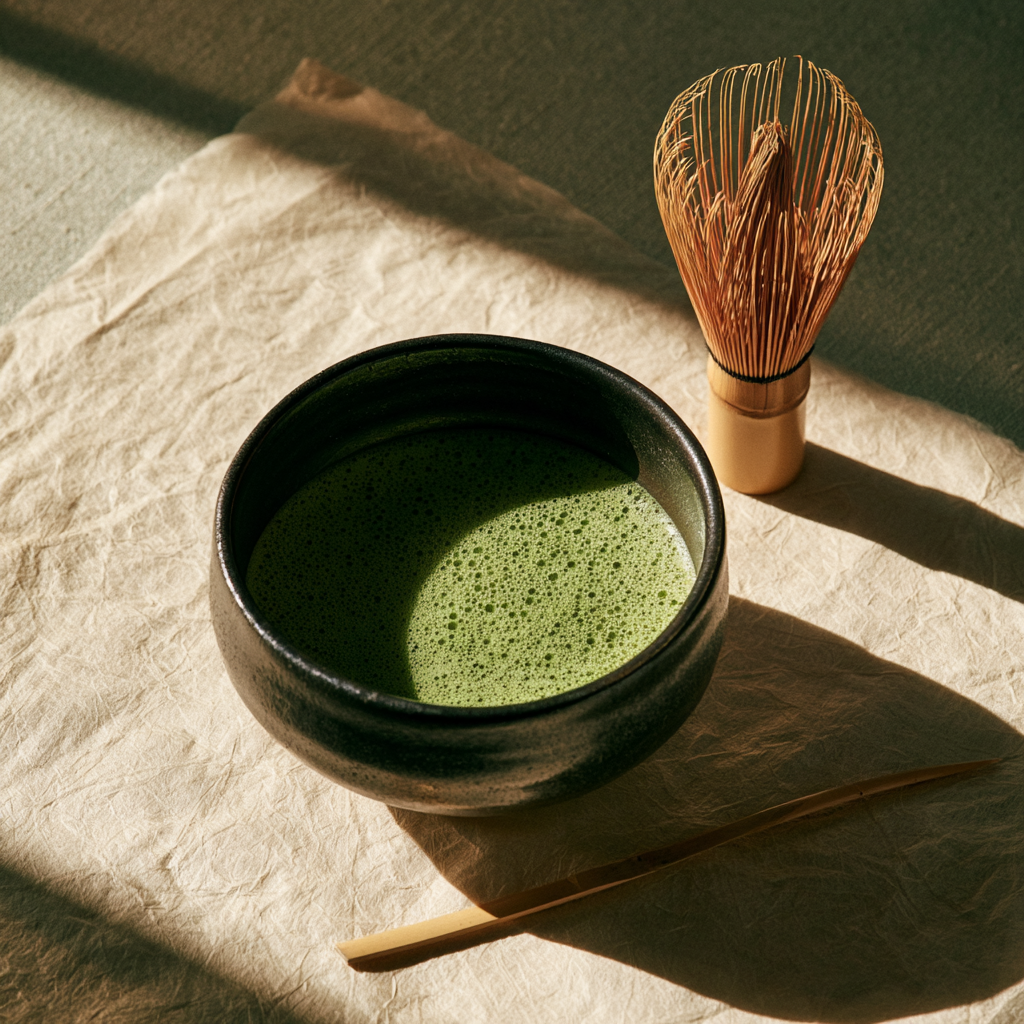
In Japanese tea culture, the method matters as much as the powder. A calm routine, a small bowl, and steady hand movements can turn one cup into a quiet ritual.
抹茶 (matcha, powdered green tea) whisking starts with a few simple tools, not with a perfect hand. If you’ve ever wanted to make a proper bowl at home, this is the place to begin.
In Japanese tea culture, the method matters as much as the powder. A calm routine, a small bowl, and steady hand movements can turn one cup into a quiet ritual.
From Kyoto Tea Rooms to a Home Bowl
Imagine a narrow alley in Kyoto. The air is cool, the stone paving is still damp, and somewhere behind a wooden facade, tea is being prepared with slow, practiced movements. That atmosphere is part of why matcha feels different from ordinary green tea. It isn’t only a drink. It’s also a small daily form of care.
The tea room tradition gives matcha its frame. In a 茶室 (chashitsu), or tea room, the tools are laid out with purpose, and each step has a clear order. That order translates well to the home kitchen. You don’t need a full tea ceremony setup, but you do need to respect the sequence: sift, add water, whisk, serve. My tip is to keep everything within reach before you start, because a smooth routine makes it much easier to repeat the habit tomorrow. Personally, that’s what makes home matcha worth learning.
A good example is the approach used by MIOKA MOMENT, a Japanese tea room and lifestyle brand that presents matcha as part of an everyday practice, not a rare performance. That frame is useful. You’re not trying to copy a stage show. You’re learning a reliable method you can use on a weekday morning or in a quiet afternoon break.
Matcha no Tatekata: The Tools You Need
Here’s the thing: good matcha starts long before the whisk touches the bowl. The essential tools are simple, and the fewer obstacles you create, the more often you’ll actually make it. AWAKÉ Matcha says it plainly in its whisking guide: a small bowl, a sieve, warm water, and a trustworthy matcha are enough for a calm routine. That’s a practical standard, and I agree with it.
For example, you can begin with these items:
- Matcha powder, about 1 to 2 teaspoons for one serving
- A fine sieve
- A tea bowl or small wide bowl
- A bamboo whisk, known as a 茶筅 (chasen)
- A spoon or scoop, called a 茶杓 (chashaku, tea scoop) if you want the traditional tool
- Hot water at about 70 to 80 C, not boiling
That temperature range matters. Boiling water can flatten the aroma and make the tea taste harsh. Matcha is made from finely milled tea leaves, so you’re drinking the whole leaf, not just an infusion. AIYA Europe notes that authentic matcha is stone-ground and consumed in full, which is why texture and aroma both matter in the cup. If you start with water that’s too hot, both will suffer.
On a related note, bowl shape also matters. A wider bowl gives the whisk room to move. You want enough surface area to make small, fast strokes without splashing. That’s why the classic Japanese tea bowl is so useful here. It’s practical, not decorative. Highly recommended: use a bowl with a rounded base and a comfortable rim, because you’ll control the foam more easily.
Step-by-Step Matcha Whisking
Seriously though, the whisking itself isn’t hard, but it does reward the right motion. The goal is a smooth, fine foam with no clumps left in the bowl. Don’t stir in circles the way you would with coffee or cocoa. Instead, move the chasen briskly in a quick zigzag motion, then finish with a light circle at the top to even out the surface.
1. Sift the powder
Add 1 to 2 teaspoons of matcha to the sieve and press it through the mesh into your bowl. This is the first step that prevents lumps. Matcha clumps easily because the powder is so fine.
2. Add a small amount of hot water
Pour in a little water first, about 30 to 50 ml, and make a paste. This makes the powder easier to dissolve. If you dump in a full cup at once, you’ll usually chase clumps around the bowl for too long. That’s not the point.
3. Whisk in quick strokes
Hold the chasen upright and whisk with a relaxed wrist. Use short, rapid M or W motions. Keep the tips close to the bottom of the bowl. You’re trying to aerate the tea, not beat it like egg whites.
Once the paste is smooth, add the rest of the water. Continue whisking for about 20 to 30 seconds. You should see a thin layer of foam forming on the surface. A little practice helps here, but the motion is simple. Keep the whisk light. If you press too hard, the tines spread and the foam gets uneven.
What I especially like is the final texture when it’s done well. The tea looks bright, the foam is fine, and the drink feels balanced rather than heavy. Not bad, right?
4. Serve immediately
Matcha doesn’t wait politely. Serve it at once, while the foam is still fresh. If you’re making 薄茶 (usucha, thin tea / light matcha), the lighter everyday style, you want a clean, drinkable bowl with a fresh aroma. If you prefer a stronger cup, use a little more powder and slightly less water, but keep the whisking method the same.
That reminds me: 焙じ茶 (Hojicha, roasted tea) powder is often used when people want a lower-caffeine option for later in the day. Paper & Tea notes that a cup of hojicha often stays below 20 mg of caffeine, while matcha can sit around 30 to 70 mg depending on dosage. That’s one reason matcha feels more like a focused morning cup, while hojicha fits the evening better. Classic Japan, isn’t it?
Small Habits That Make Matcha Better
No joke: the best home matcha routine is the one you can repeat without friction. A bowl that’s easy to reach, a whisk that dries well, and powder stored away from heat and light will all help. Matcha keeps best when you treat it like fresh pantry stock, not like a jar you forget for months.
Keep the powder sealed. Measure before you pour. Warm the bowl if your kitchen is cold, then wipe it dry before adding powder. These small habits make the tea taste more even from cup to cup. If you want a richer body, use less water. If you want a softer cup, add a touch more. The method stays the same.
For learners of Japanese, this is also a nice place to remember a few useful words: matcha for the tea, chasen for the whisk, chashaku for the scoop, and 点て方 (tatekata, how to prepare / whisk (tea)) for the method of making something. Those terms appear often in tea spaces, and learning them gives context to what you’re doing. You’re not just following a recipe. You’re learning the language around a practice that has been refined for generations.
But let’s stick with the cup for now. If you can whisk one serving cleanly, you already understand the core of the routine. After that, you can adjust strength, foam, and bowl size to suit your own kitchen. I hope this gives you a practical starting point for making matcha at home with a little more confidence. Personally, that is all this drink needs.
Frequently Asked Questions
Do I need a bamboo whisk?
It helps a great deal. You can use a small kitchen whisk in a pinch, but a bamboo whisk gives better foam and a smoother finish.
Why does my matcha taste bitter?
The water may be too hot, or you may be using too much powder. Try slightly cooler water and a smaller amount of matcha.
Can I make matcha without a tea bowl?
Yes. A small wide bowl works well. Choose something with enough space for quick whisking and easy control.


