Overview
I've spent enough hours 恩 (on, debt of gratitude, sense of obligation) the Tokaido 新幹線 (Shinkansen, bullet train) — forehead against the window, half asleep, half watching the Kanto plain flatten out toward Shizuoka — that the etiquette stopped feeling like rules and started feeling like weather. You just move through it. But for a lot of travelers it arrives as a surprise: a whole set of expectations nobody wrote down on your ticket, and one violation of it can turn into international news, as it did in March 2026, when Argentine model and media personality Wanda Nara found herself at the center of a very public etiquette dispute on board.
What Happened on the Platform: The Wanda Nara Case
The earliest reports, citing the Argentine outlet El Cordillerano, dated the incident to 29 March 2026; later and more detailed coverage, citing Ciudad, put it a day later, on 30 March. The gap matters less than what came after: fellow passengers, unhappy with the disturbance in their car, photographed and filmed it, and the footage moved fast on social media. Nara's companion on the trip, Martín Migueles, wasn't named in the first wave of reporting but was folded into the criticism once fuller accounts emerged. What followed in both Argentine and Japanese media wasn't simple celebrity pile-on. Commentators were specific about which norms had been breached, and the online debate split cleanly into two camps — one insisting manners are manners regardless of who you are, the other arguing for some grace toward visitors who genuinely don't know the local code. Both positions, I'd say, are correct at the same time. That's usually how these things go.
A Quieter Kind of Viral: The Couple Who Let Mount Fuji Wait
Two months later, in May 2026, a different clip made the rounds — no scandal in it at all, which is precisely why it traveled. A Japanese couple, filmed from a nearby seat, sat calmly as Mount Fuji rose into view outside their Shinkansen window. They didn't scramble for the blinds. They didn't stake a claim on the window seat or crowd the glass. They just let the mountain arrive and looked at it, unhurried. It spread on Instagram and got praised for exactly what it wasn't: a performance. That's the texture of Japanese train etiquette in miniature — not a set of prohibitions so much as a low-grade, constant consideration for the six or eight strangers sharing your air for the next ninety minutes.
The Unwritten Rulebook: Phones, Food, and Floor Space
Some of it is genuinely unwritten. Some of it is printed on posters you'll walk right past. JR East and JR Central both publish formal etiquette guidance covering noise, food odor, reservations, luggage, and priority seating, and it's worth actually reading once. The headlines: phone calls are considered rude on the Shinkansen and on most Japanese trains. Phones go to silent, texting substitutes for talking, and if a call truly can't wait, you take it standing in the connecting space between cars — not at your seat. Eating on board is fine, even expected; a 弁当 (bento, boxed meal) box on a long westbound run is practically tradition. But strong odors are a different matter, especially in reserved seating, where you can't simply move away from what someone's unwrapping. Keep your voice low. Never block the aisle with your bag or your body. Respect Priority Seats near the doors, and follow the luggage rules — oversized suitcases now require a reservation on the Tokaido, Sanyo, and Kyushu lines, a policy that exists purely so nobody's Samsonite ends up wedged across three people's legroom.
Why the Rules Feel So Absolute: Meiwaku, On, and Wa
Underneath all of it sits 迷惑 (meiwaku, trouble, nuisance, disturbance to others) — the idea of causing trouble or disturbance to others — which functions less like a rule and more like a reflex most people here were raised with. Two older concepts reinforce it: on, a sense of obligation and gratitude owed within a shared space, and 和 (wa, harmony), harmony, the low hum that public life is supposed to maintain. None of this is purely social pressure enforced by disapproving strangers, either. Train manners are taught in schools, reinforced by station staff, and pushed through government campaigns — it's closer to civic infrastructure than folk custom.
If You Slip: How to Recover Gracefully
You will get something wrong at some point — everyone does. The fix is small and fast. A quiet ごめんなさい (gomen nasai, I'm sorry (personal apology)) or すみません (sumimasen, excuse me / sorry), moving your bag off the seat, softening your tone and posture, or just quietly changing seats if the situation allows it. Nobody expects perfection. They expect the correction to be immediate and sincere.
Sixty Years of Punctuality: A Short History
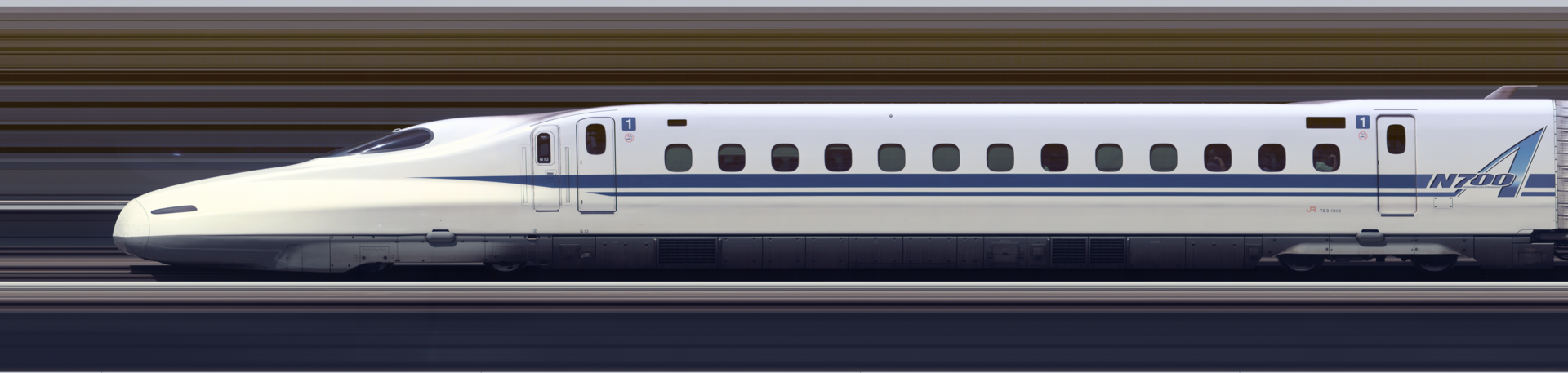
The Tokaido Shinkansen opened in 1964, timed to the Tokyo Olympics, and it set the template — order and punctuality as the whole point of the exercise, not an afterthought. Six decades on, the network carries more than 350 million passengers a year across nearly 3,000 kilometers of track, with some lines running up to 320 km/h. A standard train is 16 cars long. Multiply that ridership by that density and the etiquette stops looking fussy; it starts looking like the only thing that makes a system that size livable.
Where to Practice This Yourself
The best classroom is the Tokaido line itself, Tokyo to Nagoya or on to Shin-Osaka. Book a reserved seat, request the window side facing away from the aisle, and past Shin-Fuji Station keep your eyes up — Fuji, 3,776 meters and a UNESCO World Heritage Site since 2013, shows itself on clear days without ceremony. Sit in the ordinary car rather than Green Car if you want the full texture of it: families, サラリーマン (salarymen, office worker, businessman), the quiet negotiation of shared armrests. Watch how people angle their bodies, how bento wrappers get folded small before they go in the bag for later disposal, how a phone buzzes and gets silenced without anyone breaking stride. It's not a performance for tourists. It's just what sixty years of practice looks like.
Building the Vocabulary
If you want the language alongside the manners, start small: sumimasen for excuse me or sorry, gomen nasai for a more personal apology, meiwaku for the trouble you're trying not to cause, wa for the harmony you're contributing to by not causing it. Learn them as phrases you'll actually use on a train, not as flashcards, and they stick.