
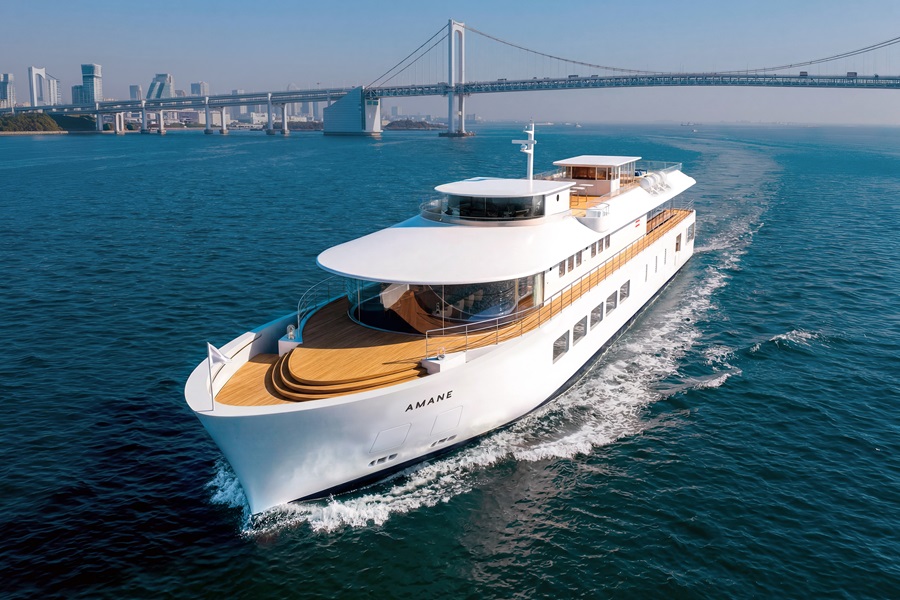
What I like here is the naming itself, because it feels very Japanese, calm, and image-rich. For Japan fans and language learners, this is a lovely little case study in how a single ship name can carry mood, meaning, and branding at the same time.
NYK has officially named its new cruise ship Amane, written in kanji as 海音, and plans to put it into service in spring 2027. Compared with back home, where ship names often sound purely technical or patriotic, this one feels softer. It has atmosphere. It has a point of view. And if you enjoy Japanese naming culture, there’s a lot to unpack here. See what I mean?
The announcement matters not only because NYK is one of Japan's best-known shipping companies, but also because this is a cruise ship aimed at a market that cares about experience, design, and storytelling. In Japan, even a name can set the tone for a whole journey. Think of it like choosing the right word for a ryokan, a café, or a seasonal 懐石 (kaiseki, kaiseki cuisine) menu. The first impression starts long before anyone boards.
NYK's new cruise ship Amane and the meaning of 海音
Ever wondered why some Japanese names sound immediately poetic? Amane does exactly that. The kanji 海音 can be read as 海 (umi, sea) no 音 (oto, sound) in a literal sense, meaning something like “sound of the sea”, while the chosen reading Amane gives it a smoother, more brand-like feel. That gap between written form and reading is very Japanese, and it's one reason the name stands out.
To be fair, ship names are often chosen for memorability and image, not just dictionary meaning. Still, Amane feels especially elegant. The character 海 means sea, and 音 means sound. Put together, they suggest the quiet rhythm of waves, the creak of a harbour at night, maybe even the hush you get when a ferry leaves port just after sunset. Highly recommended: if you're learning Japanese, pay attention to names like this, because they show how kanji can carry mood as well as meaning.
Why this naming choice works so well
Unlike what we're used to in many English-speaking markets, Japanese naming often invites interpretation. A name doesn't have to be blunt to be effective. It can be layered, a little indirect, and still feel premium. That is exactly why Amane works. It sounds gentle, but it still has maritime weight thanks to the kanji.
On a related note, this is a great reminder that Japanese learners should not stop at one “correct” translation. Here, umi plus oto gives you the literal image, while Amane gives you the branding. Both matter. My tip: when you see kanji-based names, ask yourself what the kanji mean, how they are read, and what feeling they create together. From my experience, that habit makes Japanese feel much more alive.
What spring 2027 means for NYK and cruise fans
According to NYK's announcement, Amane is scheduled to begin service in spring 2027. That timing is interesting on its own. Spring is one of the strongest seasons in Japan for travel, thanks to 桜 (sakura, cherry blossom) season, mild weather, and the general desire to get back outside after winter. For a cruise ship, that launch window is perfect branding, classic Japan, isn't it?
While we're at it, timing matters in the cruise industry because new ships are often introduced when travellers are already thinking about future bookings. A spring debut gives NYK room to build anticipation, line up itineraries, and position the ship as a fresh option for the 2027 travel calendar. If you follow Japanese tourism news, you know how carefully companies in Japan plan launch seasons, from department store openings to hotel debuts. The details are never random.
By the way, NYK is not a tiny player experimenting on the edge. It is a major name in Japanese shipping, and that gives this project extra weight. When a company like this chooses a name with such a clear identity, it is usually doing more than decoration. It is setting expectations for the onboard experience, the target audience, and the image it wants to project internationally. Personally, I think that is smart. A cruise ship should feel like a destination in itself, even before departure.
Japanese learning takeaway: how kanji, branding, and mood meet
Quick detour: this is exactly the kind of news item I like using for Japanese study. You get vocabulary, cultural context, and a real-world example all in one place. The word umi means sea, oto means sound, and together they create a calm sensory image. Even if you never study shipping, this kind of naming shows how Japanese can be compact and expressive at the same time.
Trust me on this one: if you're building vocabulary, don't only memorise isolated words. Watch how they appear in names, slogans, menus, and seasonal events. A term like oto can feel abstract in a textbook, but in a name like Amane, it suddenly becomes visual. You can almost hear the waves. That is a memorable hook for learners, and it makes kanji easier to retain. See what I mean?
And there is another angle here too. Japanese public-facing names often balance softness with precision. Think of product names, train names, even limited-edition sweets. They are rarely random. They are designed to evoke a place, a feeling, or a season. Amane fits that tradition neatly. For Japan fans, that makes the announcement more than a shipping update. It becomes a small window into how Japanese companies speak to emotion through language.
Frequently Asked Questions
When will NYK's Amane cruise ship start service?
NYK plans to begin service in spring 2027.
What does the name Amane mean?
The ship's kanji, 海音, suggest the idea of the sound of the sea.
Why is this name interesting for Japanese learners?
It shows how kanji meaning, reading, and branding can work together in a real Japanese context.


