
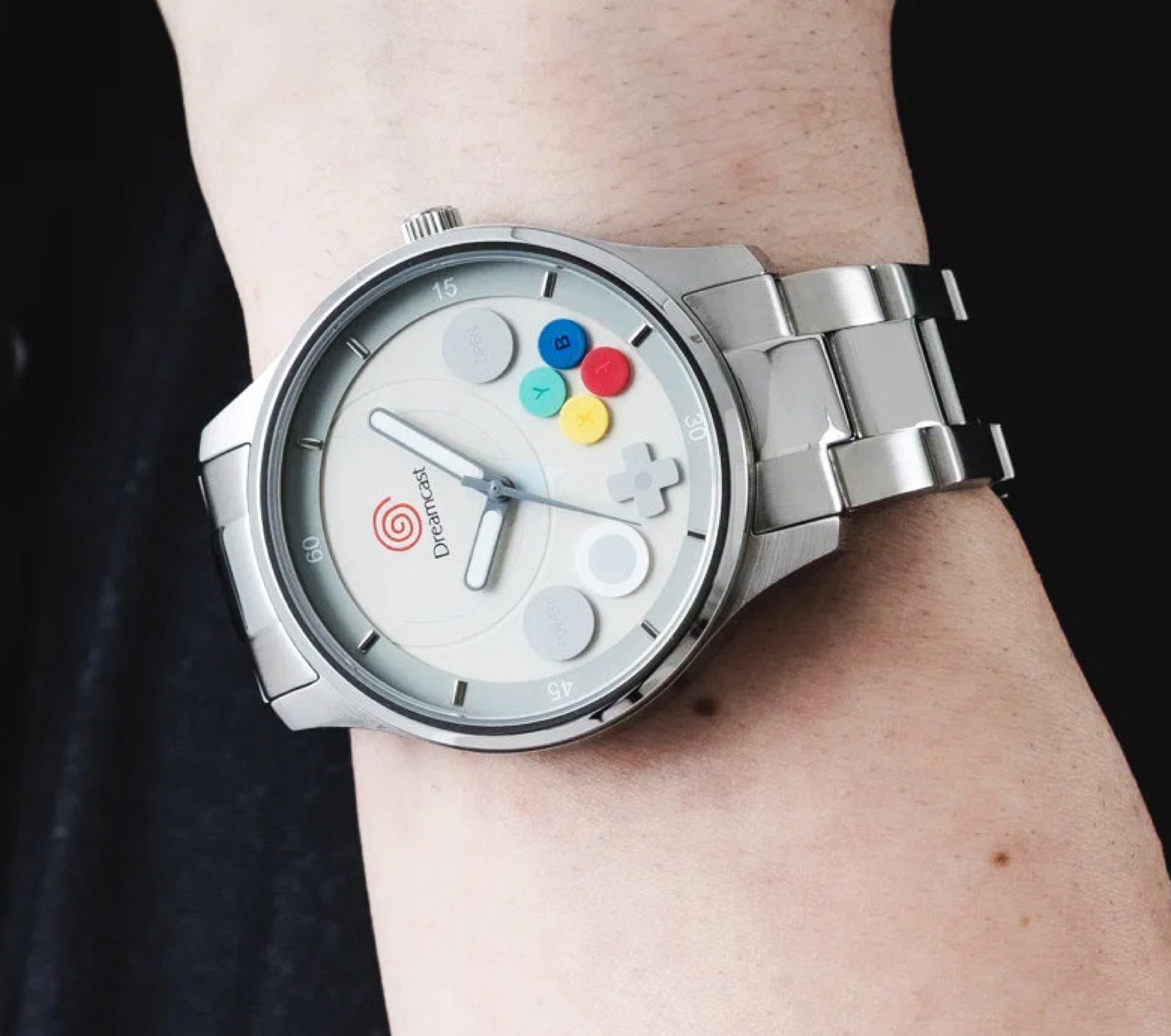
What caught my eye is the mix of nostalgia and everyday wearability. These aren't toy-like tie-ins, they're adult merch with a very deliberate Sega identity.
![Dragon Ball Z: Kakarot [Master Edition]](https://s.pacn.ws/1/p/1eh/dragon-ball-z-kakarot-master-edition-908785.1.jpg?v=t8ja8t&width=400)


Okay, here's the thing. Sega retro watches are exactly the kind of merch story I love writing about, because they sit right at the intersection of fandom, design, and collector culture. You're not just buying a watch here. You're buying a tiny wearable tribute to three machines that shaped a whole generation of players, especially in Japan and the broader import-game scene.
The new line comes from SuperGroupies, the Japanese fashion brand that has built a whole business around subtle, stylish fandom pieces. And this time, the company has gone for three clear console inspirations: Mega Drive, Saturn, and Dreamcast. The price is the same across the range, at 319.99 US dollars per watch. Pre-orders open on August 4. That's the kind of detail collectors care about, because timing matters almost as much as the design itself.
I still remember how Japanese merch often works. It rarely screams at you. It hints, it references, it rewards people who know. That's very much the vibe here. Instead of slapping a giant logo on a dial, SuperGroupies has leaned into console-specific design language, which makes the watches feel more like fashion pieces than convention freebies. Sounds good, right?
Sega Retro Watches: Three Consoles, Three Very Different Styles
Picture this: you're looking at a watch, and the dial quietly tells you whether you grew up with Mega Drive, Saturn, or Dreamcast. That's the entire appeal. The lineup is split into three models, each tied to one of Sega's most recognisable consoles, and each one is clearly aimed at people who want nostalgia without looking like they raided a toy shelf.
The Mega Drive version taps into that early 16-bit confidence. The Saturn model brings in the mid-90s sci-fi edge that defined Sega's more experimental era. And the Dreamcast watch, of course, is the one that really hits the heart for a lot of fans, because that console became a symbol of both ambition and unfinished business. If you know the history, you know why these three names still matter.
Why these designs work so well
The best part: each watch feels like a different chapter of Sega history rather than just three colour variants. That's a big deal. A lazy collaboration would have reused the same case and changed a few details, but here the branding does the heavy lifting. You can tell the project was made for people who actually care about the source material.
And the collector angle is strong. These aren't mass-market watches sitting in every department store. They're limited-style fashion collectibles with explicit Sega branding, which means they speak to two audiences at once: retro gamers and people who buy character goods, designer collabs, and anime-adjacent accessories. In Japan, that overlap is huge. Think of it as wearing your fandom with 神聖 (shinsei, sacred; holy) taste instead of shouting it from the rooftops.
To be fair, this kind of product only works if the design is restrained enough to pass in daily life. SuperGroupies usually gets that balance right, and that's probably why these collaborations keep landing with fans. They're playful, but not costume-like.
Price, Pre-Orders, and the Sega Branding Strategy
Before I forget: the pricing is fixed at 319.99 US dollars per watch, which puts these firmly in collector territory. That's not impulse-buy territory. That's the kind of price where you pause, check your shelf, and ask yourself whether you want one watch or a full trio. And honestly, for Sega fans, that's exactly the point.
The pre-order window opens on August 4, so the first wave of buyers will likely be the people who already know they want one. That matters because fashion collectibles like this often live and die on early enthusiasm. If you wait too long, the good stuff vanishes. And when a brand with Sega's legacy is involved, the demand can move fast. We've seen that with plenty of Japanese collaboration goods before, especially when the item feels premium rather than disposable.
And the thing is: Sega branding has quietly become a fashion asset. Not every game company can pull that off. Sega can, because its logo, colour palette, and console history carry a kind of cool that feels distinct from the more family-friendly image of some rivals. You can wear Sega on your wrist and it feels like a statement, not just merch. That's a game changer for collector products.
What makes this feel very Japanese
Compared with back home, Japanese character goods often put emphasis on subtle signals over loud branding. That's why these watches make sense in Tokyo retail culture, where a good collaboration piece can work in a cafe, on a train, or at a meet-up without needing explanation. If someone notices the reference, you instantly have a conversation starter. If they don't, it still just looks clean.
My tip: if you're a Japanese learner, this is a great little vocabulary moment. The idea of limited goods is often discussed with words like 限定 (gentei, limited edition; limited) and 予約 (yoyaku, reservation; pre-order), and that whole shopping culture is part of everyday Japan. You'll hear similar language around ガチャポン (gachapon, capsule toy machine; gashapon), pop-up stores, and event-exclusive items. It's all about scarcity, fandom, and the pleasure of owning something that feels time-specific. Not bad, right?
Why Sega Retro Watches Matter to Fans and Collectors
Plot twist: this isn't really about watches. It's about how retro game hardware keeps living on through design objects. Sega's consoles are long gone from the hardware race, but they're still emotionally alive in merchandise, clothing, acrylic stands, art books, and now watches. That's what makes this interesting. The brand is being preserved not just in archives, but in daily life.
There's also a bigger collector logic at work. Sega's most beloved systems came from very specific moments, 1988 for Mega Drive, 1994 for Saturn, and 1998 for Dreamcast, and those dates matter because they map onto memory. If you grew up with any of them, a watch like this isn't just a product. It's a compact reminder of where you were when the console first entered your life. Sounds weird, but it's true.
What I especially like is that this merch doesn't try to replace the original hardware. It complements it. That's the smart move. You keep the console on the shelf, the watch on your wrist, and the nostalgia becomes part of your routine rather than something locked away in a display case. That's the whole trick with good fandom merchandise, especially in Japan, where design and identity are often inseparable.
So yes, Sega retro watches are expensive. Yes, they're niche. But they're also a very clean example of how old gaming brands can stay relevant without pretending to be new again. They just need the right object, the right design, and the right collector audience. I try to make every piece of coverage better than the last, and that's the whole point. Wait, there's more.
Frequently Asked Questions
How much do the Sega retro watches cost?
Each watch is priced at 319.99 US dollars.
When do pre-orders start?
Pre-orders begin on August 4.
Which Sega consoles are featured?
The collection includes designs inspired by Mega Drive, Saturn, and Dreamcast.


